
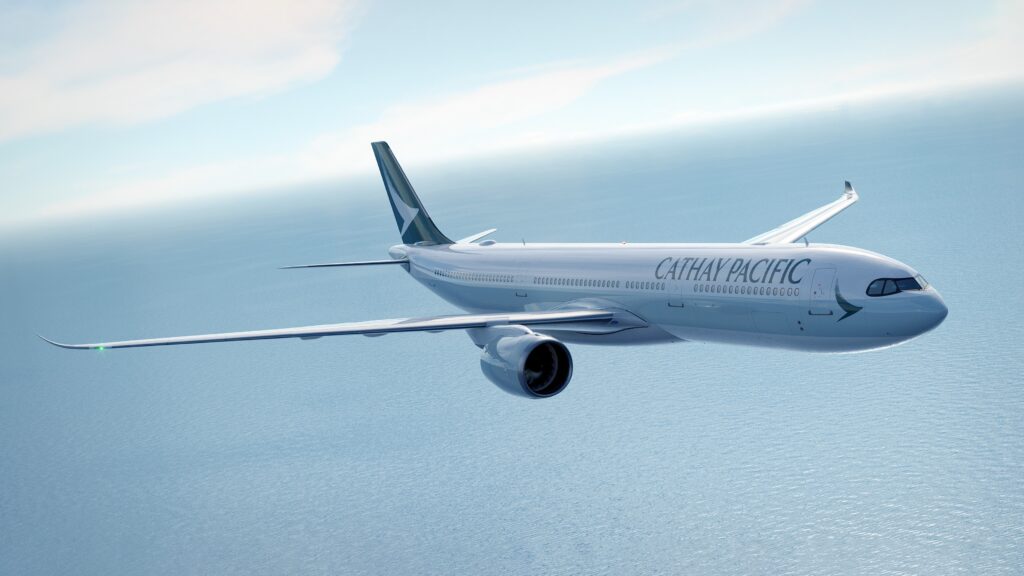
The Cathay Group has selected Thales to provide a comprehensive suite of advanced avionics systems for its upcoming fleet expansion, covering 30 Airbus A330neo aircraft to be operated by Cathay Pacific and 18 A321neo/A320neo aircraft to be flown by HK Express. The agreement strengthens Thales’ position as a key technology partner for the Hong Kong-based airline group and reflects a continued focus on equipping new aircraft with modern, future-ready cockpit solutions.
Under the deal, both airlines will benefit from Airbus’ latest generation Flight Management System (FMS), based on Thales’ PureFlyt FMS. The system is designed to improve flight efficiency through highly accurate trajectory computation, an intuitive pilot interface and enhanced operational reliability. Thales highlights that the PureFlyt FMS can support more optimised flight planning and execution, helping airlines reduce pilot workload, minimise airspace congestion and lower fuel consumption. A notable feature is its dedicated DIRECT TO page, which displays only the most relevant information for pilots, supporting quicker decision-making in dynamic flight conditions.
The aircraft will also be equipped with Thales’ 5G-Immune Low-Range Radio Altimeter (LRRA), designed to enhance flight safety and ensure resilience against potential interference from 5G networks. In addition, the fleet will feature the integrated T3CAS traffic collision avoidance system from ACSS, providing advanced alerting functions to improve situational awareness and strengthen safety margins during flight operations.
Further enhancing cockpit capability, Thales will supply a Head-Up Display (HUD), allowing pilots to access critical flight data while keeping their eyes focused outside the cockpit, supporting safer operations during approach, landing and low-visibility conditions.
Cathay Pacific will also install Thales’ AVIATOR S cockpit satellite communications system on its A330neo aircraft, providing high-speed and reliable connectivity to improve communications, operational responsiveness and overall flight efficiency.