

The Danger of Trusting What the Eye Can See
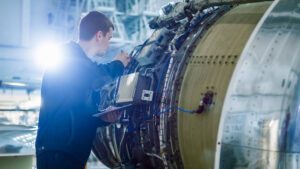
There is no doubt threat there is still a place for the experienced eye of a skilled mechanic to spot if something doesn’t look right. However, it would be naive to think that the airworthiness and reliability of an aircraft need only depend on visual inspections. This is especially so when we know that the majority of faults, or potential faults, are usually not visible from the onset. Hairline cracks which are invisible to the naked eye, and which can result in the failure of a part can exist for some time prior to the part malfunctioning. In other words, following the path of believing that “if it looks fine, it probably is fine” may feel intuitively correct, but can only lead to serious, if not fatal problems down the line as, in reality, many of the most serious maintenance threats develop quietly beneath the surface, long before they can be detected by sight alone.
Hidden Defects in a High-Stress Environment
The biggest problem with aircraft maintenance is that everything operates under extreme conditions and therefore, if there is a flaw in any material or part, when it fails, the result can be catastrophic. Pressurisation cycles, vibration, temperature variation, moisture exposure, and aerodynamic loads create continuous stress on structures and systems. Over time, this stress produces fatigue cracks, corrosion, insulation breakdown, and material degradation that may remain invisible until the damage becomes advanced. A fuselage skin may appear flawless while microscopic cracking grows around fastener holes. Wiring bundles may look intact while insulation deteriorates internally. Bearings may run smoothly until early-stage spalling progresses into sudden failure. In aviation, the absence of visible symptoms does not equate to the absence of any risk.
Why Visual Inspection Alone Is Insufficient
As mentioned, there is no question that the trained eye of an experienced mechanic is invaluable when it comes to making an inspection of an aircraft. The problem is, that alone is insufficient because of the nature of the type of damage caused by stress. In addition, so many areas of an aircraft are inaccessible where visual inspection is concerned, so to say that such an inspection is superficial is relatively accurate when the term is used literally. Many failure modes occur inside sealed structures, behind panels, within engines, or beneath protective coatings. Composite materials, now common in modern fleets, can suffer significant internal damage from impact without showing obvious external deformation. Likewise, corrosion may begin in hidden cavities long before it becomes visible on the surface. Relying solely on what can be seen creates a false sense of security and can allow defects to progress unnoticed.
The Role of Non-Destructive Testing and Advanced Inspection
Because the nature of so much damage caused to an aircraft is hidden or invisible to the naked eye, especially in its early stages, maintenance in the aviation sector relies heavily on non-destructive testing methods. Here we are referring to techniques such as ultrasonic testing, eddy current inspection, radiography, and dye penetrant analysis which allow technicians to identify cracks, voids, and structural anomalies long before they become apparent externally. These methods are not optional extras; they are fundamental to maintaining structural integrity and preventing unexpected failures. Modern aircraft maintenance programmes are built around the understanding that airworthiness depends on detecting what cannot be seen, as opposed to simply confirming what appears to be normal.
Operational Pressure and the Persistence of the Myth
The perpetuation of the myth “If it looks fine, it probably is fine” is partly owed to the pressures and time constraints placed on engineers and technicians responsible for the maintenance of an aircraft. The AOG time is so costly, swift turnaround times and the constant demand to return aircraft to service quickly means that for maintenance teams there is a constant temptation to accept visual normality as ample reassurance. However, time and time again, aviation history demonstrates that small, hidden defects are often the starting point of major incidents. As a consequence, today, maintenance is not only about responding to obvious damage; it is about anticipating degradation before it becomes visible or critical.
Human Factors and the Limits of Perception
Human factors also play a role in reinforcing the myth that if it looks fine, then it probably is as even experienced technicians can be influenced by expectation bias. In simple terms, if something is assumed to be serviceable, subtle warning signs may very easily be overlooked. Fatigue, distractions, and repetitive tasks can each further reduce the likelihood of noticing small defects and irregularities, which is why aviation maintenance depends so heavily on systematic inspection requirements rather than subjective judgment alone. Procedures, inspection intervals, and diagnostic tools exist to compensate for the natural limitations of human perception.
Modern Maintenance: Seeing Beyond the Surface
As aircraft systems have become so much more advanced, maintenance has increasingly become dependent on data-driven monitoring and predictive approaches where it is now aircraft health monitoring systems, engine trend analysis, and digital maintenance records which provide insight into developing issues that cannot be visually noticed. While a component may appear in perfect or near-perfect condition, it may well be that performance data can indicate varying degrees of early deterioration. Modern maintenance has, to a degree, become more efficient and safer as we have shifted from reactive discovery to proactive detection, combining technician expertise with technology to identify risk before it becomes a visible failure.
Conclusion: Airworthiness Is Not Always Visible
Ultimately, the belief that “if it looks fine, it probably is fine” is one of the most dangerous oversimplifications in aircraft maintenance. Aviation safety depends on understanding that critical defects often develop silently, beneath surfaces, inside structures, and within systems that appear outwardly intact. Visual inspection remains a vital first step, but it can never reveal the full picture. The true strength of aviation maintenance lies in disciplined procedures, advanced inspection methods, and the recognition that airworthiness is not always something the eye can confirm. In aircraft maintenance, what cannot be seen is often what matters most.