
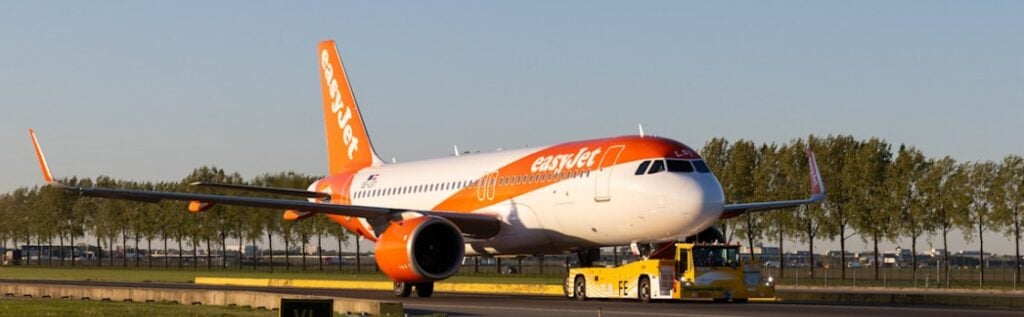
easyJet and Amsterdam Schiphol Airport have launched electronic TaxiBot operations for Airbus aircraft at Schiphol following a successful trial earlier this year, marking a further step in reducing ground emissions and improving operational efficiency.
Funded through the SESAR HERON project, TaxiBot is a semi-robotic aircraft tug that allows aircraft to taxi between the gate and runway without using their main engines. Instead, the aircraft operates on its auxiliary power unit (APU), cutting fuel burn, CO₂ emissions and apron noise during ground operations.
Following initial testing in March, easyJet operated its first passenger flight using TaxiBot on April 30. Three additional easyJet Airbus A320neo aircraft are now being permanently equipped with the system as part of the programme developed alongside Schiphol, Menzies Aviation, Airbus and SAS.
easyJet estimates the technology will save around 95kg of fuel and 299kg of CO₂ per flight. Schiphol, the first airport in Europe to deploy electric TaxiBot technology for Airbus operations, said wider adoption could reduce taxiing fuel consumption by up to 65%, while also lowering NOx and ultrafine particle emissions.
The initiative forms part of Schiphol’s broader sustainability strategy, developed in partnership with airlines, ground handlers, air traffic control and technology providers to reduce the environmental impact of day-to-day airport operations.