
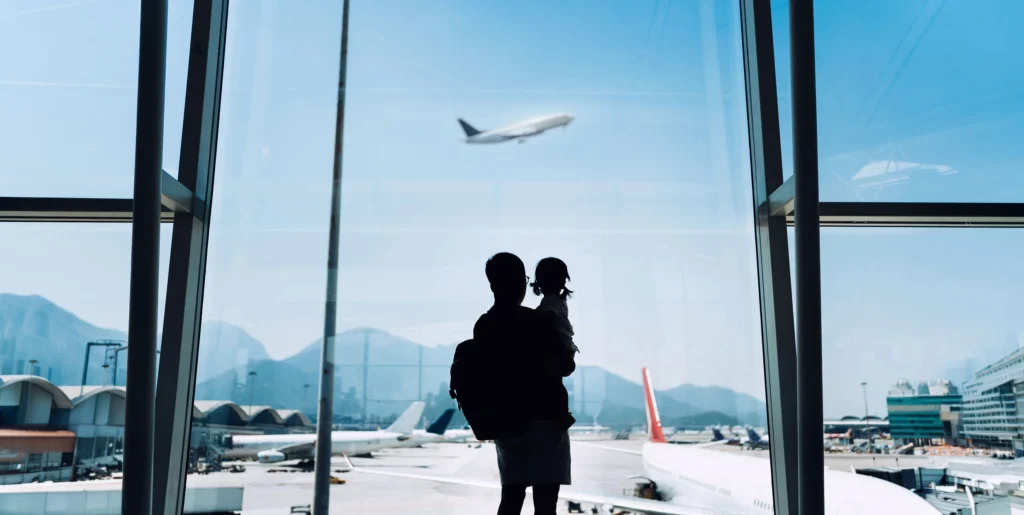
Aviation is preparing to handle twice as many passengers within a generation without doubling the number of airports, aircraft or border staff, according to SITA’s Impact Report 2025, which highlights technology as the key enabler of future growth.
With the industry expected to carry eight billion passengers a year within the next 20 to 25 years, rising to ten billion by 2050, the report outlines how airlines, airports, governments and travel partners are using digital technology to increase capacity, improve operational resilience and reduce environmental impact.
According to SITA Chief Executive David Lavorel, the industry is increasingly relying on software rather than infrastructure to meet future demand. Airports are expanding capacity within existing facilities, governments are using digital technologies to accelerate border processing, and artificial intelligence is moving from trials into day-to-day operational use.
Some of the most visible changes are at the border. In Aruba, pre-cleared passengers complete border checks in as little as eight seconds (78% faster than before), using digital travel credentials and biometric verification. SITA also said more than 271 million travellers receive pre-arrival risk assessments each year, with most completed in under four seconds.
Artificial intelligence is also being deployed across airline and airport operations. SITA’s OptiFlight platform processed 2.9 million flights for 59 airlines during 2025, helping save 127,732 tonnes of fuel and reducing carbon dioxide emissions by the equivalent of 403,633 tonnes. AI-based airport management systems are improving turnaround performance at Toronto Pearson and Abu Dhabi airports, while Thai Airways has reduced baggage rebooking times from three minutes to one second using SITA’s WorldTracer Auto Reflight system.
The report also points to technology’s role in improving operational resilience. During trials at France’s Reims Control Centre, shared real-time weather information helped cut weather-related delays by up to 65%. During the 2024 CrowdStrike outage, more than 460 flights continued operating using SITA Maestro DCS, while the company’s operational support ensured zero downtime during Hajj 2025.
Other developments include a 90% reduction in genuinely lost bags for airlines using Apple AirTag location sharing through SITA WorldTracer, while Frankfurt Airport’s new Terminal 3 has been developed around a digital-first common-use concept created with SITA and CCM.
SITA also reported strong financial performance in 2025, with revenue rising 7% to US$1.71 billion, marking a fourth consecutive year of growth. The company continued to invest in research and development, acquired airport interior design specialist CCM, and expanded co-innovation projects through SITA Labs. On sustainability, SITA reduced its emissions by 1.3% year on year, taking total emissions reductions to 32% compared with 2019 levels, while 90% of the electricity used across its global offices now comes from renewable sources.