
Waygate Technologies, a Baker Hughes business specialising in non-destructive testing (NDT), and GE Aerospace have introduced new automated inspection templates designed to modernise engine maintenance processes. The Menu Directed Inspection (MDI) templates, developed for GEnx-1B and -2B engines, mark an important step towards greater standardisation and automation in borescope inspections.
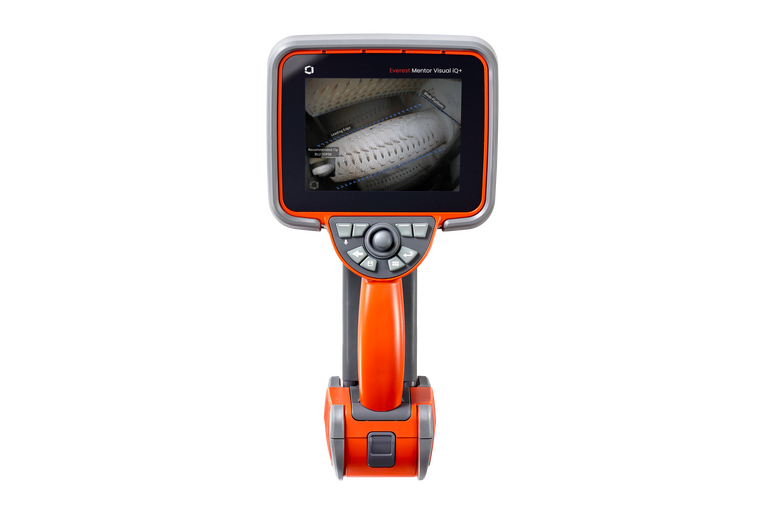
The rollout forms part of an ongoing Joint Technology Development Agreement (JTDA) between the two companies, initiated in 2023. The new functionality is integrated into Waygate’s Mentor Visual iQ+ video borescope, building on earlier AI-assisted capabilities to enhance defect detection and inspection accuracy in commercial aviation engines.
At the core of the innovation is a guided, structured workflow supported by artificial intelligence (AI). This ensures inspectors consistently capture high-quality images during each inspection, reducing variability between operators and accelerating skill development. The result is a more efficient and reliable inspection process, with improved confidence in maintenance assessments.
The MDI templates also introduce advanced visual guidance features, specifically tailored to critical engine components such as High-Pressure Turbine (HPT) stage 1 and stage 2 blades. By aligning directly with Aircraft Maintenance Manual requirements, the system helps inspectors achieve precise, standardised views. On-screen overlays and reference imagery further support consistency, while reducing the likelihood of human error.
In addition, the system incorporates both automated and manual 3-D measurement tools, enabling detailed analysis of component condition. Inspectors can assess parameters such as line, area, depth, and surface profiles, streamlining both defect identification and subsequent maintenance decisions.
Overall, the collaboration between Waygate Technologies and GE Aerospace demonstrates how AI and automation are reshaping maintenance, repair and overhaul (MRO) operations. By improving efficiency, consistency, and data quality, these advancements are setting new benchmarks for safety, productivity, and digital transformation in engine inspection.