
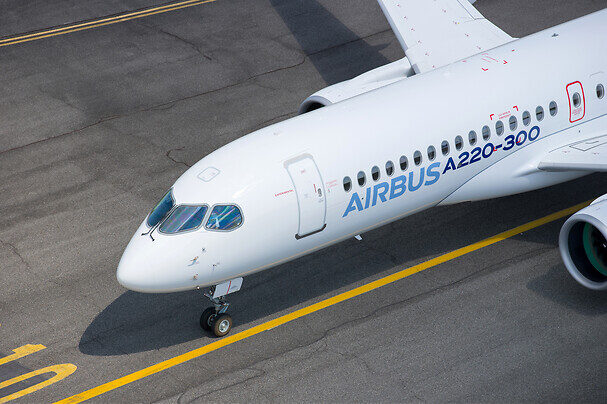
Airbus has reported weaker first-quarter 2026 financial results, reflecting a drop in commercial aircraft deliveries, although its Defence and Space division delivered a robust performance. Chief Executive Guillaume Faury highlighted a challenging and fluid operating environment, including geopolitical uncertainty in the Middle East, while confirming that full-year guidance remains unchanged.
Commercial aircraft orders were strong, with 408 gross orders and 398 net orders after cancellations, significantly higher than the same period last year. The overall backlog rose to 9,037 aircraft, underlining sustained long-term demand. However, deliveries fell to 114 aircraft, down from 136 a year earlier, weighing on revenues and profitability. Supply chain constraints, particularly ongoing shortages of Pratt & Whitney engines, continue to slow production ramp-up across key programmes.
Group revenues declined 7% year-on-year to €12.7 billion, with commercial aircraft revenues dropping 11% to €8.4 billion due to fewer deliveries and an unfavourable US dollar exchange rate. In contrast, Airbus Defence and Space posted a 7% increase in revenues to €2.8 billion, driven by higher activity in its Air Power segment, while Helicopters revenues remained stable despite a modest increase in deliveries.
Profitability weakened notably. Adjusted EBIT fell to €300 million from €624 million a year earlier, with the commercial aircraft division particularly affected, reporting just €81 million due to lower output and hedging impacts. Defence and Space improved profitability, while Helicopters saw a slight decline linked to increased research and development spending.
Net income dropped to €586 million, and free cash flow turned sharply negative at €-2.4 billion, largely due to lower deliveries and planned inventory build-up to support future production increases. Despite this, Airbus maintains ambitious production targets, including higher output rates for the A320, A350 and A220 programmes over the coming years, signalling confidence in long-term market demand despite near-term constraints. (€1.00 = US$1.17 at time of publication).