

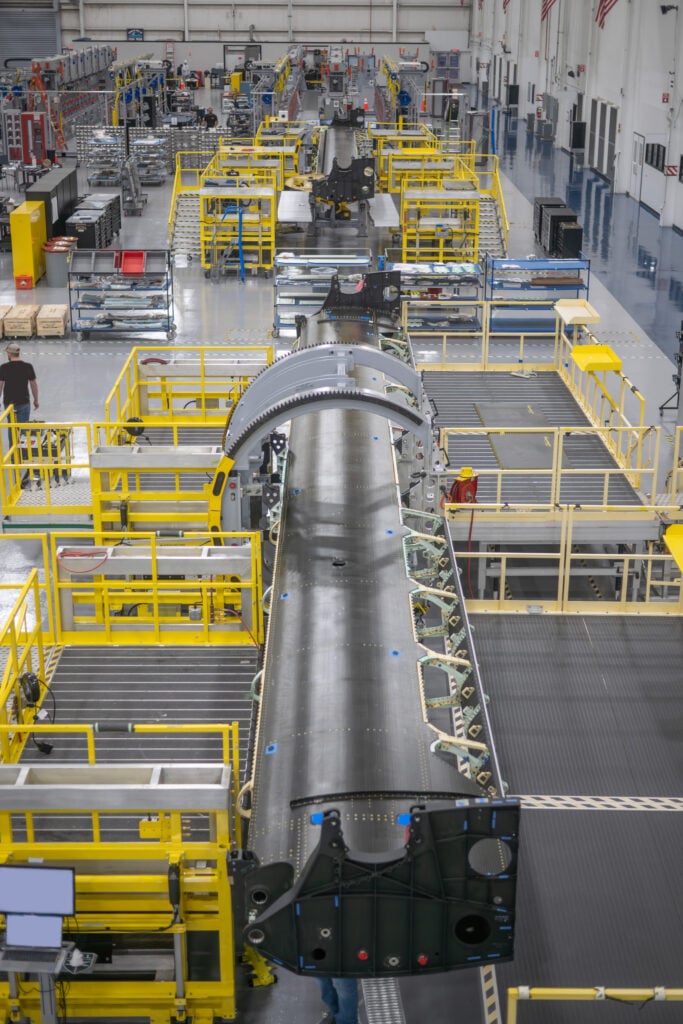
Bell Textron has completed assembly of two wing structures for the MV-75 Cheyenne, marking a key step in the development of the next-generation tiltrotor aircraft.
The wings will be integrated into the first two MV-75 test aircraft, moving the programme into the next stage of its build process. Bell said the milestone reflects progress in production readiness, affordability and aircraft design maturity.
The tiltrotor wing is a central structural element of the MV-75, providing the aircraft’s backbone with high strength, optimised stiffness and improved survivability. Bell said the wing is one of its core areas of expertise, supported by decades of tiltrotor manufacturing experience.
All major wing components are produced within Bell’s own facilities, including composite wing skins and spars, the tailored aluminium substructure and final assembly work. This in-house capability gives the company greater control over quality, sequencing and production efficiency.
Culley Shafer, Director of Operations in Amarillo at Bell, said the company had applied lessons learnt from decades of V-22 wing production to the MV-75 from the start.
“After decades of building V-22 wings, we have learnt new ways to do things better, faster and smarter by implementing these lessons into the design upfront,” said Shafer. “The team is constantly evolving, making adjustments, refining sequencing and implementing engineering changes to keep raising the bar on quality, safety and efficiency.”
The first MV-75 wing, completed in February, was produced with 90% fewer labour hours than the first V-22 wing build. Bell then achieved a further 40% reduction in labour hours on the second wing, underlining its focus on manufacturing efficiency and cost control.
With both wing structures complete, Bell is now integrating system provisions. The next assembly phase will involve mating the wings with the fuselage, which is being built at the Wichita Assembly Center, and the nacelle, which is also progressing through assembly.