
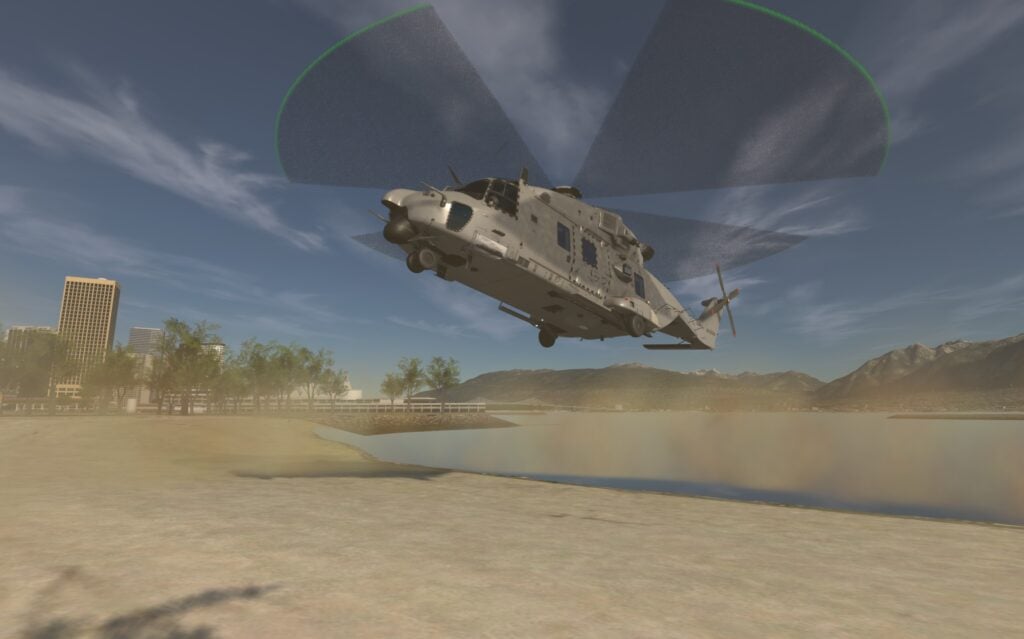
CAE has secured a contract from the NATO Support and Procurement Agency (NSPA) to modernise the visual systems of the German Navy’s NH90 NTH Sea Lion full-mission simulators. The upgrade will introduce CAE Prodigy, the company’s next-generation image generator, enhancing the realism and effectiveness of naval aviation training while reinforcing CAE’s long-standing partnership with Germany’s armed forces.
Designed to deliver highly detailed synthetic environments, CAE Prodigy represents a significant advance in military simulation technology. The system provides exceptional visual fidelity and responsiveness, helping bridge the gap between live operations and virtual training. By enabling aircrews to move seamlessly between real-world and simulated environments, the technology is intended to improve mission preparedness and operational effectiveness.
The upgrade covers two NH90 full-mission simulators and brings major improvements to visual immersion, particularly for rear-crew training scenarios. Beyond the cockpit, the system integrates synchronised high-resolution external visuals and Mixed Reality (MR) environments tailored to rear-crew operations. These enhancements support complex mission profiles such as hoisting operations, door gunnery and cargo handling, providing crews with a more realistic representation of operational conditions.
According to Pascal Grenier, President of CAE Defense & Security, the integration of CAE Prodigy narrows the divide between simulated and live training environments. He said the enhanced visual capabilities support more effective mission rehearsal, faster decision-making and stronger operational readiness for demanding missions. Grenier also highlighted CAE’s ongoing commitment to supporting the Bundeswehr through advanced mission and operational training solutions.
The latest award builds on CAE’s recent deployment of Prodigy across several European defence programmes. These include the German Army’s CH-53GS helicopter simulator and Eurofighter training systems delivered to Austria. The growing adoption of the technology highlights its ability to provide scalable, highly realistic training across a range of military platforms and operational environments.