

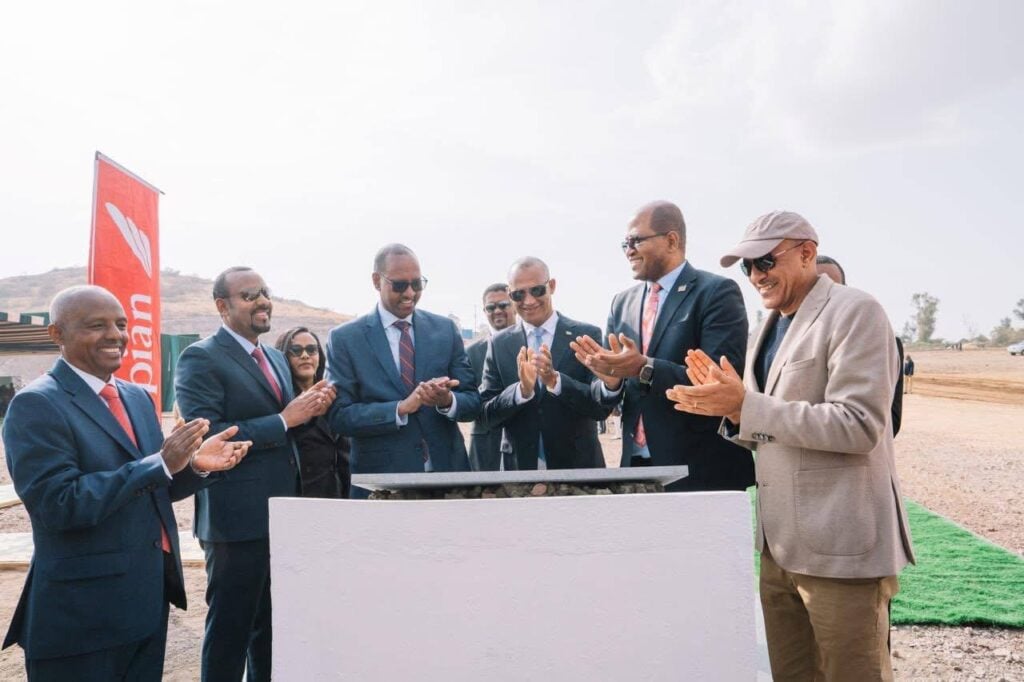
Ethiopian Airlines Group, Africa’s largest airline, has announced the official commencement of construction of the Bishoftu International Airport, marking a major milestone for Ethiopian and continental aviation. Construction began on January 10, 2026, following a formal ground-breaking ceremony.
The landmark event was attended by His Excellency Dr Abiy Ahmed, Prime Minister of the Federal Democratic Republic of Ethiopia, alongside ministers, senior government officials, industry leaders, key stakeholders and executives from Ethiopian Airlines Group. The ceremony underscored the national and regional significance of the project, which is set to transform Ethiopia’s aviation infrastructure and strengthen Africa’s global connectivity.
During the event, Ethiopian Airlines also unveiled the design of Bishoftu International Airport and confirmed the successful completion of the resettlement and livelihood restoration programme for communities affected by the project. Prime Minister Dr Abiy Ahmed, together with senior government representatives and Ethiopian Airlines Group Chief Executive Officer Mesfin Tasew, officially marked the start of construction by unveiling a commemorative plaque at the site.
Commenting on the occasion, Mesfin Tasew described the ground-breaking as a moment of pride for both Ethiopian Airlines and the African continent. “We are embarking on a new chapter with the construction of Bishoftu International Airport, which will redefine Africa’s aviation ecosystem,” he said. “As we celebrate 80 years of service, this project represents another major milestone, reaffirming our commitment to shaping the future of African air transport while meeting the growing demand for passenger and cargo services.”
He added that Bishoftu International Airport would play a critical role in addressing Africa’s infrastructure gap and supporting the implementation of the African Continental Free Trade Area (AfCFTA). “At Ethiopian, we are fully committed to delivering this transformative project,” he noted.
Bishoftu International Airport is expected to become a cornerstone of African aviation, facilitating trade, tourism and people-to-people connectivity within Africa and beyond. Phase One of the development is scheduled for completion by 2030 and will be capable of handling 60 million passengers annually. Once fully completed, the airport will have the capacity to serve up to 110 million passengers per year.