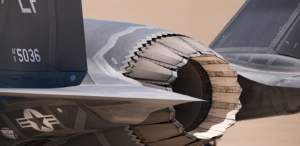


For those of you who have not come across the acronym before, RFID stands for radio-frequency identification, and it is a technology whose roots can be traced back to the time of the Second World War and the development of radar systems. While a basic radar system was being developed by both the Germans and the British, the problem remained that while airborne aircraft could be detected, initially there was no way of distinguishing between friend or foe. While the Germans’ crude solution was to roll their fighter planes to alter the radio signal sent back, the British developed a system called IFF (identify friend or foe) where aircraft were fitted with a transmitter and when that transmitter received a signal from the radar station on the ground, it would broadcast back an identifying signal to confirm it was an allied aircraft. Thus, the first RFID system was born.
In the 1960s a major development was the use of tracking solutions to minimise product theft through the creation of the electronic article surveillance (EAS) solution, something we take pretty much for granted today as being associated with tags attached to clothes that have to be removed after purchase and before leaving the store. The 1970s saw massive investment in academic research, but with few commercial results, though the 1980s would see much of that research come to fruition in the fields of transportation (US toll fees) personal access, factory automation and animal tagging. It is also worth noting that the development of the internet also had a major influence on the development of RFID systems as prior to this, focus was on improving ways information could be stored on RFID tags. With the development of the internet, tags could simply provide a reference number and data associated with that number could be altered online.
The 1990s then saw the establishment of the Auto-ID Center based at the Massachusetts Institute of Technology (MIT) and which focused on low-cost RFID tags, which researchers hoped could be placed on a variety of products and tracked through the entirety of the supply chain. As a direct consequence, come the 2000s, the RFID landscape began to change dramatically with the arrival of the Electronic Product Code (EPC) numbering system which enabled universal identifiers for a vast array of products and other physical objects. These numbers were typically encoded on RFID tags and used for tracking inventory, assets, and personnel.
Energy-efficient RFID tags have been another significant advancement, providing a combination of high performance and minimal power consumption. These tags have proven to be ideal for large-scale deployments and long-term applications, e.g., extensive asset tracking and continuous monitoring in supply chains. Enhanced connectivity and seamless integration with other digital systems has helped to further streamline supply chain management, making processes more transparent and responsive. Beyond this, emerging trends such as the integration of RFID with artificial intelligence (AI) are providing even greater predictive analytics, optimised logistics, and enhanced traceability, shoring up RFID’s role as a cornerstone technology for the future of interconnected and automated industries.
Modern RFID Tracking in Aircraft Maintenance: Enhancing Safety, Efficiency, and Compliance
Aircraft maintenance is one of the most safety-critical activities in aviation as it requires total precision, rigorous documentation, and strict control of tools, parts, and processes. As aircraft fleets become more complex and operational pressures increase, maintenance organisations are finding themselves under constant demand to reduce turnaround time yet still maintaining the highest standards of airworthiness. In this environment, modern tracking technologies are becoming key, and among them, RFID has emerged as one of the most impactful tools for transforming aircraft maintenance operations. Today, RFID tracking is no longer limited to warehouse logistics or retail inventory and instead, in the aviation sector, it is increasingly being deployed as a powerful enabler of smarter maintenance, improved tool accountability, enhanced supply chain transparency, and stronger regulatory compliance. By providing real-time visibility into assets, RFID is effectively supporting the industry’s digitisation and data-driven MRO practices.
From Manual Control to Digital Traceability
In the past, aircraft maintenance organisations have relied on manual systems for tracking tools and components where tool sign-in/sign-out logs, barcode scanning, and paper-based documentation have been standard practice for decades. Although these methods have been undoubtedly effective, there is no escaping the fact that they have often been time-consuming, prone to human error, and limited in providing real-time situational awareness. The challenge has always been that in a hangar environment where hundreds of tools may be used across multiple shifts, and thousands of parts must be controlled through strict traceability requirements, manual tracking systems can introduce operational risks as missing tools, misplaced components, or incomplete documentation can result in costly delays, safety incidents, or regulatory findings. As a solution to the challenge, RFID offers a major improvement through enabling automated identification and tracking without the need for line-of-sight scanning. This is because RFID tags embedded in tools, consumables, rotable components, or even personnel badges can be detected instantly by RFID readers placed at key points within the maintenance environment.
How RFID Works in the MRO Context
RFID systems consist of three primary elements which are tags, readers and software platforms. The tags, which can be be passive or active, store digital identification data, with passive tags requiring no internal power source and which are activated by the reader’s signal. This makes them very suitable for the likes of tool tracking and part identification, while active tags contain their own power supply and can transmit over much longer distances and are more often used for high-value assets or equipment tracking. As for the RFID readers, these can be either handheld devices used by technicians or fixed installations located at tool cribs, hangar entrances, in storage rooms and work zones, so that when an item with an RFID tag passes through a reader’s detection field, the system automatically records its presence and movement. The real value of RFID comes through integration with digital maintenance systems as, when connected to enterprise resource planning (ERP) platforms, maintenance tracking software, or electronic task cards, RFID provides a live digital thread linking physical assets to operational data.
Tool Control and FOD Prevention
One of the most critical applications of RFID in aircraft maintenance is tool control as Foreign Object Debris (FOD) represents a constant safety risk, and tool misplacement is a leading contributor. A forgotten wrench or drill bit inside an aircraft structure can have catastrophic consequences. RFID-enabled tool tracking is a great way to mitigate this risk by ensuring that every tool is accounted for before, during, and after maintenance tasks as tools can be automatically logged when removed from storage, tracked while in use, and verified upon return. Additionally, some systems allow for real-time alerts if a tool enters a restricted area or is not returned within a defined timeframe. Compared with manual shadow boards and checklists, RFID provides a higher level of assurance and reduces reliance on memory and procedural discipline alone, while for regulators and safety auditors, RFID-supported tool control also offers stronger evidence of compliance.
Component Tracking and Lifecycle Management
Beyond its implementation with tools, RFID also plays an increasingly important role in aircraft component tracking. Aviation parts require full traceability, including installation history, maintenance records, life limits, and certification status so, while barcodes have supported this for years, RFID introduces automation and greater resilience in harsh environments. This is because RFID tags can store or link to critical part information, enabling maintenance teams to verify component identity instantly, which reduces the risk of installing incorrect or unserviceable parts and supports faster inspections and audits. For rotable components such as landing gear parts, avionics units, or engine accessories, RFID improves lifecycle monitoring by capturing each movement between aircraft, workshops, and storage locations and, over time, this data supports predictive planning and inventory optimisation.
Improving Inventory and Supply Chain Visibility
Over recent years, supply chain disruption and parts shortages have become major challenges for MRO organisations worldwide, so knowing exactly where critical inventory is located—and whether it is serviceable—has become essential. Thus, RFID-enabled inventory management provides real-time stock visibility across warehouses, hangars, and remote line stations and unlike traditional inventory systems that rely on periodic counts, RFID allows continuous monitoring of part movements, reducing the risk of shortages, overstocking, or misplaced materials. This capability is particularly valuable in large maintenance bases where thousands of serialised parts must be managed efficiently as RFID also supports pooling programmes and shared inventory models by providing transparency and accountability between operators and suppliers.
Workforce Efficiency and Reduced Downtime
Aircraft maintenance is highly labour intensive, and technician productivity is often negatively impacted by time spent searching for tools, waiting for parts, or resolving documentation discrepancies, so the use of RFID helps reduce these inefficiencies by streamlining asset availability and task preparation. Additionally, when tools and components are digitally visible, technicians can locate required equipment much faster, and maintenance planners can ensure that resources are staged before work begins, all of which contributes directly to reduced aircraft ground time and improved turnaround performance. Finally, RFID systems also support shift handovers by providing clear status updates on which assets are currently in use and where they are located, therefore helping to reduce miscommunication across teams.
Regulatory Compliance and Digital Documentation
Aviation maintenance operates under strict oversight, and regulatory frameworks such as EASA Part-145 and FAA repair station requirements demand robust documentation and control processes, so RFID is able to enhance compliance by creating automatic audit trails. This is because every tool movement, component transfer, and inventory transaction can be logged digitally with timestamps and user identification, which automatically reduces the administrative burden of manual recordkeeping while strengthening traceability. Beyond this, during audits or incident investigations, RFID data can also provide clear evidence of procedural adherence and asset accountability.
Challenges and Implementation Considerations
However, a word of caution as despite its benefits, RFID adoption in aircraft maintenance does not come without challenges. For example, hangar environments contain metal structures, electromagnetic interference, and complex geometries that can affect signal performance, so selecting the right tag types, reader placement, and system calibration is essential for reliable operation. Beyond this, cost is another consideration, particularly for large-scale deployments involving thousands of tagged assets. However, on the plus side, many organisations find that the return on investment is justified through reduced tool losses, improved efficiency, and fewer operational disruptions. Additionally, integration with existing IT infrastructure is also critical as RFID delivers maximum value when linked to maintenance management systems rather than operating as a standalone technology.
The Future of RFID in Aviation MRO
As the aviation industry continues its digital transformation, RFID is likely to play an even greater role in enabling smart maintenance ecosystems and future developments may well include deeper integration with predictive maintenance platforms, automated work package management, and advanced analytics. Combined with technologies such as IoT sensors, blockchain-based part traceability, and AI-driven planning tools, RFID contributes to the vision of a fully connected and transparent maintenance environment. Ultimately, modern RFID tracking represents more than a technological upgrade—it is a strategic step toward safer, more efficient, and more resilient aircraft maintenance operations.