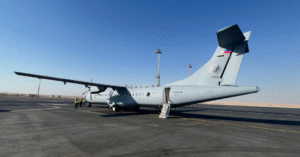

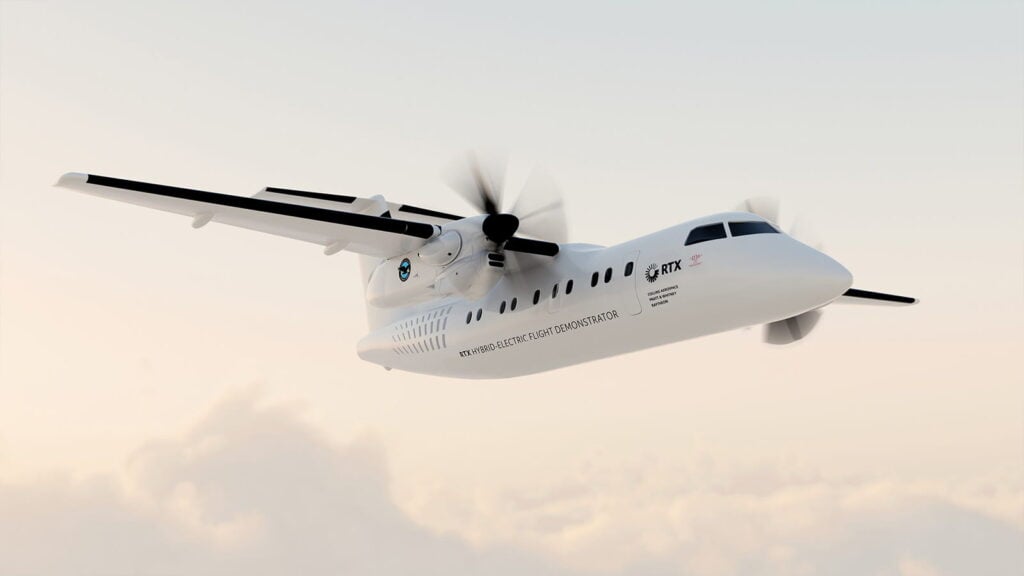
RTX has taken another step towards the future of hybrid-electric aviation with the development of a turboprop demonstrator designed to improve fuel efficiency and explore new aircraft design possibilities. The experimental aircraft will combine a conventional thermal engine with battery-powered electric propulsion.
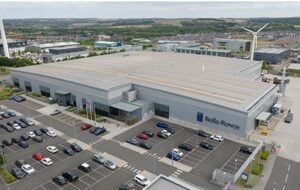
At a Pratt & Whitney Canada facility near Montreal, engineers recently powered up an early version of the demonstrator’s experimental propulsion system inside a test cell. In a nearby control room, a team of engineers and specialists who had spent years working on the project watched as the system was activated, marking a key milestone in the programme.
The hybrid-electric system forms part of the RTX Hybrid-Electric Flight Demonstrator, which is focused on advancing propulsion technologies for future regional aircraft. The system pairs a traditional thermal engine with a powerful electric motor, creating a hybrid configuration designed to reduce fuel consumption while maintaining performance.
The project is supported by both the Canadian federal government and the Government of Quebec, alongside a number of partners from across the aerospace industry and academic institutions. It also reflects RTX’s broader innovation strategy, combining expertise from across its business units and external partners.
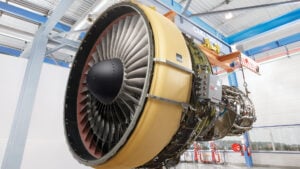
The propulsion architecture integrates several advanced technologies. Pratt & Whitney Canada is providing the thermal engine, while Collins Aerospace has developed a one-megawatt electric motor for the system. The battery component is supplied by aviation start-up H55, which has developed a 200-kilowatt-hour battery system and has received investment support from RTX Ventures, the company’s venture capital arm.
Together, these technologies form a hybrid propulsion system designed to demonstrate significant efficiency gains for regional aviation. RTX aims to show that the concept can deliver up to a 30% improvement in fuel efficiency compared with today’s most advanced regional turboprop aircraft.
Beyond efficiency gains, the programme is also intended to demonstrate how hybrid-electric propulsion could influence the design and operation of next-generation aircraft, potentially reshaping the future of regional air transport.