
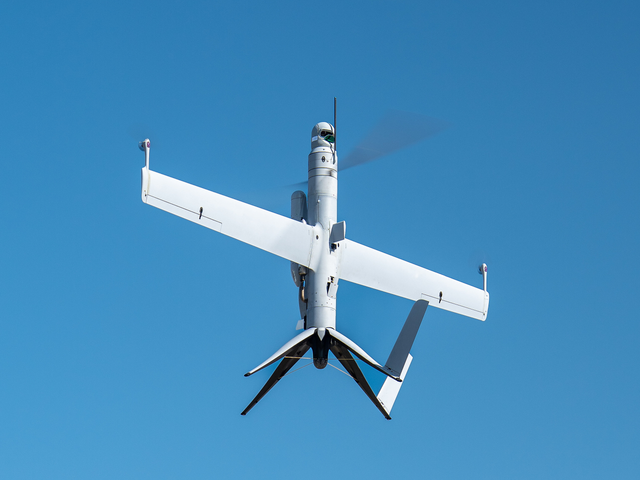
Airbus Helicopters and Garuda Technologies (Garuda) have signed a contract for the delivery of up to 18 Flexrotor Uncrewed Aerial Systems (UAS), marking a significant step in Garuda’s international expansion and the development of its global drone services portfolio.
Under the agreement, Garuda will provide Flexrotor capabilities to customers through both dry and wet lease arrangements. The systems will support a wide range of civil and parapublic missions, including infrastructure inspection of roads, railways, oil and gas pipelines and power lines, as well as law enforcement operations, search missions, wildfire monitoring and disaster relief activities.
Garuda Technologies Inc. is a Delaware-based subsidiary of India’s Garuda Aerospace Limited and is expanding its operations across the North American market. The company plans to use the Flexrotor systems to strengthen its service offering across several sectors, including energy, public services, agriculture, defence and industrial operations.
Garuda’s founder and Chief Executive Officer, Agnishwar Jayaprakash, described the partnership with Airbus Helicopters as an important milestone in the company’s international growth and investment strategy. Having manufactured and delivered more than 5,000 drones and served over 500 enterprise and government customers worldwide, the company is now scaling its services and upgrading its global product portfolio. With more than one million flight hours and a leading position in India’s agricultural drone sector, Garuda aims to deliver high-endurance unmanned solutions for complex and mission-critical operations.
Airbus Helicopters also highlighted the growing global demand for the Flexrotor platform. According to Olivier Michalon, Executive Vice President for Global Business, the system offers a strong balance between payload capacity, endurance and operational flexibility, making it well suited for both civil and military missions.
The Flexrotor is a versatile light tactical UAS designed for long-endurance operations and capable of carrying a wide range of sensors. Its compact footprint allows it to operate from confined areas on land or from ships without flight decks, and it can be transported easily and deployed from a stowed position to airborne in less than 30 minutes.