
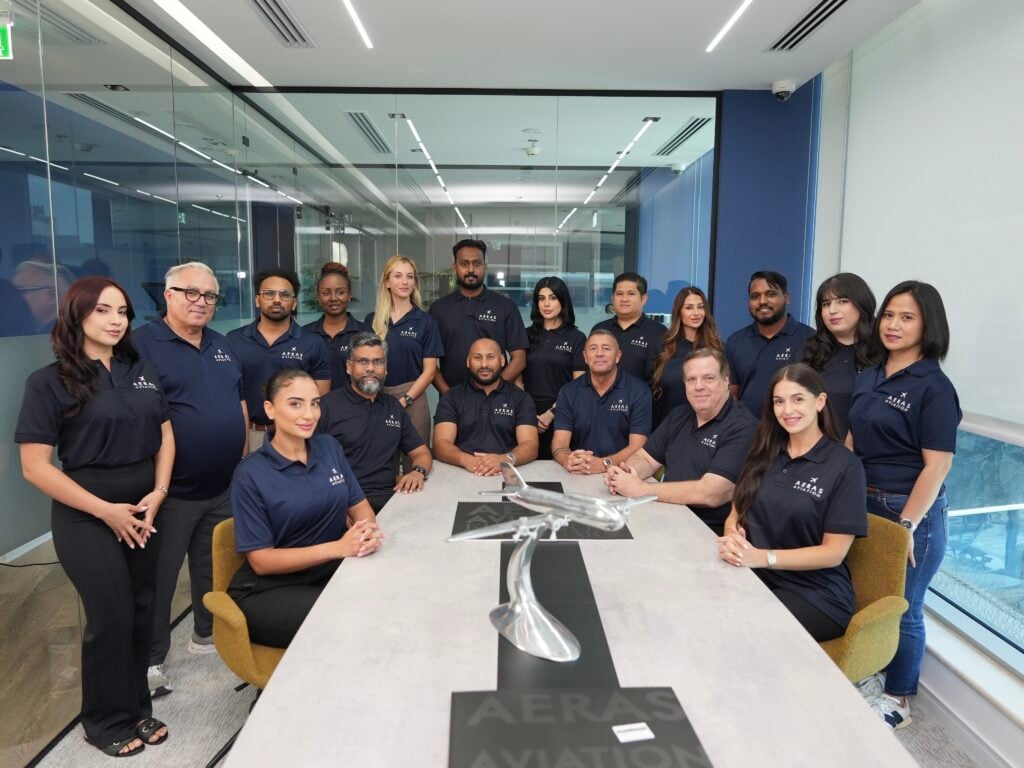
1. Can you tell us a bit about the history of Aeras Aviation?
Aeras Aviation was founded in October 2017 in Dubai with a bold and focused ambition: to become a trusted global partner in aviation asset management and aftermarket solutions. From day one, we recognized that turbine availability, cost volatility, quality, and regulatory complexity were placing increasing pressure on airlines and lessors. We positioned ourselves not simply as a trader of assets, but as a strategic partner of choice.
Over the past eight years, Aeras has evolved into a multi-country-based aviation asset management partner with global reach. Our growth has been disciplined and opportunity-driven, built on technical depth, strong partnerships, and prudent capital deployment. Today, as we expand into aircraft leasing, we are extending our lifecycle expertise beyond engines—strengthening our position as a comprehensive aviation asset partner.
2. What are the key products and services Aeras Aviation provides?
At our core, we specialize in end-of-life engine acquisitions, strategic teardowns, and the supply of high-quality serviceable and overhauled material. We also design and manage structured engine programs for airlines and MROs seeking predictability, liquidity, and operational resilience.
Our technical expertise spans major engine platforms from leading OEMs, including:
· CFM International
· GE Aerospace
· Rolls-Royce
· Pratt & Whitney
· International Aero Engines
These platforms power the majority of the global commercial fleet. Our role is to unlock value across the asset lifecycle—whether through teardown optimization, material redistribution, or engine and asset remarketing / leasing. We operate at the intersection of technical precision and financial strategy.
3. How do you define Aeras Aviation’s core mission today, and how has that mission evolved since the company’s founding?
Our mission is clear: to maximize aviation asset value while enhancing operational sustainability for our partners.
In our early years, our focus was primarily transactional in terms of buying, trading, and redistributing engine assets efficiently. As the market matured and volatility increased, our mission expanded. Today, we act as long-term strategic partners, offering lifecycle management solutions that integrate commercial intelligence, technical analytics, and financial structuring.
The post-pandemic environment has reinforced the importance of resilience, liquidity, and flexibility. Our evolution reflects this reality. We are no longer simply participating in the aftermarket—we are shaping asset strategies that allow airlines and lessors to navigate complexity with confidence.
4. What should airlines consider in order to reduce their engine maintenance costs?
Engine maintenance is no longer just a technical matter—it is a capital allocation strategy. Airlines must adopt a lifecycle mindset. This includes proactive shop visit planning, intelligent LLP management, and optimizing time-on-wing through data-driven maintenance strategies.
Equally important is the strategic use of certified serviceable material (USM). In today’s constrained supply environment, access to high-quality USM can significantly reduce overhaul costs while maintaining reliability and compliance. Airlines should also consider structured engine programs, short-term leasing solutions, and pooling arrangements to mitigate AOG exposure and protect revenue streams.
Ultimately, reducing engine maintenance cost is about integrating operational insight with financial discipline. Those who treat engines as managed financial assets—not just mechanical components—will be ahead of the curve.
5. How do you assess the current state of the aviation leasing and asset management market, particularly in the post-pandemic environment?
We are operating in a structurally tight market. Demand has surpassed pre-pandemic levels, yet OEM production constraints and supply chain limitations continue to restrict new aircraft and engine deliveries. This imbalance has created sustained upward pressure on lease rates, asset values, and material demand. It is clearly a lessor-favourable market. However, it is also a market that demands discipline and value. Elevated values can mask underlying technical and maintenance risks if not managed correctly.
In this environment, technical due diligence, asset lifecycle forecasting, and disciplined capital deployment are more important than ever. Companies that combine technical expertise with financial prudence will capture long-term value—not just short-term gains.
6. Which internal capabilities—commercial, technical, or financial—do you consider most critical to sustaining competitiveness?
Commercial acumen, technical expertise, and financial discipline form the foundation of our competitiveness. However, it is the synchronization of these three pillars that truly differentiates a company in today’s market.
Commercial Capability ensures we structure transactions creatively and responsively. Technical Expertise allows us to accurately evaluate assets, manage teardowns, and protect quality standards. Financial Discipline ensures sustainable growth, risk control, and optimal capital allocation.
Beyond these fundamentals, several additional factors are critical:
· Agility in responding to market shifts
· Deep customer relationships built on trust
· Strong governance and compliance frameworks
· A culture of accountability and performance
· A commitment to teamwork and cross-functional collaboration
Sustained competitiveness is ultimately built on consistently delivering value while maintaining operational flexibility and financial discipline.