
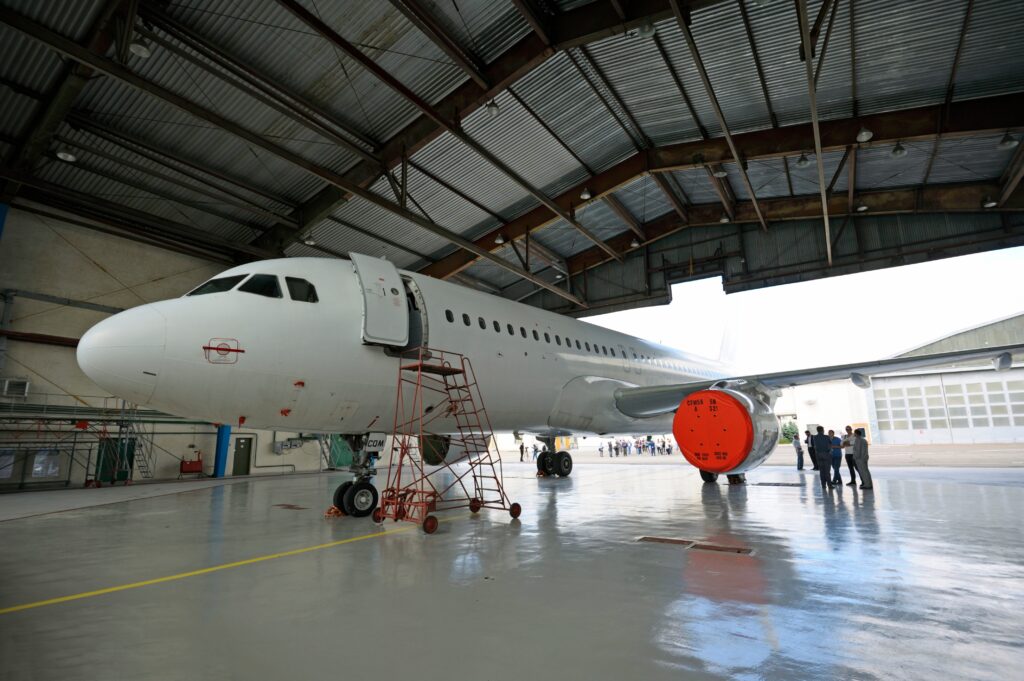
There are several advantages to leasing an aircraft over buying it, especially if you are a new operator, are looking at a rapid expansion programme, need flexibility to adapt to changing market demands, or want to test new routes. With the option of a straightforward lease, or a sale-and-leaseback agreement, having less money tied up can bring its own benefits, while opting for a lease can also speed up access to certain aircraft types where there is a backlog in deliveries for new ones.
Of course, all leases come to an end, and returning an aircraft to the lessor is not the same as returning a leased car to a dealer where you hand over the keys and the lessor’s idea of an inspection is to have a quick look over the bodywork to check there is no major damage, and to check that it has been regularly serviced. In reality, the handing back of an aircraft to its lessor is a highly complex task that requires a myriad boxes to be ticked, the failure to tick just one having the potential to lead to a financial penalty running into millions of dollars. The reason why? Because an aircraft’s value is not solely governed by its age or the number of hours it has flown, but also by its entire MRO history as detailed records of its past need to be provided on handover, as well as watertight proof that all requirements of the lease agreement in terms of maintenance and upkeep have been strictly adhered to.
Beyond this, the date a lease comes to an end is known well in advance and the lessor will likely have done one of two things in advance of this date, either leased the aircraft to a new lessee, or sold it to an MRO operative or specialist teardown company for parts. In both instances, if the aircraft is not ready for handover to the new lessee or owner on a specific date, there are likely to be financial penalties which will be passed on to the original lessee. If one then takes into account the severe financial penalties where maintenance records are not 100% complete or where 100% traceability does not exist for all parts that have been renewed or changed, the return of an aircraft at end of lease could be financially crippling for a carrier or MRO set-up.
Consequently, when it comes to handing back an aircraft to a lessor, aircraft transition management becomes a crucial element of the whole process and we wanted to find out more details of what, exactly, is involved. As a consequence, we approached three companies who are highly experienced in the field of aircraft transition management to get their take on things by asking a fairly comprehensive range of questions.
How would you define aircraft transition management in today’s leasing and MRO environment?
One thing is for sure. Over the last ten years, a lot has changed, and as Giuseppe Renga, CEO of AMROS Group makes clear, it is a very challenging environment which he feels is underemphasised and chronically understaffed, mostly suffering from historical records challenges and an unclear records landscape and delivery conditions. In turn, he feels this creates an environment where every aircraft transition may bear risks of delayed delivery, which often comes with financial compensations, to say the least. He adds that: “In today’s leasing and MRO environment, aircraft transition management is further challenged by regulatory complexity, operational time pressures, technical variability, supply chain stress, market volatility, and stakeholder coordination demands. Successfully navigating these conditions requires proactive planning, digital data management, and collaborative communication across the lease and MRO environment, yet these elements are often underestimated in practice.” Additionally, he points out that aircraft transitions are also frequently prone to unexpected costs for component purchases, exchanges, repairs etc., and therefore longer MRO lead times appear very frequently. With over 800 aircraft transitions done at AMROS, the company sees an average of US$4m in unexpected cashouts per aircraft, based on narrow-body variants.
Aircraft transition, like everything, requires teamwork, in this case collaboration between commercial, legal, technical and financial departments. It starts well before the end of lease, typically taking between 9-12 months to confirm and prepare the re-delivery requirements and planning, according to Sergey Starkov, Technical Director at Vallair. He expands further: “Lessors tend to do back-to-back leases and, as such, match redelivery requirements at the end of one lease to the delivery conditions of the next one, which saves on transition costs and minimises downtime. This is an ideal arrangement which works well with relatively young aircraft, but it may not always be the case. For example, jurisdictions should be kept in mind. Transitions within one jurisdiction – for instance, within EASA – are easy, but those which go between different jurisdictions require thorough evaluation of import requirements, such as local modifications and language adjustments. During transition, our records department gets busy going through the drafts of redelivery paperwork, which always generates numerous findings for the operator to rectify. Here at Vallair, we have experience managing these final stages in-house, allowing us to support operators who do not have the resources to manage the costly redelivery process themselves. Simplifying redelivery starts at the very beginning of the lease. Ideally, all technical records should be formatted in the same way they are required to be presented at redelivery. IATA guidelines are the most widespread standard for transition documentation.”
Meanwhile, Aslihan Ucar, Director of Business Development Türkiye & Middle East for Werner Aero LLC is very focused on the need to plan things well in advance. She advises that “What was once viewed primarily as a maintenance handover process has now evolved into a highly strategic function that sits at the intersection of technical asset protection, commercial risk management, and operational planning. Today’s transitions require early planning, strong cross-functional coordination, and very close alignment between operators, lessors, and maintenance providers. They are no longer isolated maintenance events but structured projects that directly influence both operational continuity and asset value preservation.” She concludes: “In the current leasing environment, where aircraft frequently move between operators and fleets are constantly being optimised, transition management plays a critical role in maintaining schedule predictability while protecting long-term asset performance.”
Why has transition management become more critical in recent years?
Faster lease cycles, ageing fleets, stricter regulations, tighter budgets, and higher expectations for digital records and operational readiness have increased the pressure on transition processes. In addition, since COVID, airlines and lessors both have understood what it means in terms of effort, risk and potential costs, to return an aircraft or redeliver an aircraft, regardless of whether or not the return was scheduled or unscheduled suggests Giuseppe Renga. “Therefore, significant investments are still being made, despite the low aircraft production rate and the following low aircraft transition rate. Mainly, in our opinion, it has become a potential risk factor in terms of costs and operational availability,” he concludes. Sergey Sarkov feels that transition management has always been a critical phase in the life of an aircraft, pointing out that: “In recent years, requirements towards records have increased, and not all operators have adapted their records management systems to meet these latest requirements. This is especially true for long-term leases that were initiated several years ago and for mature assets 15-20 years old. However, at Vallair, we are seeing this situation improving over time.”
Aslihan Ucar senses that several industry trends have fundamentally increased the importance of transition planning, including lease agreements which have become considerably more technically detailed which, in turn, has increased the level of compliance oversight required during redelivery. “At the same time, global supply chain constraints and ongoing propulsion system availability challenges have reduced maintenance flexibility and extended component turnaround times. Another major factor is the increasing frequency of aircraft trading between operators throughout the asset lifecycle. Each transition introduces new regulatory, technical, and documentation challenges, and in many cases, these challenges are underestimated during early planning stages,” she says, adding that: “… geopolitical instability and regional conflicts continue to disrupt logistics networks, material flow, and maintenance capacity. From what we have observed in recent years, these external pressures have transformed transitions into major cost and schedule drivers for both operators and lessors, making structured transition governance more important than ever before.”
What are the most challenging aspects of lease return and redelivery projects?
Sergey Starkov sees challenges coming from both sides of the fence, as in from both the lessor’s and operator’s perspective. He identifies that “For the lessors, the challenge is securing co-operation from the operator. From the operator’s perspective, their priority is to operate aircraft, not to edit records paperwork so that redelivery conditions are met. There are instances when issues arise due to operators taking the attitude that lessors are ‘overdemanding’ with their lease return requirements. However, when the two work together and operators allocate enough resources to the transition, the return runs smoothly. If the operator lacks such resources, then management of the transition can be sub-contracted. There are companies like Vallair which provide such services for operators and lessors. For some airlines, it is cheaper to sub-contract these services to an experienced team than try to manage it themselves. Additionally, a specialist team will make sure that the lease ends as scheduled, something which is paramount for an operator to achieve, as they must continue to pay for the aircraft in the event of a delay until redelivery is accepted by the lessor.”
Looking at the situation from a different angle, Aslihan Ucar identifies three key areas that present the greatest challenges: technical findings, documentation integrity, and timeline control. She explains: “Heavy maintenance events often reveal structural discrepancies or configuration misalignments that were not previously visible during routine operations. These findings can rapidly expand project scope and cost exposure. However, in my experience, technical records remain the most sensitive and often underestimated risk area. Documentation gaps, incomplete traceability, or differences in interpretation of return conditions frequently delay acceptance even when the aircraft itself is technically compliant. Managing these variables under strict contractual timelines, while coordinating multiple stakeholders with competing priorities, remains one of the most demanding aspects of transition management.”
Giuseppe Renga then adds two more challenging aspects relating to redelivery conditions, namely: the lack of correct aircraft status and a lack of dedicated staff to take care of the dynamics of aircraft transitions. He goes on to tell us that: “Lease agreements return conditions are often insufficiently detailed or lack technical understanding of aircraft, creating unpleasant scenarios which are often hard to solve without proper dedication. This is particularly critical when there are unclear or misinterpreted return conditions, incomplete aircraft status, and limited technical oversight, which can quickly escalate into complex technical and commercial discussions. Lastly, projects have strongly moved toward remote management with aircraft records and transition tools – the personal factor gets a bit lost and may cause inefficiencies compared to on-site presence in projects, resulting in reduced on-site presence creating inefficiencies and complex issues.”
How early should an airline begin preparing for a lease return event?
All three of our respondents are of the same opinion regarding the timeline, but with some interesting and thoughtful riders. Aslan Ucar advises that: “Leading operators typically begin structured redelivery planning approximately 12 to 18 months before the contractual return date. This timeline allows sufficient opportunity to perform detailed lease analysis, assess asset conditions, and validate technical records,” adding that: “For assets requiring major component shop visits, particularly engines or landing gear, preparation often needs to begin significantly earlier. Due to current shop capacity limitations and material lead times, we increasingly see operators extending planning horizons to 24 to 36 months for propulsion systems. Early engagement consistently improves cost control, reduces operational disruption, and provides greater flexibility when unexpected findings occur. In today’s environment, delayed planning almost always results in increased financial exposure.”
Sergey Starkov certainly believes that you can’t start thinking about a lease return too soon when he suggests that: “Ideally, operators should begin thinking about the lease return during delivery, when the lease starts. They should set up their own maintenance information software in a way that keeps the necessary data for the lease return. Some lessors may impose certain requirements for parts replacement and modifications, so this must be kept in mind from the start of the lease as well. Actual preparation for redelivery starts 9-12 months before the end of lease. For the lessor, preparations start well in advance as they look to find the next lessee or buyer and schedule transition in a way that minimises downtime. After all, it would be inefficient to have an aircraft redelivered without a next lessee lined up – there would be zero income and storage charges would accumulate. For airlines, preparing for redelivery in advance allows them to prebuild transfer records and update technical specs for the next lessee. Finding an MRO where redelivery is to take place is also key. Slot availability, workscope confirmation, and pre-arrangement of parts are all major considerations. The MRO provider should be experienced and familiar with the leasing business, as they will need to deal with a number of unscheduled, last-minute tasks depending on the redelivery review process. At Vallair, we are well versed in the leasing business and have an established delivery and re-delivery process designed to support customers through aircraft transition.”
In accord with the other two, and succinctly put, Giuseppe Renga advises that: “12 months ahead should be the first step to discuss with lessor the scope of the transition, define return conditions, transaction perimeter. Six months before, records should be built up, if not already done with a tool like LISA, and cleaned up and reviewed internally before publishing to the lessor.”
What are the most common causes of redelivery delays?
Two things become apparent when looking at the responses to this question. First, there seems to be no specific, regularly identified problem and, second, any problem which arises tends to be unexpected. As Sergey Starkov puts it, “Normally, it is ‘that one item’ in the redelivery conditions which is, in many cases, something different from a lease agreement the operator may have had previously. Perhaps there is some de-modification to do or an MRO delay. Also, completion of the redelivery maintenance itself can often be delayed. In many cases, an aircraft should be returned in the same condition as when it was delivered, meaning it has to be cleared for at least the next sequential C check or 6Y check. Sometimes, landing gears may require overhaul, or engines may need restoration. In some cases, like these, settlement with the lessor may be a solution.” Beyond the above, Aslihan Ucar highlights that “Most redelivery delays originate from issues identified too late in the transition timeline. Structural findings discovered during heavy maintenance, parts availability constraints, and limited shop capacity remain major contributors to schedule disruption. That said, documentation discrepancies continue to represent one of the most overlooked delay drivers. Many acceptance delays are not caused by physical non-compliance, but by incomplete historical traceability or differing interpretations of contractual requirements. In nearly every transition project, early alignment between stakeholders on documentation expectations significantly reduces acceptance risk and prevents costly last-minute negotiations.” To conclude, Guiseppe Renga adds, concisely: “Unavailable aircraft records and insufficient tracking of maintenance documentation evidence remain the primary causes of redelivery delays. In addition, missing records, unexpected technical findings, supply or MRO constraints, and coordination gaps frequently contribute to extended timelines and operational disruption.”
How do operators balance operational needs with the heavy downtime required for redelivery maintenance?
From an operational standpoint, the most successful airlines treat redelivery as a long-term fleet strategy rather than a final maintenance event. This mindset shift often determines the overall success of the transition program Werner Aero’s Aslihan Ucar informs us. She also suggests that: “Operators that consistently achieve smooth redeliveries typically adopt phased maintenance strategies. By gradually incorporating compliance items into scheduled maintenance visits, they significantly reduce peak workload during final redelivery checks. Fleet planning discipline is equally important. Stabilising aircraft configuration, ensuring adequate rotable availability, limiting late-stage modifications, and maintaining operational backup capacity all contribute to successful transition execution.” Giuseppe Renga at AMROS Global on the other hand, looks at things from a slightly different angle. “Frequently, aircraft transitions represent peaks in resource demand, which is why often the task of records build-up and auditing is outsourced to service partners. This cuts the operational staff significant slack, considering also that transitions may not be a daily business for an operator, so know-how could be an issue as well.” To conclude, Sergey Starkov at Vallair summarises the solution to the challenge by suggesting that “The ideal scenario is to plan maintenance for the low-operation season – winter, for example. In any case, operators anticipate the event so it can be planned in advance. Redelivery maintenance is still routine maintenance, which is normally carried out anyway, but with varying scope.”
How important are technical records in determining transition success?
Here, Sergey Starkov, Giuseppe Renga and Sergey Starkov are all very much in agreement as to the crucial role technical records play. Starkov suggests that: “The sooner a draft of redelivery records is available, the sooner the lessor’s team can start checking it. Such drafts will also allow sooner review by the next lessee or buyer. Any issue would be addressed for correction, so that the final version would be just updated at the end of lease. Having such records in good shape as early as possible also benefits the operator. The sooner the lessor can find a next home for the aircraft, the greater the chances of them closing the current lease quickly.” Renga feels that “They are the key success factor of every transition. Technical records are crucial for transition success because they provide the complete history of an aircraft’s maintenance, modifications, airworthiness compliance, while also preserving the aircraft’s value and marketability. A bad, incomplete and inconsistent records evidence of aircraft maintenance can break a transaction which can cause delays in transactions or, if the aircraft is sold, even for a customer to walk away from a deal.” Meanwhile, Ucar feels that: “Technical records are often the single most influential factor in transitional outcomes. While physical discrepancies can usually be corrected through maintenance action, documentation gaps can create significant commercial exposure and delay aircraft acceptance.” She adds that “Reliable traceability, clear maintenance evidence, and consistent record governance not only support regulatory compliance but also strengthen the operator’s negotiation position during redelivery settlement discussions.”
How do digital records systems improve—or complicate—transition management?
Here Giuseppe Renga can see only positives in terms of the benefits of digital records systems. “They definitely improve the transition management as they digitalise and automate tedious and inefficient review processes with software landscapes that are not made for managing aircraft records (e.g. legacy document management systems like SharePoint or Dropbox etc.). They can facilitate communication down to records level and provide quick metrics and KPIs related to records quality and availability. We do not see any complication in records processes,” he tells us. Aslihan Ucar, however, sees both plus points and negative points when it comes to these systems On the plus side, “Digitalisation has significantly improved records accessibility, audit transparency, and project coordination. Modern digital platforms allow real-time monitoring of compliance status and enable faster stakeholder collaboration,” she says, but adds that “… However, digital systems can also introduce complexity, particularly when historical data has been migrated across multiple legacy platforms or when data governance standards vary between organisations. We frequently see that digital tools deliver maximum value only when they are supported by disciplined data validation processes and standardised documentation practices. Technology alone does not solve records’ challenges — structured data management does.”
Aircraft transitions involve airlines, lessors, MROs, and regulators—where do coordination failures most often occur?
According to Aslihan Ucar, here coordination breakdowns most often occur at stakeholder interface points, with one of the most common issues being misalignment between contractual return conditions and the technical execution scope during maintenance events. She adds that: “Delays also occur when decision-making during maintenance findings is not clearly structured or when documentation ownership responsibilities are not well defined. These risks become significantly more pronounced when parts supply is constrained or when regional disruptions affect manpower and logistics availability. Successful transitions rely heavily on clearly defined governance structures, transparent communication channels, and early agreement on escalation and decision-making frameworks.” On the other hand, Giuseppe Renga is of the opinion that “Coordination failure often lays in the asynchronous flow of information and expectations. It is crucial to involve all the stakeholders early enough to clearly define responsibilities, accountability and expectations from each other. Often the coordination failures therefore end up in not enough transparency of information and lack of dedicated stakeholder management.”
What advice would you give to maintenance teams managing their first major redelivery?
Aslihan Ucar has a wealth of sound advice, pointing out that “For organisations managing their first major redelivery, structured planning and early risk identification are essential. Translating lease return conditions into detailed operational work scopes and checklists provides critical execution clarity. Conducting early technical records audits and maintaining continuous communication with lessors significantly improves transition predictability. It is also extremely valuable to engage experienced transition specialists, as lessons learned during initial projects often define long-term organizational capability and cost efficiency. Given ongoing instability in global parts supply and propulsion system availability, early engagement with OEMs, MRO providers, and technical consultants is becoming increasingly important to mitigate risk and maintain schedule reliability.”
Sergey Starkov, on the other hand, is quite blunt when he advises that you should “Start everything as soon as possible.” He then goes on to advise that “Clarity in redelivery conditions and subsequent delivery conditions is very important to keep the project on time, within budget and within agreed scope. Here at Vallair, we have pre-set steps and checklists for different stages of the redelivery process, as well as templates of files produced to IATA standard, which help manage the everything efficiently,” while to conclude, Giuseppe Renga has three very precise suggestions: “Prepare, prepare, prepare,” he says, while advising that you should also communicate proactively with all stakeholders.