
When you consider that a commercial aircraft fuselage such as that belonging to the Boeing 737 MAX or Airbus 320neo families of aircraft is made up of many thousands of repairable and or replaceable parts, and the same applies to engines such as the CFM International LEAP-1B or Pratt & Whitney PW1000G-JM GTF, it is hardly surprising that component management is a vital element of MRO operations. However, on a level playing field, it is not too much of a challenge to hold stock based on those parts more frequently required and those which are rarely needed. However, today, that playing field is hardly level and the challenges encountered in component management are greater than they have ever been before.
To begin with, there are major problems with the supply chain where the producers of Original Equipment Manufacturer (OEM) parts are struggling to cope with demand while resources are focused more on the production of new aircraft and engines. Is this really such a surprising scenario as how many businesses do you know which have order books for thousands of units and scheduled production demands that extends for over a decade? Of course, there was a solution that seemed to work well for a while, and that was Used Serviceable Material (USM) or, put more simply, second-hand parts from the teardown of older aircraft that were no longer financially viable.
Unfortunately, this solution was only short lived as, in trying to find some form of balance between using parts for the production of new planes and engines and providing the sales aftermarket sector, manufacturers have failed to ramp-up production to meet demand and many carriers have found themselves having to extend the intended lifespan of their aircraft. This then has had a three-fold negative knock-on impact on the market for USM.
First, the extended lifespan of older aircraft has resulted in a shortage in the number of aircraft available for teardown. Second, this lack of availability has led to a substantial rise in the value of certain aircraft parts, and especially rotables. Last, we have today reached the stage where nearly new aircraft are worth more for teardown than they are as an operational entity, to the point where two-year-old aircraft are now being dismantled because, primarily, there is a critical shortage of certain engines. As an example, currently two P&W GTF engines powering an A321neo are worth more to lease than the entire aircraft as a whole.
So, as an analogy, today, inventory management seems to be akin to playing three-dimensional chess on a board made of moving sand. We wanted to know how businesses were coping with the situation, so we decided to ask some questions.
What are the most significant disruptions still affecting component availability today?
Straight away James Bennett, the Chief Commercial Officer at AerFin highlights problems associated with engines as he comments that: “The GTF inspection programme continues to absorb shop capacity and spares, and it has knock-on effects across leasing, availability of replacement lift, and the wider component ecosystem. Alongside that, you’ve got three persistent bottlenecks: OEM and tier-supplier capacity – long lead times for castings, forgings, and certain “long-cycle” parts mean production ramps don’t translate into immediate availability; repair capacity and labour – strong demand is meeting a technician shortfall and stretched slots, pushing turnaround times out, across component and airframe/engine repair activity, and system-wide backlog – IATA has been clear that demand is outstripping aircraft and engine availability, with a multi-year mismatch that will take time to unwind.” He concludes that “The bottlenecks above present clear opportunities for MROs with expanded capacity – such as AerFin – to meet the increased demand.” Beyond materials’ shortages, Scott Symington, the Chief Commercial Officer at AJW Group points out that: “Disruptions and supply chain volatility are challenges that have become the industry’s new normal. They’re a business-as-usual reality requiring organisations to build agility and resilience directly into their operating models. Key pressures include ongoing workforce shortages, a critical skills gap, and persistent delays in the delivery of new components and engines. These constraints are compounded by the rapid pace of technological advancement in aerospace, which is increasing both the complexity of components and the demand for specialised expertise.” He adds: “Organisations that invest in their people and digital capabilities will be best positioned to adapt to disruptions to maintain operational continuity.”
Ramona Vintila, Sales Executive – EirTrade Aviation is of a similar mindset to Scott Symington in relation to the dual problem of a shortage in spare parts and skilled labour. She explains further: “OEMs are struggling to source raw materials such as titanium and aluminium which is impacting production of new aircraft and increasing maintenance turnaround times for existing fleets. This issue is due to geopolitical dependencies which amplify the risk when conflicts, sanctions, export controls and other industry requirements occur. These shortages ripple through the industry causing significant delays and increased lead times from repair shops. At EirTrade Aviation we have experienced lead times of up to 10-12 months, delaying turnaround time and creating huge financial constraints on airlines. The extended lead times are impacting AOG requirements and scheduled maintenance while also affecting the market and resulting in cost inflation, particularly for high demand parts. Additionally, aviation is facing workforce and capacity constraints, with skilled technician shortages impacting inspections, certifications and repair turnaround times. Even when parts are available, we see additional lead times due to the high demand for labour and limited workforce to meet this.” Looking in a different direction, an interesting and very topical point is mentioned, among others, by Kevin Rimmer, Director of Operations at NEACO, a Jet Parts Engineering company when he points out that: “… tariff uncertainty on critical aerospace metals is increasing landed costs and delaying customs clearance.” To a degree, he is pretty much aligned with what has been mentioned above as he advises that “Delayed new aircraft deliveries are extending legacy fleet operations, driving unprecedented demand for mature components. Sub-tier suppliers — particularly those providing specialised castings and micro-electronics — continue to face labour shortages and raw material constraints.”
Etienne Gombeaud, Executive Vice President of Global Parts Trading at Setna iO, LLC acknowledges that the post-COVID backlog of parts’ availability, he suggests that “A lot of the manufacturing seems to be primarily focused on new aircraft and engines, leaving too low capacity dedicated to older programmes. Multiple legacy platforms are also seeing higher usage than predicted (777-200, A380-800, A330 etc…) due to delays in the production of newer aircraft, while the manufacturing of parts has already been scaled down to put focus on newer-generation aircraft. (Neo’s, A350’s etc…)”. He also expresses frustration with the massive disruption caused by, for example, one missing replacement part: “If a subassembly is missing a single piece part it’s unable to go back to service and it can quickly clog up an entire product line, providing uncertainty on availability and can be reflected in higher pricing for used material on the market.” To briefly conclude the answers to this first question, Yuhei Yagi, the SVP Head of Sales at Werner Aero comments: “Long lead time on repairs is often caused by a lack of supply of piece parts by OEMs.”
Are operators shifting toward higher inventory levels, or are they trying to stay lean despite shortages?
Here we were keen to find out if the simplest solution to a shortage of parts is to increase inventory levels, or if the cost of engine parts makes such a policy financially prohibitive. Scott Symington suggests that: “Instead of building large inventories, some operators are turning to integrated support solutions that enable them to remain lean while protecting operational reliability. Flight hour programmes, such as AJW’s Power-By-the-Hour (PBH) support contracts, and provide operators with predictable cost structures and guaranteed access to component support without the financial burden of holding extensive stock. This approach is becoming even more relevant as the global fleet undergoes a significant technological transition. The introduction of next-generation aircraft such as the Airbus A321neo and the Boeing 737 MAX brings greater component complexity and more sophisticated supply chain requirements. Managing these evolving ecosystems independently would require substantial inventory investment and technical capability. Support programmes like ours, therefore, act as both a financial hedge and a resilience strategy, allowing operators to maintain a more stable bottom line, while securing reliable access to inventory.” However, Ramona Vintila sees it slightly differently to Scott Symington as, in her experience, “… due to this lack of component availability, operators are moving towards higher inventory levels in response to the supply chain challenges, especially for critical items. Most airlines are building buffers where shortages hurt the most and try to stay lean on predictable, low-risk items. Building stock and ensuring parts are available in case of an AOG, particularly for engines, LLPs, and high-value rotables, allows airlines to avoid long shop visits, inspections and delayed AOG turnaround times. Although, high-value units are following this trend, EirTrade is also seeing this with small parts such as seals, connectors etc., as these ensure operators will not have any delays caused by minor issues. Those able to withstand disruptions by leveraging agile inventory strategies will gain a competitive edge in today’s disrupted market landscape. Operators are also increasing their inventory levels by pooling their stock, extending contracts with providers and using predictive measures to forecast these shortages.”
Kevin Rimmer has a very precise description of the current situation when he tells us that: “The lean model is giving way to a more proactive stance,” before going on to explain further. “Airlines are increasingly investing in mission-critical parts that are accessible when and where they’re needed. Inventory decisions are also becoming more data driven, with operators leveraging MTBUR (Mean Time Between Unscheduled Removals) metrics to prioritise stock based on real-world operational reliability rather than historical assumptions.” James Bennett and Yuhei Yagi also have concise opinions on the current situation. “Operators aren’t making a wholesale move away from lean inventory models, but they are rethinking where and how they carry risk,” says Bennett, while Yagi points out that: “It depends on the operator, but we have seen cases where operators purchase certain material which have supply chain issues in heavy bulk.” However, James Bennett explains further that: “For years, minimising stock was the default because inventory ties up cash and depresses returns. That discipline hasn’t disappeared. What has changed is the cost of unpredictability. Extended lead times, volatile repair turnarounds and less reliable delivery commitments mean that a missing part can now have a disproportionate operational impact. As a result, many airlines are holding more inventory in very specific areas – components that are high failure, long lead, or critical to dispatch reliability. These are the parts that create immediate AOG exposure if they’re unavailable. For lower-criticality or more interchangeable items, operators are still leaning on pooling, exchange programmes and shared inventory to avoid unnecessary capital lock-up. The net effect isn’t a broad inflation of stock levels, but a more deliberate, risk-based approach to inventory. Operators are prioritising resilience where it matters most, while continuing to manage cost and balance sheet exposure elsewhere.”
What are the benefits and risks of relying on shared inventory versus owning strategic stock?
Most operators are now using a hybrid model to maximise the benefits and avoid the risks associated with shared inventory. Utilising a share inventory approach allows operators to lower capital exposure by avoiding upfront investments in expensive rotables and reduce holding costs associated with excess inventory suggests Ramona Vintila. “This approach opens opportunities for scalability through fleet growth and easier exit and entry for fleet types while also providing flexibility with quicker adjustments to demand. Shared inventory also guarantees availability which is critical during AOG disruptions to avoid delays and operational costs. At EirTrade we believe that utilising a shared inventory approach allows operators to improve their operational independence, relying less on OEMs, avoiding bottlenecks and improving control over scheduled maintenance. However, relying solely on shared inventory can cause disruptions for operators. During systemic shortages, shared inventory can become scarce, and larger operators are prioritised for in-demand parts. Sudden fleet-wide demand spikes can leave smaller operators vulnerable, leading to financial losses and delays. With shared inventory, operators have limited control over the specific units provided, which may not always align with their preferred specifications or shop tags. Logistically, access to stock can be slower, particularly in AOG situations, where customs and clearance delays can extend turnaround times and disrupt operations. Additionally, shared inventory often incurs extra costs, including AOG premiums, exchange fees, and logistics surcharges, which can be difficult to manage or avoid,” she concludes.
Kevin Rimmer seem to feel that shared inventory has many advantages, primarily because it “…gives operators immediate access to critical rotables — including PMA and DER solutions that a growing number of airlines now embrace for supply chain resilience. It also allows access to high-value assets without the cost of dedicated exchange pools. However, shared pools can be depleted during peak demand. Data-driven forecasting helps operators and repair stations identify long-lead-time parts early and stock proactively, balancing availability with cost efficiency.” As an alternative, Etienne Gombeaud sees a combination of solid data analysis combined with experience as having great benefits. “Better data analysis tools and returns on experience allow operators to put more focus on stocking only parts they frequently need or are hard to get. This strategy helps in reducing immobilised equity while decreasing unavailability risks to a minimum. That said, the collaboration with USM providers is necessary for a successful supply chain. The strategies between operators are different as some airlines prefer to set up PBH contracts and defer most of the rotables supply to a separate company, while others prefer to keep control of the entire chain internally and own tangible assets,” he tells us.
Post providing a comprehensive response to the question, James Bennett sums the situation up well by saying that: “In practice, the best setups blend both – own what can stop your operation, share what can be flexed.” By “both”, he is referring to shared and owned inventory and advises that: “At AerFin we work with operators and MROs on programmatic solutions; these range from consignment of inventory in their location, component leasing and service level driven structures, all designed to minimise operator risk and provide timely and cost-effective access to inventory.” He then goes on to detail the pros and cons of both. For shared inventory, the feels the benefits are: “Faster access without tying up capital, coverage across multiple sites and fleets, increased flexibility, and predictable cost per event if the contract is right.” He further advises that risks include: “Availability risk at peak demand – you’re competing with everyone else for the same asset and relying on a partner, priority and service-level complexity – performance depends on contract enforcement and provider capacity, and configuration and documentation discipline – traceability, mod status, and paperwork quality can vary between pools if governance is weak.” When it comes to owning strategic stock, James Bennett once again sees both positive and negative aspects. From the positive side, he sees the benefits include: “Control – you decide what sits where, and what gets used first; resilience – you’re less exposed to market spikes and allocation decisions, and better planning – ownership supports forward maintenance planning and stable operations.” Finally, on the risk front, he includes: “Cash and obsolescence – especially when fleet plans change; repair and logistics burden – you need slots, vendors, and internal processes to keep assets serviceable, and wrong-stock risk – buying ‘more’ is easy; buying ‘right’ is the hard part”
Another view of the situation is provided by Scott Symington where he suggests that it is fundamentally about balancing risk, capital, and control. He explains in greater detail: “Shared inventory models allow operators to transfer maintenance risk to a specialist partner such as AJW. PBH provides cost visibility and budget stability, particularly valuable during parts shortages, economic volatility, and inflation. The model shifts unpredictable capital expenditure into more manageable operating costs, while maintaining access to critical components. The trade-off is dependency as operators must be confident in their provider’s inventory depth, forecasting capability, and financial strength. Furthermore, they need to consider that they have less buying power versus large-scale PBH providers like AJW. Owning strategic stock offers direct control and immediate access but requires significant capital investment and carries exposure to obsolescence and forecasting risk, particularly as fleet complexity increases. In practice, many operators adopt a hybrid approach. AJW’s strategic inventory planning and in-house optimisation platform, Apollo, uses probabilistic modelling to align stock levels with utilisation and risk tolerance, delivering resilience without unnecessary capital burden.” To succinctly conclude these answers, Yuhei Yagi comments: “The benefit is not having to use your own balance sheet for the material you offer. The risk is lack of flexibility and agility when trying to sell inventory ‘owned’ by a separate party.”
What role does USM play in solving today’s component shortages?
At NEACO, Kevin Rimmer sees used serviceable material (USM) as an essential tool for maintaining the flow of the supply chain. He informs us further that: “Repair stations use USM to harvest piece parts internally, bypassing extended OEM lead times for sub-components. Combining USM with PMA and DER alternatives creates hybrid solutions that keep repair pipelines moving and costs manageable — particularly for high-failure components where new production parts are scarce or backordered.” At Setna iO, Etienne Gombeaud is of the same opinion as Rimmer with regard to the importance of SEO, as he explains: “USM is key and a necessary alternative to component shortages. Companies like Setna iO use experience and inventory coming from teardowns to provide availability and reduced costs versus the option of new parts. Data analysis allows us to predict and invest in repairs in order to have material ready to go for our customers when they need it.”
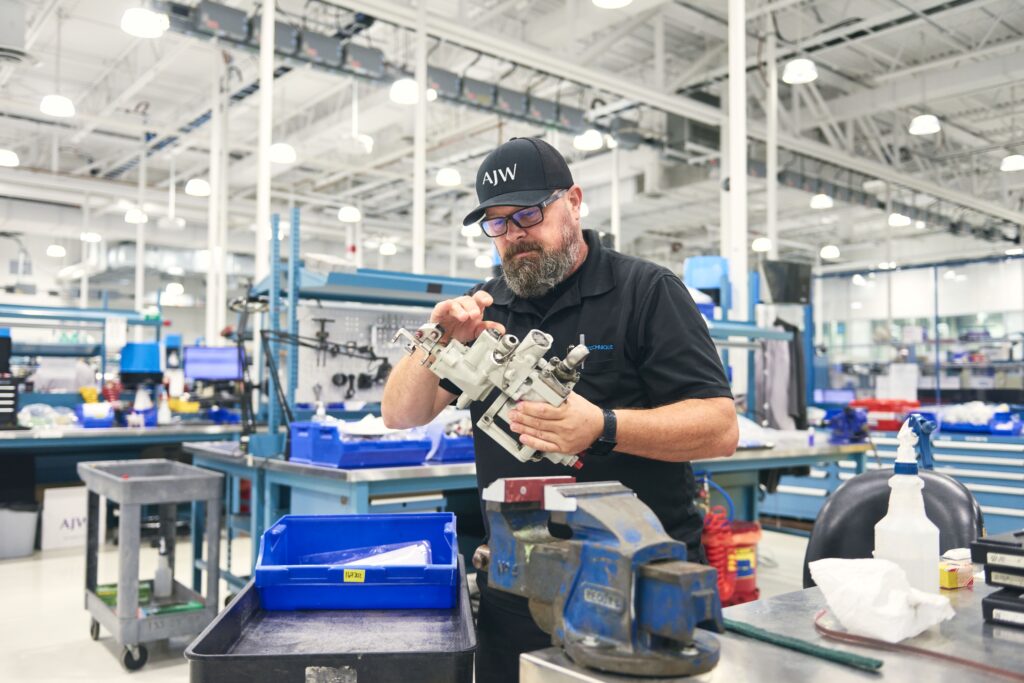
At AerFin, James Bennett points out that the USM market has now grown to US$7 billion, and he does not see that demand slowing down as it is “one of the few levers that can add real supply at speed – without waiting for new production.” He adds that “When teardown and disassembly are done properly, USM can deliver serviceable material into the market quickly, with the traceability and documentation airlines, lessors, and MROs require. It also helps in three practical ways: Bridging lead times – filling gaps while OEM supply and repair capacity catch up, reducing total cost – particularly when paired with smart repair/recertification decisions, and supporting circularity – keeping assets in service longer and reducing the need for new manufacture. At AerFin, that’s where our focus sits – combining teardown sourcing with repair, recertification, and a disciplined approach to documentation so operators can keep aircraft flying with confidence.” Scott Symington is also in the camp of OEM helping to speed up operations, as well as it being a cost-effective alternative to a constrained OEM supply. He backs this up by saying that: “With extended lead times on new parts and ongoing production bottlenecks, USM enables operators to access certified components more quickly, reducing AOG risk and supporting fleet continuity. It also offers significant cost advantages, helping airlines manage maintenance budgets. Sustainability is also becoming a key driver as regulators, investors, and the public demand greener operations from the industry. USM extends the operational life of existing components, reduces waste, and lowers the environmental footprint associated with manufacturing new material, which means MRO facilities like AJW Technique, are, essentially, aircraft component recycling facilities. The balance between new and used material will continue to evolve, but USM is no longer a secondary solution, it is a cornerstone of a more sustainable aviation supply chain.”
Ramona Vintila at EirTrade Aviation not only comments on the benefits of OEM in relation to filling gaps in inventories left by pooling and OEMs, but also how it is helping to keep older planes flying. “USM has become a critical solution for operators in today’s volatile market by helping to fill gaps that OEMs or inventory pooling cannot. USM allows operators to avoid long lead times caused by increased demand and raw material shortages and utilise readily available parts from parts providers like EirTrade that can ship immediately. USM also plays a huge role in reducing AOG turnaround times, from months to days solving operators’ component shortages significantly. In the current market EirTrade observes the important role played by USM in allowing older but economical aircraft to continue flying by providing out-of-production parts that OEMs sometimes discontinue. Without USM, many operators would face fleet grounding due to inoperable aircraft. By incorporating USM, operators can reduce part costs by 40–60% compared with new OEM components, providing a faster, more cost-effective solution that preserves cash while mitigating operational disruptions. USM has increasingly proven to be a strategic resilience tool, helping operators absorb supply-chain shocks and maintain continuity amid OEM production constraints,” she informs us. To conclude, Yuhei Yagi at Werner Aero sees operators relying on USM in moments when you need stock that is ready to be shipped. He also feels that “… operators rely on USM as an alternative ‘flexible’ solution to support their supply chain.”
Are airlines and lessors becoming more open to USM compared with the past?
Craig Skilton, VP Components at APOC Aviation firmly believes that USM will remain a critical source of supply for lessors and airlines on a global basis, advising that ongoing manufacturing delays, persistent supply chain disruptions, and escalating material and production costs continue to constrain the availability of new components, thus reinforcing the importance of alternative sourcing strategies. He goes on to say that: “While regional preferences for new versus USM still exist, at APOC we see that industry sentiment is continuing to shift, and confidence in USM quality, traceability, and performance continues to grow. The expanding maturity of the aftermarket, coupled with a broader range of bespoke support services and tailored solutions, has positioned USM as not only a cost-effective option but often the most operationally efficient pathway for maintaining fleet availability and controlling lifecycle costs.” James Bennett concurs in terms of both being materially more open while also being more structured about it. He explains further why: “Two forces are driving that shift. First, availability: when new-part lead times and repair TATs are stretched, USM becomes an operational necessity, not a ‘nice alternative’. Second, maturity: the market’s approach to traceability, condition, and assurance has improved, as the USM market has matured. Critical in the decision making however is working with a partner with a strong track record and ability to demonstrate a robust pipeline of assets to support future operational requirements. The engine and production constraints affecting fleet availability have kept pressure on spares markets, which in turn reinforces the role of used serviceable material. Lessors are increasingly pragmatic – they want asset protection and strong records, but they also want uptime and cost control. The result is not blanket acceptance, but much wider acceptance with tighter standards.”
Here Ramona Vintila is in total accord that USM is now utilised to a greater extent and is no longer seen as a “compromise”. She explains further: “At EirTrade we have seen a significant increase in both airlines and lessors becoming more open to USM today than at any point in the past. While at first USM was used predominantly as a cost-driven exception, today it has become a mainstream resilience strategy. USM is fully acceptable under the regulators. Eliminating any quality barriers and with correct traceability, airlines have shifted their mindset and incorporated USM as a key component in their maintenance planning, AOG solutions, and continued fleet operations. EirTrade is pleased to say that USM is no longer viewed as a compromise within the industry and more as a competitive advantage. USM offers cheaper and more flexible solutions for lessors which alleviate their overdependency on OEM and PBH agreements, which in turn encourages operators to incorporate USM in their business models.” Kevin Rimmer also sees USM as an almost invaluable element of MRO. In answer to the question, he is unequivocal when he says “Significantly, yes. Airlines today have a more sophisticated understanding of the aftermarket and recognise USM as a valuable tool for balancing maintenance budgets with fleet availability. USM can meaningfully reduce both total cost and turnaround time without compromising quality — a proposition that resonates strongly in today’s supply-constrained environment.”
Etienne Gombeaud is in accord with all respondents here when it comes to the adoption of USM, though adding an element of caution when it comes to very specific items. “In an ever-increasingly competitive market, aircraft availability and cost-control is crucial. USM offers a better readiness across a network of dedicated companies. While end-users are clearly investing more in parts stock it’s impossible to always have every single part needed in stock ready to go. USM is the best solution to better availability from more varied stock location, all while keeping the cost lower than through the NEW option. USM can be harder to navigate through when looking for specific requirements items such as particular manufacture date or cycle limited items, but most of the time used material is not only accepted but more desirable,” he says. To conclude responses to this question, Scott Symington sums the situation up perfectly in a nutshell: “Operators and asset owners increasingly view USM not as a possible option, but as a credible, certified solution that supports fleet continuity, cost control, and sustainability objectives.”
What advice would you give to smaller MROs or operators trying to navigate component shortages and rising costs?
Here Kevin Rimmer has sage advice as he tells us to: “Be proactive, not reactive. Introduce PMA and DER alternatives to customers before a shortage forces the conversation — awareness of all available options leads to better decisions on cost and turnaround time. Prioritise reliability upgrades and approved repair processes that extend time-on-wing, reducing overall parts demand. And diversify sourcing by building relationships with independent distributors and part-out specialists to avoid single-source dependency.” On top of this, James Bennett suggests you: “Work with partners you can trust. Those who have a strong track record of working with airlines and MROs in providing USM solutions. Get ruthless on criticality – don’t stock ‘more’, stock ‘smart’. Build a top 20 list that genuinely drives AOG risk and focus money there. Lock repair capacity early – treat slots like inventory. Multi-year agreements for key commodities can beat spot-buy panic. Labour and capacity constraints aren’t going away overnight. Use USM strategically – especially to bridge long lead times, reduce exposure to price spikes, and stabilise operations. Strengthen paperwork discipline – traceability and clear records protect value and accelerate install decisions. Collaborate – pooling and shared inventory can work well for smaller players, as long as service levels and governance are watertight. Work with partners who can blend supply and capability – sourcing alone doesn’t solve the problem if you can’t repair, certify, and turn parts quickly. That’s where an integrated aftermarket partner can take pressure out of the system.”
Scott Symington advises that disciplined inventory management is critical; and that success will depend on striking the right balance between service performance and profitability. He expands on this by suggesting: “That means moving beyond simply holding more stock and instead focusing on holding the right stock to align with the demands of customers’ fleets. Capital tied up in slow-moving inventory can quickly erode margins, while insufficient coverage risks operational disruption and reputational damage. Agility is equally important. Businesses should strengthen forecasting capabilities, build flexible supplier relationships, and ensure they can position material where and when it is needed. Those that combine data-driven inventory decisions with operational responsiveness will be better placed to navigate shortages and rising costs.” Craig Skilton shares common thoughts with James Bennett and Ramona Vintilla in terms of working with trusted partners. Bennett advises that: “Smaller MROs and operators should prioritise diversifying their sourcing strategy to reduce dependency on single suppliers and enhance access to global component inventories. Establishing strong, trusted relationships with USM stockists like APOC, teardown specialists, and approved repair stations is essential to improving supply reliability. Given that many of these organisations operate with lean teams and limited procurement resources, the importance of selecting dependable, high-performing partners is critical, especially in today’s market with many suppliers to choose from.” Meanwhile, Vintila places greater emphasis on “Building strong, long-term relationships with suppliers and maintaining a reliable industry network can enable smaller MROs and operators to negotiate more favourable commercial terms and improve access to constrained components. This can be combined with selective use of pooled inventory, particularly covering high-usage parts and material identified as having long lead times. This can help to mitigate shortages that would otherwise disrupt operations. In parallel, EirTrade would advise that working with trusted parts brokers and strategically leveraging USM can help reduce procurement costs while providing faster access to material during supply constraints. Finally, strengthening data-driven forecasting and demand planning even where imperfect, allows smaller MROs to anticipate requirements earlier and minimise exposure to predictable shortages.”