
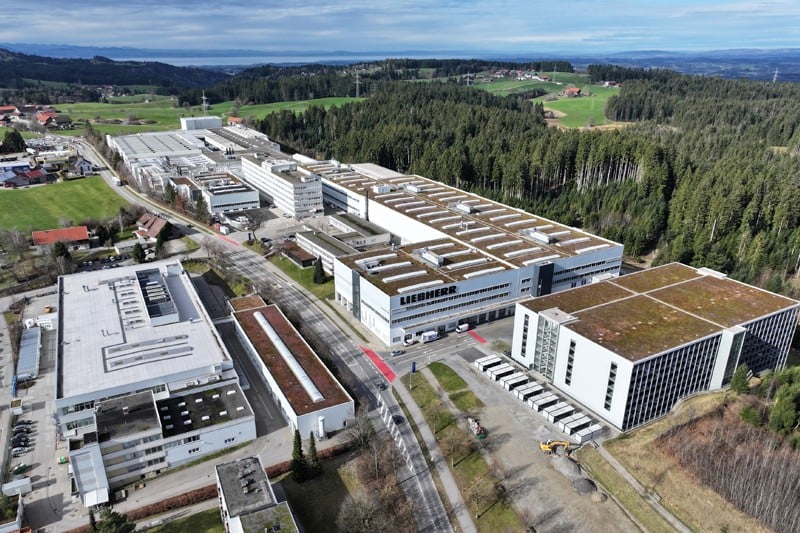
Liebherr-Aerospace is set to significantly expand its Lindenberg, Germany, site from 2026, reinforcing its capacity to meet growing demand across both production and aftermarket services in the aviation sector. The long-planned development reflects sustained market growth, particularly in maintenance, repair and overhaul (MRO) activities, as well as increasing requirements for advanced aircraft systems.
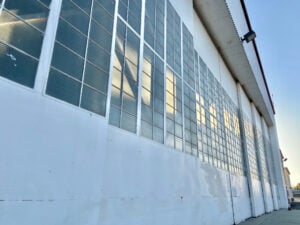
Central to the expansion is the enlargement of customer service and assembly areas by approximately 6,000 m². To accommodate this, the site’s oldest administration building will be demolished, making way for modernised facilities designed to support higher throughput and operational efficiency. The project also includes the extension of the employee restaurant, aligning workplace infrastructure with the anticipated increase in workforce and activity levels.
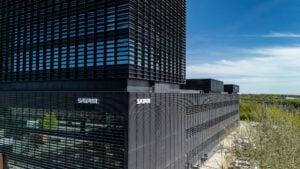
In parallel, Liebherr-Aerospace plans to construct a new office complex spanning around 10,000 m². This development is intended to provide long-term flexibility, enabling the company to adapt to evolving operational and staffing needs. As with all new Liebherr buildings, the project will incorporate advanced environmental standards, including heat recovery systems and green roofing equipped with photovoltaic installations, underlining the company’s commitment to sustainable production alongside more environmentally responsible aviation technologies.
A key driver behind the expansion is the expected ramp-up in MRO demand, particularly linked to the Airbus A350 programme. Liebherr-Aerospace is responsible for major systems on the aircraft, including the slat actuation system and the nose landing gear—the latter being the largest landing gear produced at the Lindenberg facility. As the global A350 fleet matures, demand for overhaul and servicing of these components is set to increase significantly, requiring additional space and specialised infrastructure.
Liebherr-Aerospace management highlighted the strong momentum across the aviation industry, noting that the expansion is a direct response to sustained customer demand and a robust order pipeline. The investment positions the company to support both current programmes and future growth while maintaining high standards of technical capability and service delivery.