
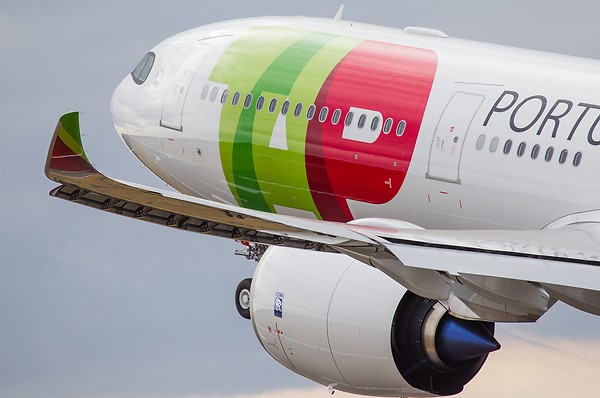
The long-anticipated privatisation process of TAP Air Portugal (TAP) has entered a decisive phase, as two of Europe’s largest airline groups—Air France–KLM and Lufthansa Group—have formally submitted non-binding offers for the Portuguese flag carrier. The development marks a significant step in the restructuring of Europe’s aviation landscape, with TAP positioned as a strategically valuable asset due to its transatlantic network and Lisbon hub.
TAP Air Portugal has long attracted attention from major airline groups owing to its strong presence on routes between Europe, Brazil, and North America. Lisbon’s geographic position as a western European gateway enhances the airline’s role as a connector between continents, particularly for traffic flows linking Europe with Latin America and parts of Africa.
Both Air France–KLM and Lufthansa have articulated clear strategic rationales for their interest. For Air France–KLM, the acquisition would strengthen its South Atlantic network, complementing existing operations through Paris Charles de Gaulle and Amsterdam Schiphol. Lufthansa Group, meanwhile, views TAP as a means to consolidate its footprint in southern Europe and expand its long-haul offering beyond its existing hubs in Frankfurt, Munich, Zurich, Vienna, and Brussels.
At this stage, the bids submitted are non-binding, meaning they serve as preliminary expressions of interest rather than final commitments. Such offers typically outline valuation ranges, strategic intentions, and initial integration concepts, while leaving room for detailed due diligence and negotiation.
The Portuguese government, which retains a controlling stake in TAP following its pandemic-era nationalisation, is expected to evaluate these proposals alongside broader considerations, including employment safeguards, national connectivity, and the preservation of Lisbon as a key aviation hub.
The sale of TAP is not merely a commercial transaction; it carries considerable political sensitivity. The airline is widely regarded as a national symbol and a critical component of Portugal’s tourism-driven economy. As such, the government has emphasised that any eventual agreement must align with national interests.
Key concerns include maintaining direct connections to Portuguese-speaking countries, particularly Brazil and former African colonies, as well as safeguarding jobs and operational bases within Portugal. These factors could influence both the selection of a preferred bidder and the final terms of any deal.
Following the submission of non-binding offers, the process is expected to move into a more detailed evaluation phase. Shortlisted bidders may be invited to submit binding offers after completing due diligence, with negotiations potentially extending over several months.
The timeline remains subject to political developments within Portugal, as well as broader market conditions affecting airline valuations and financing capacity.