
Troubleshooting: Precision, Pressure and Progress
There is one specific role associated with all aircraft mechanics (aircraft maintenance technicians / AMTs or licenced engineers) and that is to ensure flight safety. Beyond that, they are also responsible for operational continuity. It is a highly challenging role that comes with its own set of unique pressures, and one particularly unique aspect of aircraft mechanics is defect troubleshooting, in other words, the process of identifying, isolating, and rectifying faults across a wide range of mechanical, electrical, and electronic systems.
In order to meet such a challenge, mechanics need to have a wealth of training behind them, state-of-the-art tools, and a varying degree of experience, yet the high-stakes aspect of their work is subjected to the increasing complexity of modern aircraft, time pressures, data interpretation difficulties, and the interplay between human judgement and automated systems. In the following, we want to explore the key challenges facing aircraft mechanics when it specifically comes to defect troubleshooting.
The Complexity of Aircraft Systems
Modern commercial aircraft are extraordinarily complex machines. With integrated avionics, fly-by-wire controls, modular systems, and digital diagnostics, the boundaries between mechanical and electronic faults are becoming increasingly blurred. For example, mechanics have to contend with multiple interconnected systems where a defect in one area can manifest symptoms elsewhere, advanced composite structures and newer systems (e.g., electrical environmental control systems, B787’s no-bleed architecture) that require specialised knowledge, while not forgetting about varied aircraft types and configurations, especially within mixed-fleet airlines. In order to effectively troubleshoot problems in such an environment, mechanics need to have exceptional knowledge and understanding of specific aspects of an aircraft, access to volumes of comprehensive and detailed technical documentation, and critically, the skills to accurately interpret fault logic pathways.
Intermittent and Non-Reproducible Faults
Some faults that occur in an aircraft aren’t always frequent and, as a direct consequence, such instances can be difficult to reproduce when the aircraft are on the ground. Examples of such occurrences include electrical faults that only occur in flight due to vibration, pressure, or temperature, data bus interruptions that briefly trip warnings without leaving a trace, and cabin pressure fluctuations or ECAM/EICAS alerts with no apparent mechanical root cause. Consequently, mechanics must often rely on pilot reports, flight data logs, and fault history—all of which may be incomplete, vague, or inconclusive, while a “No Fault Found” (NFF) scenario is frustrating for technicians and also costly for operators. In such cases, mechanics must balance operational risk with engineering judgement, sometimes releasing aircraft under MEL (Minimum Equipment List) provisions until a more definitive solution can be found.
Limited Access and Troubleshooting Constraints
As many of you know, there are locations in an aircraft that are particularly difficult to access and as a direct consequence, this can make physical accessibility to some components a major challenge. The outcome can mean that it can take several hours of disassembly before a part can even be inspected or replaced. Such scenarios include wiring bundles behind sidewalls or overhead panels, fuel or hydraulic lines located in wings or centre tanks, and avionics equipment located in confined electronic bays. Beyond this, certain systems can only be effectively tested under certain conditions, i.e., pressurisation or airspeed, which means that ground-based troubleshooting can be less effective. Ultimately, mechanics will often have to make judgement calls based on incomplete access or simulated conditions that are as close to a real-life scenario as possible, sometimes being forced to rely on specialised ground support equipment (GSE) or test rigs.
Constant Pressure of Time and Turnaround
To say that airlines operate under very tight schedules would be an understatement and, as a consequence, mechanics are frequently under immense pressure to resolve defects quickly during limited ground time, particularly in turnarounds or overnight maintenance windows. What can be the result of such pressure? Deferred maintenance via an MEL, temporary fixes instead of full component replacements, and not forgetting increased stress, fatigue, and potential for oversight. Finding an acceptable balance between safety, compliance and on-time performance will always be a challenge, where maintenance control centres, line supervisors, and engineering departments need to collaborate closely to support mechanics.
Technical Documentation and Diagnostic Tools
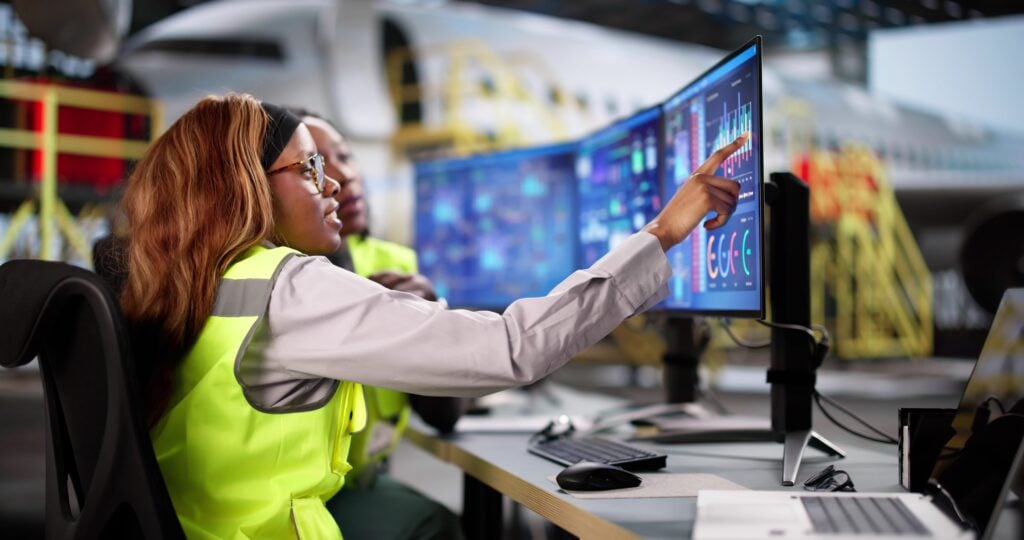
While the MRO sector is undergoing the transformation to becoming a more digitised environment, the legacy of older, paper-based documentation still remains. Thus, today’s aircraft are still supported by vast physical libraries of technical manuals, maintenance documents, and fault isolation procedures. However, problems can exist where fault isolation manuals (FIMs) and maintenance task cards can be overly rigid or based on ideal conditions, electronic troubleshooting tools (e.g. BITE test systems, CMCs) can often provide fault codes without context, and mechanics may struggle with information overload or inconsistent terminology between aircraft types and OEMs. Beyond this, certain digital tools require a level of system understanding that even experienced technicians may not possess without recent type-specific training.
Training and Skill Gaps
Aircraft systems are becoming more software driven and thus mechanics have to develop new hybrid skills to enable them to deal with current mechanical systems, digital signal interpretation, electrical and electronic diagnostics, and human factors and systems thinking. However, not all training programmes evolve at the same pace as technology, and as a direct result there are ongoing gaps in type-specific troubleshooting techniques (especially for new aircraft like the A350 or B787), the interpretation of digital fault data, and the practical application of OEM-provided maintenance tools. Therefore, continuous learning has become essential, but it is frequently underfunded or deprioritised in high-demand operational environments.
Communication and Human Factors
Where aircraft parts troubleshooting is concerned, this task is rarely a solo undertaking and more usually involves collaboration between engineers and pilots and flight crews who report anomalies, maintenance controllers and engineers who provide technical support, and inventory and logistics personnel for coordinating parts availability. However, breakdowns in communication—whether due to unclear pilot write-ups (PIREPs), jargon misunderstandings, or cultural/language differences—can have a negative effect on troubleshooting. Beyond this, human factors such as fatigue, workload, environmental conditions (heat, cold, noise), and even team dynamics can all influence the success of defect troubleshooting.
Emerging Technologies and Future Solutions
While it may seem that changes such as digitisation of records and the introduction of new materials all add to the knowledge and experience bank that top mechanics need, and therefore create additional pressures, there are also new tools that advanced technologies are developing that will make the life of an aircraft mechanic easier when it comes to troubleshooting activities. These include predictive maintenance platforms like Skywise, Boeing AnalytX, and Honeywell Forge which help to identify likely component failures before they occur, augmented reality (AR) headsets and mobile tablets offer mechanics real-time access to schematics and repair procedures, remote support technologies allow mechanics to consult OEM experts or engineers via video links while working on aircraft, and AI-enhanced diagnostic tools which are being trialled to interpret fault codes and propose likely root causes, especially for repeated or ambiguous defects.
To conclude
Aircraft defect troubleshooting is a blend of science, art, and experience. Mechanics must balance technical precision with operational urgency, and individual judgement with system-based guidance. Thus, as aircraft continue to evolve, so too must the skills, tools, and support structures available to those responsible for their upkeep. The challenges are significant—ranging from intermittent faults and system complexity to time pressure and training gaps—but so are the opportunities. However, with the right investment in technology, human capital, and cross-functional collaboration, the future of aircraft defect troubleshooting promises to be more proactive, intelligent, and efficient than ever before.