
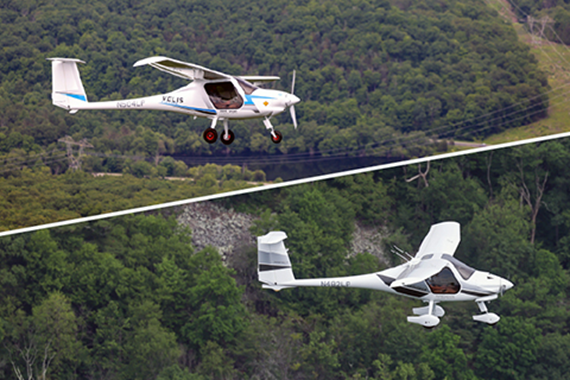
Pipistrel, a Textron Inc. company, has received type-certificate validation from Transport Canada for its current production models: the Pipistrel Explorer, Velis Club and Velis Electro. The milestone clears the way for Canadian operators to purchase and fly these aircraft, unlocking new opportunities for flight schools to integrate cutting-edge, efficient platforms into their training programmes. The decision is expected to accelerate the adoption of cleaner, quieter and more advanced training aircraft across the country.
The Velis Electro, the all-electric aircraft, sits at the centre of this development. Offering a lower-cost, zero-emissions solution for early-stage pilot training, it produces just 60 decibels—significantly quieter than traditional piston aircraft. Its simplicity, modern avionics suite and environmentally responsible profile make it an appealing option for flight schools seeking to reduce noise impact and operational emissions. The Velis Electro secured EASA type certification in 2020, followed by UK CAA approval in 2022 and an FAA LSA airworthiness exemption in 2024. Also in 2024, its electric engine became the first of its kind to achieve type-certification validation in Canada, marking an important breakthrough for electric aviation.
Pipistrel delivered its first Velis Electro to Canada in 2022. The aircraft was acquired by the Waterloo Institute for Sustainable Aeronautics (WISA) at the University of Waterloo and its partner, the Waterloo Wellington Flight Centre (WWFC). Since then, both organisations have used the aircraft to advance research into battery-powered flight, including operational feasibility, training applications and future infrastructure requirements.
Alongside the Velis Electro, the Pipistrel Explorer brings strong performance characteristics for operators working in diverse and challenging environments. Designed for efficiency, the Explorer requires minimal power while offering reliable capability across a wide range of temperatures and altitudes. It is approved for both day and night VFR operations, can perform intentional spins and is equipped with an IFR-ready avionics suite—features that enhance its suitability for advanced training and remote flying. The original Explorer model, the Virus SW 121, received type certification in 2016, while the updated Pipistrel Explorer (Virus SW 121A) achieved EASA certification in 2021.
Together, the validated aircraft position Pipistrel to play a growing role in Canada’s evolving training landscape, particularly as the industry embraces cleaner propulsion technologies and more efficient platforms for developing the next generation of pilots.