
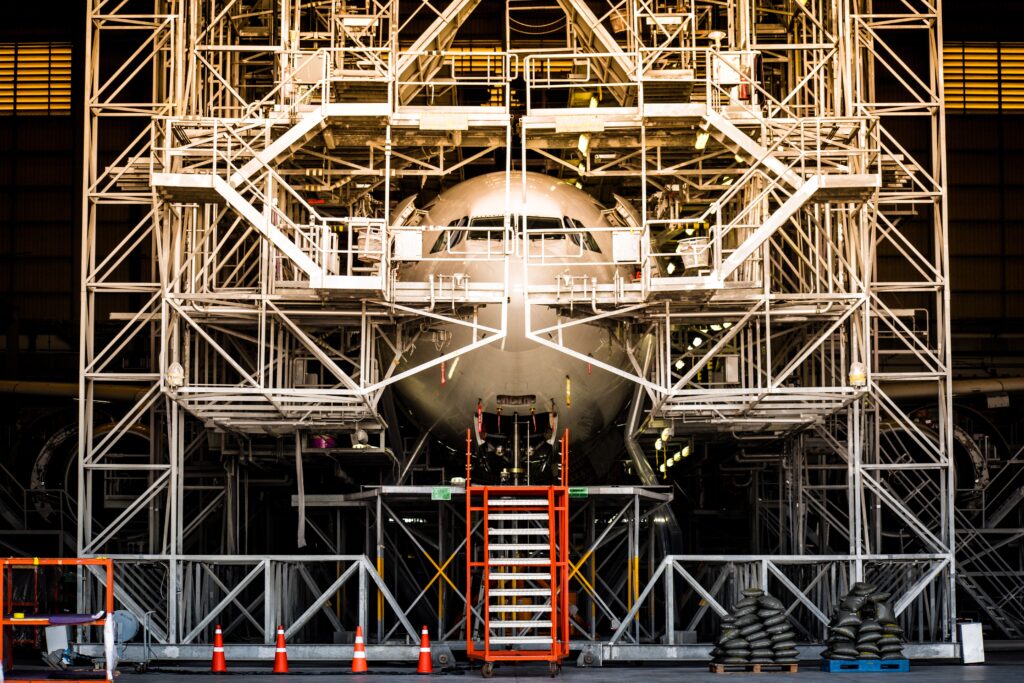
There is no question that in the field of MRO, aircraft maintenance checks present an opportunity to streamline processes in order to both reduce costs and also time aircraft spend on the ground. Add questions surrounding scheduling and availability of parts through the seemingly constant bugbear of supply chain problems, and all of a sudden these checks, and especially C- and D-checks require the same degree of choreography as a performance of Swan Lake!
When it comes to cost efficiencies, it is appreciably more difficult to make major savings on A- and B-checks when compared to heavy checks, and that is as a consequence of their nature and the time involved. Admittedly A-and B-checks are carried out appreciably more frequently than their bigger relatives, but even then the total hours throughout the lifetime of an aircraft still don’t come close when you consider an A-check usually takes, say, around 50 man hours and is performed roughly every 500 flight hours. Even a B-check only takes 160-180 man hours and is carried out every six to eight months. A D-check, on the other hand, may be performed just once every six to ten years, but it will consume over 50,000 man hours and will likely last for around a two-month period.
Logically, there are going to be more opportunities for significant cost savings for heavy checks, so we decided to delve deeper into the field of C- and D-checks. In particular, we wanted to explore the areas of cost drivers, operational strategies and also today’s hot topic of AI, and what effects they can have on heavy maintenance. We are grateful to AMROS Global, FL Technics, Vallair and VAS Aero Services for their invaluable input.
The main cost drivers during a typical C- or D-check?
Unlike components or engines, where material often represents more than 70% of the total invoice, our contributors all agree that base maintenance primarily involves highly skilled labour. According to Pascal Parant, Chief Commercial & Marketing Officer, Vallair Group, this is “ …typically split between: B1 Licensed Aircraft Maintenance Technicians who are responsible for the mechanical and structural aspects of the aircraft: airframe, engines, landing gear, fuel systems, hydraulics, and pneumatics. They perform inspections, troubleshooting, repairs, replace components, and certify the aircraft for return to service for mechanical systems; B2 Licensed Aircraft Maintenance Technicians who are specialised in avionics and electrical systems. They work on navigation, communication, flight management, autopilot, electrical power systems, and related troubleshooting and testing. They certify the aircraft for return to service for avionics and electrical systems, and sheet metal / composite technicians, who handle structural repairs, corrosion treatment, and repairs on skins and frames.” Parant adds that in addition to direct labour costs, engineering hours are also incurred when faults are found during the check such as corrosion, dents, cracks, etc. while also pointing out that there are, of course, materials involved, but those generally represent a minor part of the final invoice. “We must also consider hangar fees. Vallair’s large hangars – capable of accommodating aircraft worth several hundred millions of dollars -are extremely expensive to operate. Hangar fees are charged in addition to labour. In case of “zero-stress” waiting periods (e.g. waiting for OEM repair instructions), technicians cannot work, but the aircraft still occupies the hangar. Hangar fees help offset the financial impact of these non-productive periods,” he concludes
Juozas Lapeika, Deputy CEO for Base Maintenance at FL Technics advises that: “On the surface – the main cost drivers during a typical C- or D-check include man hours (labour costs), materials, and spare parts, encompassing the replacement of consumables, rotables, and expendables. In addition, non-routine findings – such as defects or unplanned repairs – can substantially increase total maintenance costs.” However, he also points out that: “ …if we dig deeper – delays in material deliveries, OEM responsiveness, and problematic repairs can extend the turnaround time (TAT), leading to higher indirect costs for both MROs and airlines. Low workload periods during maintenance, often caused by such delays, further contribute to overall cost escalation.” Giovanni Renga, Chief Technical Officer at AMROS Global sees additional problems beyond the obvious, pointing out that: “On well-maintained aircraft, an additional 10–20% of costs typically arise from findings discovered during routine checks once the aircraft is accessed. For poorly maintained or older aircraft, this can increase significantly — it’s not uncommon to see even 100% of the routine labour in NRCs! In addition, if the aircraft requires repainting or a cabin refurbishment, these elements can quickly add considerable expense. Even minor cabin brush-up activities tend to accumulate costs once combined with the labour hours and material they require.”
Kevin Ferreiro, Sr. Director Business Development, VAS Aero Services, LLC suggests that “The main cost drivers during a typical aircraft C- or D-check include labour, replacement components and piece parts. Ongoing market pressures for parts supply chain and labour availability are negatively impacting the scheduling and performance of these major maintenance checks. Specialised inspections, structural repairs, and system overhauls require skilled technicians and precise tools. Regulatory compliance and certification processes also add time and cost. And the extended aircraft downtime required is increasing indirect costs, such as lost revenue and hangar fees. These factors make C- and D-checks the most resource-intensive and financially significant events in an aircraft’s maintenance lifecycle.” He concludes that: “Efficient planning and resource management are essential to controlling these costs.”
The criticality of long-term maintenance planning in controlling costs during heavy checks
“Long-term maintenance planning is absolutely essential for keeping heavy check costs under control,” says Giovanni Renga. “A solid and accurate mid- and long-term plan helps prevent a range of unforeseen actions once the aircraft enters the hangar. Effective planning means you can avoid last-minute AOG material orders, ensure the maintenance slot runs as scheduled, and prevent additional operating costs that might arise from delays, such as flight cancellations, schedule disruptions, or ACMI wet lease aircraft resulting in revenue loss.” He then advises us further that: “Experience plays a big factor — knowing what the physical processes of aircraft maintenance look like helps a planner to determine what makes sense to include in a work package, and save time and costs. Mere scheduling may not provide the desired outcome, as it often lacks experience values such as those described above that can generate cost savings.” In relation to planning, Juozas Lapeika likes to adopt a proactive approach: “If MROs know in advance which aircraft and work packages (WPs) will be delivered, and have access to a statistical database, they can prepare by preloading critical materials and adjust milestone plans to perform inspections as soon as possible in zones that are statistically identified as potential bottlenecks. This proactive approach helps to reduce turnaround times (TATs) and control overall maintenance costs. Additionally, low workload periods can be effectively utilized for supplementary activities such as aircraft painting, storage and periodic checks, or minor modifications for other customers, ensuring continuous productivity and optimized resource use throughout the maintenance cycle,” he says.
Pascal Parant suggests that: “Securing the right slot at the right time is essential. Base MROs, like Vallair, operate much like airlines: during peak seasons, prices are higher, and more competitive during low demand periods. Airlines that can schedule heavy checks during traditionally quieter periods usually obtain better pricing. He sees long-term planning ahead as a means of combatting supply chain problems, advising that it: “… is also critical due to ongoing supply chain constraints and long lead times. Pre-ordering parts before the aircraft enters the hangar can reduce TAT and avoid AOG or stop-work delays. If the airline has several aircraft scheduled for maintenance back-to-back, there is also a volume effect, which can reduce costs since most procured parts have a higher chance of being used across multiple checks.” To round off this section, Kevin Ferreiro helpfully suggests ways of reducing labour costs, pointing out that: “By forecasting maintenance needs in advance, airlines can optimize scheduling, staffing, resource allocation, and parts procurement, thereby reducing downtime and labour expenses. Strategic planning also involves combining inspections, repairs, and upgrades to minimize disruptions, and includes close collaboration with parts supply and repair partners, such as VAS Aero Services, to assure ready availability of parts and specialty repair services. In contrast, poor planning inevitably leads to delays, part shortages, and higher costs.”
Operational strategies or process changes which have proven most effective in reducing turnaround time and costs
The most effective strategies for reducing turnaround time (TAT) and controlling costs are centred on strong teamwork, proactive planning, and effective communication. Close cooperation with the client and predictive preloading of materials are key factors in ensuring smooth workflow and minimising delays. However, beyond this, Juozas Lapeika makes it clear that: “In addition, prioritising critical inspections and maintaining proactive communication with OEMs, even before structural damage evaluations, are essential for avoiding unnecessary downtime. A deep understanding of nacelle component repairs and familiarity with previous OEM repair proposals also play an important role. Ensuring that repair materials are available in stock, even those with short shelf life, helps MROs respond quickly to findings and maintain schedule efficiency.” Pascal Parant sees the key area of manpower as critical to success, and forward planning in this area vital to future operations. He explains: “Running two shifts, six days a week requires many skilled technicians, but the industry currently faces a global shortage. Estimates suggest over 700,000 new maintenance technicians will be needed globally over the next 10–15 years. However, becoming fully proficient takes time: around three years of study, five years to be autonomous, and seven years to become highly skilled. Therefore, one of the most effective improvements is to develop integrated training academies to train the next generation which we are doing at Vallair. Increasing workforce availability allows more shift rotations, improves TAT, and ultimately returns aircraft to revenue service sooner — even if the MRO labour line item appears higher.
As is a continual theme throughout, planning well in advance in order to mitigate supply-chain problems is relevant here as well, as Giovanni Renga advises. “Accurate mid- and long-term maintenance planning is key to maintaining control over both cost and timing. Another important factor is the early definition of materials required for specific cabin tasks, such as brush-ups, relining, or carpet replacements, as well as for major component changes, including landing gears, heat exchangers, and fuel or oil coolers — parts not easy to get!” Beyond this, he also suggests that: “In addition, regular aircraft and cabin condition checks before the maintenance slot allow long lead-time parts to be ordered in advance and manpower to be planned precisely. Together, these measures help avoid unforeseen expenses and ensure on-time completion of heavy checks, which is crucial for revenue generation.” To finish off this section, Kevin Ferreiro focuses on operational strategies, especially those “…that effectively reduce aircraft maintenance turnaround time and costs, focusing on efficiency, planning, and technology. Lean maintenance principles streamline workflows and eliminate bottlenecks, while predictive maintenance using real-time data prevents unplanned repairs. Standardised procedures, modular component replacement, and cross-skilled technicians enhance flexibility and speed. Integrated scheduling and supply chain coordination ensure timely parts availability. Therefore, third-party parts supply and repair partners such as VAS Aero Services also play a key role in controlling costs. Together, these process improvements minimise downtime, optimise labour and resources, and deliver significant cost savings while maintaining high operational reliability.”
How digitalisation—such as using AI, digital twins, or maintenance software— is changing the economics of heavy checks
Digitalisation is reshaping the economics of aircraft maintenance heavy checks by enabling predictive, data-driven operations. AI and digital twins help detect potential issues early, reducing unplanned repairs, parts procurement delays and downtime. Maintenance software enhances planning, inventory management, and workforce utilisation, improving efficiency and resource use. Additionally, as Kevin Ferreiro tells us, “Digital integration with parts vendors like VAS Aero Services enhances parts availability status, limiting out-of-stock delays and reducing down time. These technologies transform maintenance from reactive to proactive, lowering labour and material costs, extending asset life, and significantly improving cost predictability and operational reliability across the maintenance lifecycle.” However, Juozas Lapeika at FL Technics makes it clear it is not all plain sailing at the moment, explaining that: “Currently, the lack of real-time online data is the main challenge preventing AI, digital twins, and other digital tools from delivering their full value. However, the future is promising, as data availability and system integration are improving rapidly. These technologies are expected to transform maintenance economics by enabling predictive planning, reducing non-routine work, and lowering turnaround times and overall costs.”
At AMROS Global, Giovanni Renga sees digitisation not just increasing efficiency, but also a means to improve process coordination and optimisation. “With adequate software-based check planning, both coordination and efficiency of maintenance processes can be significantly improved. Digitalisation helps synchronise multiple jobs that depend on the same aircraft condition: for instance, when the aircraft is on jacks, fuel tanks are defueled, engines are running or shut down, and electrical or hydraulic power is off. Performing these activities in coordinated blocks avoids repeated setups and saves considerable time. Digital tools also enable better process coordination and optimisation. For example, by grouping all tests that require the same conditions, such as pre-input and post-check tests, they can be executed together and then removed from the AMM sequence. Furthermore, digitalisation supports job coordination, such as aligning planning or adding IDG oil cooler cleaning with engine shop visits, or combining landing gear swing tests, freefall checks, and locking mechanism verifications. Lastly, records digitalisation can help swiftly identify maintenance documentation errors and inconsistency – often a mere afterthought that can lead to heavy financial impact,” he explains. Finally, at Vallair, Pascal Parant succinctly tells us that: “These technologies increase speed, traceability, safety, and efficiency. However, adoption is progressive and cost remains a barrier. A few years ago, an inspection drone could cost over US$1 million, but prices are decreasing. The challenge is the rapid obsolescence cycle: technology evolves faster than amortisation periods, which may pressure financial structures.”
Potential for measurable savings through adopting paperless documentation or real-time progress tracking systems
Kevin Ferreiro and Pascal Parant are both adamant and crystal clear when it comes to creating critical savings. Ferreiro explains that: “… adopting paperless documentation and real-time progress tracking systems generates measurable savings in aircraft maintenance. Digital tools reduce printing, storage, and administrative costs while minimizing human error and delays. Real-time tracking improves task visibility, enabling faster decision-making, better resource allocation, and reduced turnaround times. These systems also streamline regulatory compliance and record-keeping, enhancing accuracy and traceability, and the quality of documentation. Digital tools also allow for integration with third-party vendors like VAS Aero Services, enabling streamlined parts procurement and specialty repair scheduling. Overall, digital maintenance management significantly boosts efficiency, lowers operational costs, and improves aircraft availability and reliability.” Parant is very succinct as he advises that: “Paperless systems enable real-time progress monitoring, augmented reality or video-supported task guidance, faster invoicing and documentation closure, better visibility on tasks that risk delaying TATs. However, implementation costs are significant, and not all MROs can transition immediately. But within three to five years, Vallair believes, digital documentation will likely become standard practice across the industry.” Giovanni Renga is equally concise, as he point out that: “Going paperless reduces printing, scanning, and paper costs, while also saving time through faster information access and fewer administrative tasks. In some cases, it can reduce headcount needs, making the entire process leaner and more cost-efficient.”
Juozas Lapeika sees the greatest potential for savings is when it comes to turnaround time. He explains that: “… there are measurable savings from implementing paperless documentation and real-time progress tracking systems. The main benefit is a reduction in turnaround time (TAT), driven by faster information flow and improved task coordination. This is closely followed by lower consumption of paper, printing, and recycling resources, contributing to both cost efficiency and environmental sustainability. However, these benefits are fully realised only when the digital documentation process is designed to be more efficient than traditional paper-based methods and does not add administrative complexity or additional time to daily operations.”
If you could change one aspect of the heavy check process to improve cost efficiency, what would it be?
We thought this the best question to ask as we bring this topic to a close, and the answers we received showed us just what a dynamic and fluid environment the MRO sector has to be in order to adjust to ever-changing requirements, supply chain pressures and advancements in materials and technology. As Juozas Lapeika tells us: “From an MRO perspective, one of the most impactful improvements would be for airlines to maintain larger stocks of spare parts. While this requires significant investment, having a broader and better-managed parts inventory – along with reduced fleet type variety would greatly enhance efficiency across the market. Ryanair serves as a good example of how such an approach contributes to highly efficient heavy maintenance operations. Ideally, the OEMs should also play a greater role in improving supply chain efficiency. In a perfect scenario, repair instructions would be issued within 24 hours, accompanied by immediately available part numbers (P/Ns) from OEM stock for next-day delivery. Currently, delayed repair instructions and unavailable or obsolete part numbers often cause significant inefficiencies. Streamlining these OEM processes would substantially reduce turnaround time (TAT) and improve cost efficiency for both airlines and MROs.” Over at AMROS Global, Giovanni Renga chooses different areas for improvement, pointing out that: “Improving maintenance planning would have the greatest impact on cost efficiency. Involving experienced maintenance professionals who understand the inspection process first-hand significantly enhances planning accuracy and reduces ground time. Establishing a dedicated planning project manager, defining cabin standards, and introducing aircraft condition checks before major visits help optimise preparation and parts lead times. A JPM helps establish clear documentation and communication standards agreed between the MRO, CAMO, ground time manager, and technical records, including data quality, job card content, quality requirements, cost handling, and acceptance checklists to ensure alignment and transparency. Furthermore, clear onsite role assignments, together with structured kick-off and debrief meetings, support consistency and continuous improvement throughout the entire heavy check process. Lastly, never forget the invoice review, where substantial cost savings can be achieved – trust is good, but control is better in such costly endeavours.”
Where Kevin Ferreiro is concerned, he has his eyes focused on the one key area, sharing with us that: “If one aspect of the aircraft maintenance heavy check process could be changed to improve cost efficiency, it would be adopting predictive, data-driven maintenance planning. By using real-time aircraft health monitoring and analytics, maintenance teams can better anticipate component failures, schedule work more efficiently, and reduce unnecessary inspections. Our experience at VAS Aero Services has been that when we’re incorporated into this planning, we become an integral part of the process, delivering critical parts and repair services wherever and whenever needed. Without a doubt, predictive planning minimizes downtime, optimises labour and parts usage, and transforms heavy checks into proactive, cost-effective operations that enhance both reliability and overall fleet efficiency.” And to draw this topic to a close, we leave it to Pascal Parant to provide another concise insight as he suggests he would “ … create a full-airframe scanner capable of identifying corrosion, structural issues, and impact repairs months before the check, allowing optimal planning and provisioning. I would also deploy robotic assistants, like a fleet of R2-D2-style support units, to assist technicians.”