
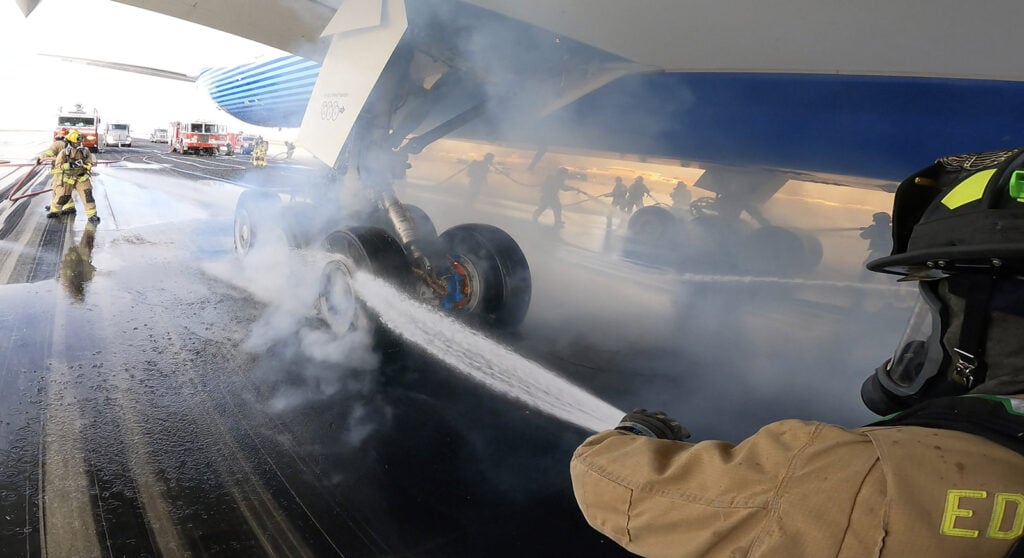
Boeing’s 777-9 programme has completed a critical maximum brake energy test at Edwards Air Force Base, simulating one of the most demanding scenarios the aircraft could encounter. As part of certification requirements, the aircraft was loaded to its maximum take-off weight and accelerated to around 190 knots before pilots aborted the take-off and relied solely on braking to bring it to a halt, without the use of thrust reversers.
The test is deliberately designed as a worst-case scenario, using brakes that have been machined to represent fully worn conditions. Under these extreme parameters, the braking system generated over a billion foot-pounds of torque, with temperatures exceeding 2,500 degrees Fahrenheit. The intense heat caused the wheels’ fuse plugs to melt, safely releasing air pressure from the tyres as intended in such conditions.
Although such circumstances would not occur in normal airline operations, they are mandated under certification standards to ensure safety margins are robust. Emergency crews were positioned on standby but delayed intervention for five minutes to replicate real-world response conditions before cooling the brakes and wheels.
This test forms part of the broader certification campaign conducted by Boeing and the U.S. Federal Aviation Administration to validate the aircraft’s safety, reliability and performance. Programme officials emphasised that extensive testing has been carried out across all systems, with teams working collaboratively to meet stringent regulatory requirement.