
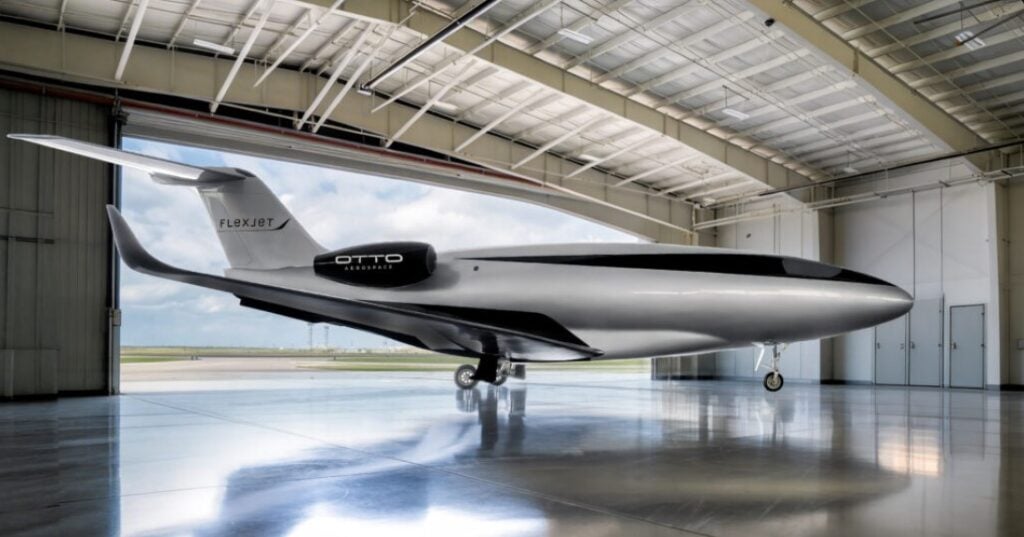
Otto Aerospace has joined forces with Austrian interior specialist F/LIST to create the cabin for its Phantom 3500, a next-generation business jet designed to dramatically cut fuel consumption while redefining the passenger experience. The clean-sheet aircraft is being developed around advanced laminar-flow aerodynamics and precision-built carbon-fibre composites, enabling a claimed 61% reduction in fuel burn compared with current super-midsize business jets.
Under the partnership, F/LIST will oversee the development and production of the Phantom 3500’s interior furniture and cabin linings. Unlike conventional aircraft programmes, where suppliers are typically engaged after key design decisions are made, Otto has brought F/LIST into the process from the outset. The companies will jointly define cabin requirements during the earliest engineering stages, allowing the interior to be fully integrated into the aircraft’s architecture rather than adapted later.
Otto Aerospace says this collaborative approach opens the door to significant efficiency gains. By designing the cabin alongside the aircraft’s structure and systems, engineers can reduce weight, optimise space and create a more cohesive passenger environment. Olivier Capistran, Principal Engineer for Interiors, Furnishings and Equipment at Otto Aerospace, said the Phantom’s clean-sheet design removes the limitations imposed by legacy layouts, enabling the cabin experience to reflect the aircraft’s broader focus on performance and efficiency.
F/LIST will also bring its expertise in advanced composite construction and sustainable material development to the programme. Through its in-house innovation centre, F/LAB, the company plans to explore bespoke concepts and bio-based materials tailored specifically for the Phantom 3500. Anita Gradwohl, Group Director Customer Relations & Sales at F/LIST, said the collaboration offers an opportunity to shape the interiors of future aircraft while balancing structural, aesthetic and environmental requirements.
A central feature of the Phantom 3500 cabin will be Otto’s proprietary SuperNatural Vision™ technology. Developed internally, the system replaces traditional windows with ultra-wide digital passenger displays designed to provide glare-free, colour-enhanced panoramic views. Otto says the technology will be lighter, quieter, safer and more energy efficient than conventional aircraft windows currently on the market.
The Phantom 3500 remains in development, with a first flight targeted for 2027 and entry into service planned for 2030.