
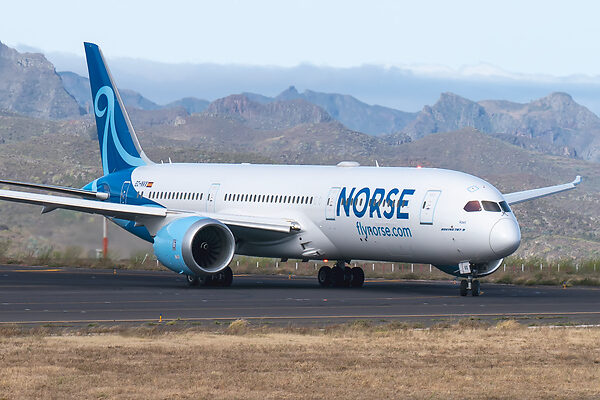
Norse Atlantic ASA (Norse) has reported a strong start to 2026, posting a 66% year-on-year rise in first-quarter revenue to US$160 million as demand for direct long-haul travel continued to grow.
The airline said performance was driven by robust commercial momentum, record unit revenue and a 99% load factor, supported by strong customer demand, its onboard product and operational improvements. Norse also achieved a positive EBITDAR of US$5.8 million during the quarter — traditionally the weakest period for airlines — which the company described as a significant milestone.
Central to the improved results was Norse’s dual business model combining scheduled passenger operations with ACMI and charter services. The airline said its own network moved closer to profitability, with unit revenue increasing 34% year-on-year and unit costs falling by 5%, helped by route optimisation and capacity adjustments.
At the same time, the ACMI and charter division generated US$16 million in EBITDAR and now accounts for around half of the fleet under long-term contracts. Norse said this provides greater earnings stability while reducing exposure to volatile fuel prices.
The airline warned, however, that escalating conflict in the Middle East from late February triggered a sharp increase in fuel prices and disrupted global travel patterns. In response, Norse rapidly redeployed capacity, including adding services between London Gatwick and Bangkok, while continuing to focus on point-to-point long-haul routes rather than traditional hub connections.
Norse said its Boeing 787 Dreamliner fleet offers a structural advantage through fuel consumption around 25% lower than older long-haul aircraft types. Improvements in operational reliability and punctuality have also begun to deliver positive results.
Following the quarter, the airline launched a fully underwritten US$110 million rights issue aimed at strengthening liquidity and resilience during the current high-fuel-cost environment. Norse is also accelerating its Project Falcon restructuring programme, which is expected to simplify operations and reduce annual costs by up to US$50 million.
In addition, the company confirmed it has appointed an international investment bank to conduct a strategic review in response to interest from potential partners. Options under consideration include a merger, partnership or potential sale of the business.