US air travel suffered one of its worst disruptions in years over the weekend after a technical failure in the Federal Aviation Administration‘s (FAA) air traffic control network forced a nationwide ground stop, triggering thousands of flight cancellations and delays. While operations were gradually returning to normal on Sunday, investigators were still trying to establish the precise cause of the failure.
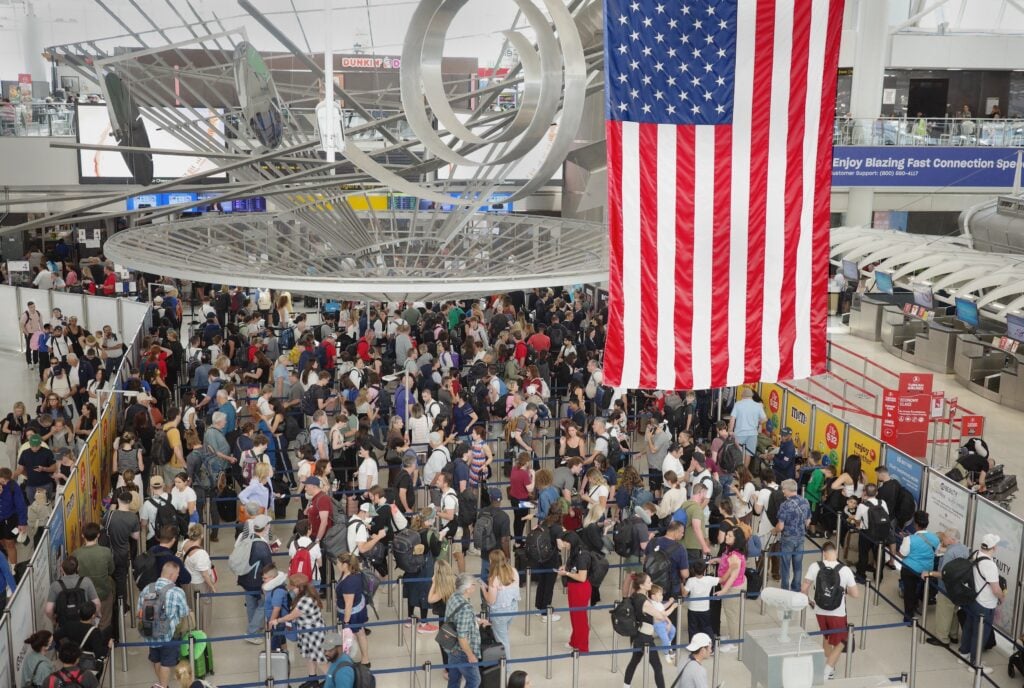
The disruption began on Friday, November 13, when the FAA ordered a nationwide halt to departures for more than four hours following problems with its air traffic control communications system. The unprecedented measure affected airports across the country, including major hubs in Chicago, Atlanta, Dallas-Fort Worth, New York and Los Angeles.
According to Transportation Secretary Sean Duffy, the incident occurred during routine maintenance work by government contractor L3Harris Technologies, which was replacing ageing copper telecommunications cables with fibre-optic connections at FAA facilities in Arkansas and Texas.
A router involved in the upgrade reportedly generated an excessive volume of connection attempts, overwhelming parts of the network and causing intermittent disruptions to radar feeds and communications between air traffic controllers and aircraft.
The FAA ordered the ground stop as a precaution because the system could no longer reliably support the monitoring and separation of aircraft. Officials confirmed that all aircraft already airborne landed safely.
However, lifting the restriction did little to restore normal operations immediately. Aircraft and crews were left out of position, while airlines struggled to reorganise schedules, arrange replacement crews and accommodate stranded passengers. Thousands of additional cancellations and delays followed on Saturday and Sunday, with disruption also affecting international services to and from the United States.
The search for answers
Although officials have identified the network and router problems as the immediate trigger, the precise technical cause remains under investigation. Authorities are examining whether faulty equipment, installation problems or human error were responsible.
L3Harris is assisting the investigation, while the affected equipment is undergoing technical examination. Hewlett Packard Enterprise, which owns router manufacturer Juniper Networks, said the equipment had operated according to its installed configuration.
Officials have ruled out any current evidence of a cyberattack, sabotage or an artificial intelligence-related failure.
The incident has nevertheless reignited concerns about the age and reliability of America’s air traffic control infrastructure. Much of the system relies on legacy technology that has been subject to years of criticism over maintenance requirements, staffing shortages and delayed modernisation.
Duffy has called for more than US$50 billion in investment to overhaul the country’s air traffic control network, arguing that the incident demonstrates the need to accelerate modernisation.
The political debate has also intensified, with lawmakers questioning both the state of the existing infrastructure and the use of funding already approved for upgrades.
By Sunday evening, the situation was improving, although more than 11,500 flights had still been cancelled or delayed during the day. Officials expected operations to return largely to normal by Monday.
The immediate crisis may be easing, but the questions surrounding the reliability of the US air traffic control system, the maintenance work and the contractor’s responsibilities remain unanswered.