
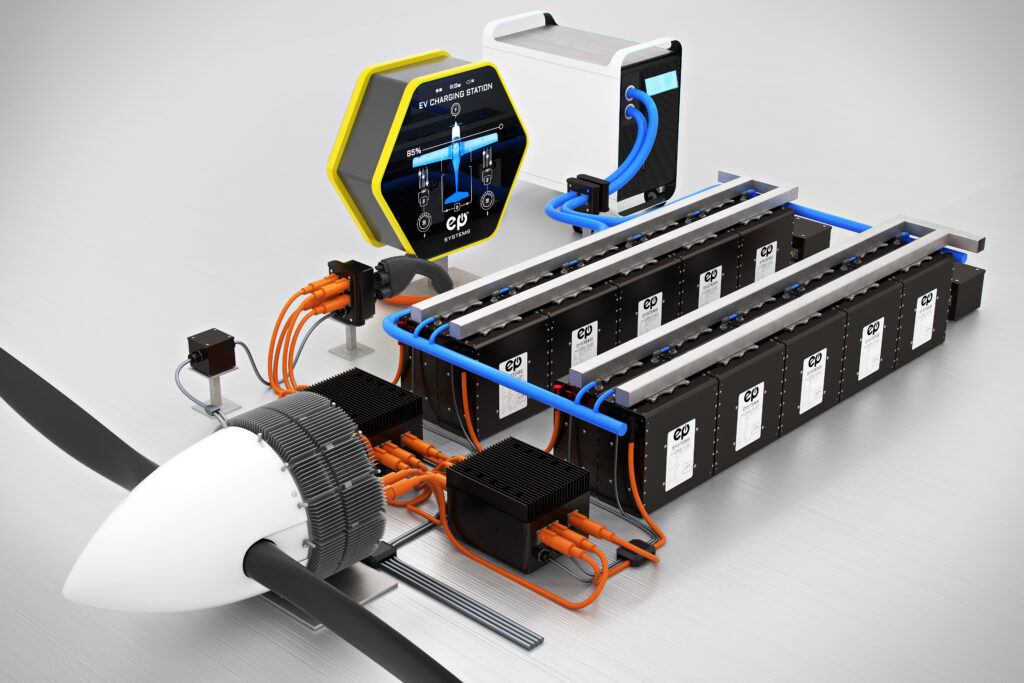
United Airlines (United) has made an investment in Electric Power Systems (EPS), a company producing battery technology that can potentially be used for a broad suite of aerospace applications. Rather than producing battery cells, the company’s compatible module technology can be adapted to support a variety of batteries, optimising performance and safety. The versatility of the technology could allow United to consider EPS’s modules for a number of near-term applications, and as part of its longer-term operations that support decarbonisation. This is United’s second investment in electric battery technology, after sodium-ion battery-maker Natron.
“Typically, we’ve had a clear vision of how to integrate sustainability investments into our operations. What makes EPS’s technology different and exciting is the scope of operational possibilities where we have the option to deploy it today and, in the future, to help electrify and decarbonize our operations,” said United Airlines Ventures President Michael Leskinen. “United’s best roadmap to reaching net zero carbon emissions by 2050, without relying on traditional carbon offsets, is by using every tool at our disposal – that includes the potential use of EPS’s impressive portfolio of electric aircraft powertrain solutions, including high-performance power electronics, and energy storage systems.”
EPS aims to provide a whole battery “ecosystem” for aviation, from the packs on aircraft to charging stations on the ground. This in turn is designed to keep costs low and provide rapid charges without degrading the life of the battery. Key to the entire proposition of electric aviation is designing a battery that can store a high amount of energy with as little weight as possible. If a battery is too heavy, it makes an aircraft uneconomic compared to conventional fossil fuel-powered planes.
“We are excited to collaborate with United Airlines Ventures as we continue to advance electric aviation technology,” said Nathan Millecam, CEO of Electric Power Systems. “United’s investment will enable us to scale our operations and expedite the development of our cutting-edge powertrain solutions. By working together, our aim is to revolutionise air travel and build a more sustainable future for the industry.”
United is exploring options to move its pilot training academy, Aviate®, away from internal combustion-powered training aircraft to electric ones. EPS’s powertrain could serve as the core propulsion system for a family of future electric aircraft concepts, starting with an electric trainer and scaling to larger variants as technology advances.