
How the development of aircraft maintenance training and the introduction of modern training technologies is helping to address the scarcity of maintenance technicians.
By Mario Pierobon
The effectiveness of aircraft maintenance training is of paramount importance in the current business landscape characterised by a scarcity of technicians and the retirement of baby boomers. Effectively implementing aircraft maintenance training requires a structured approach and process. In this feature, we have reached out to industry experts to define best practices for aircraft maintenance training development, the impact of developing training technologies, and strategies to make aircraft maintenance training appealing to future generations of professionals.
Best practices for training development
Aircraft maintenance is precise engineering, and it is a highly technical and vital aspect of the aviation industry. It is guided by regulations, standards, quality assurance requirements and partnerships with original equipment manufacturers (OEMs) and other vendors within the industry, observes Emirates Engineering. “Training in aircraft maintenance, therefore, needs to be equally stringent to ensure these standards and regulations are adhered to. Aircraft types, technologies and various technical aspects are also constantly changing or being updated, so it is absolutely critical that training keeps pace with these changes to ensure it develops talent the right way, aircraft remain safe, and aviation continues to be a solid industry with a great reputation”.
Aircraft maintenance training provides the technical skills within the regulatory frameworks, and it is complex as it needs to meet the objectives of the engineering teams, the vision of the airlines, requirements set by regulatory frameworks, and the ambitions of the countries where airlines are based, affirms Emirates Engineering. “We stringently follow regulations laid down by the UAE’s General Civil Aviation Authority (GCAA). Our basic aircraft maintenance engineering licencing (AMEL) training programme for UAE Nationals is approved by the UAE-GCAA and all the accompanying material is based on its regulations”.
The timeframe to perform all necessary tasks during standard line maintenance for basic aircraft maintenance training is, on average, approximately two years, observes Lufthansa Technik. “To get this on-the-job training (OJT) done, we have developed a programme that is approved by the German Aviation Authority whereby the participants, in less than two months, perform all necessary tasks, in the correct mixture of ATA chapters, depth of work and number of tasks to fulfil the requirements”.
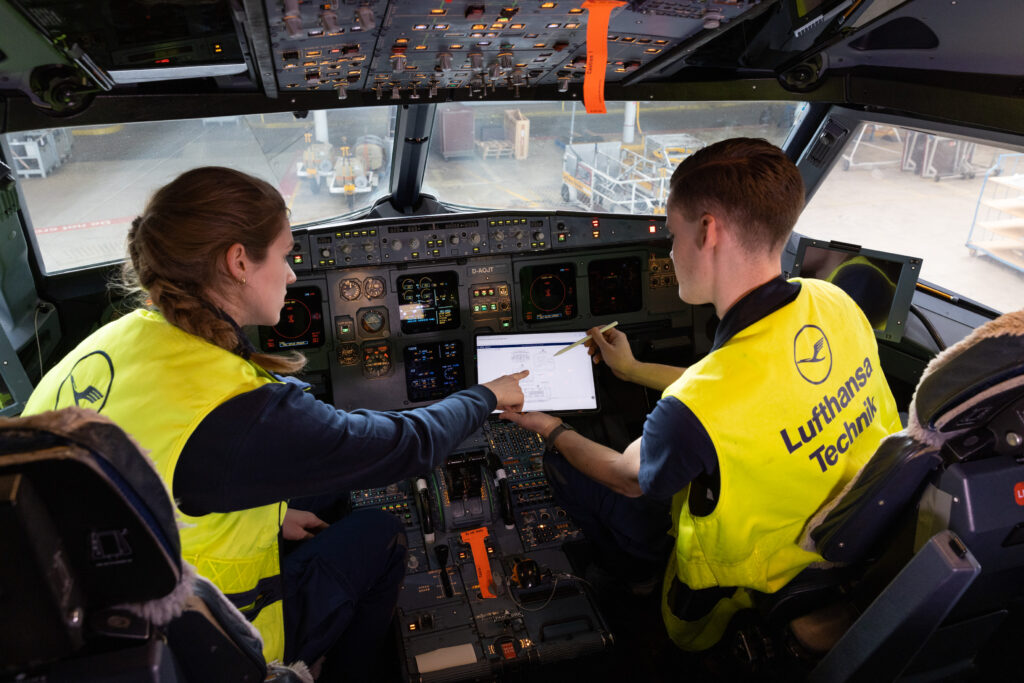
Upon completion of the OJT, the participants are able to perform a variety of aircraft maintenance tasks, explains Lufthansa Technik. “These tasks include applying relevant safety precautions, identifying and applying aircraft technical documentation, naming, identifying and locating aircraft system components, performing normal operation of aircraft systems and sub-systems, performing servicing, and performing system functional tests and on-board maintenance system supported tests. Additional tasks include carrying out routine thorough visual checks, describing component removal/installation procedures unique to the aircraft type, determining aircraft airworthiness in accordance with the minimum equipment list (MEL)/configuration deviation list (CDL), explaining maintenance procedures according to the MEL, and correlating information for the purpose of making decisions in respect to fault diagnosis and rectification.”
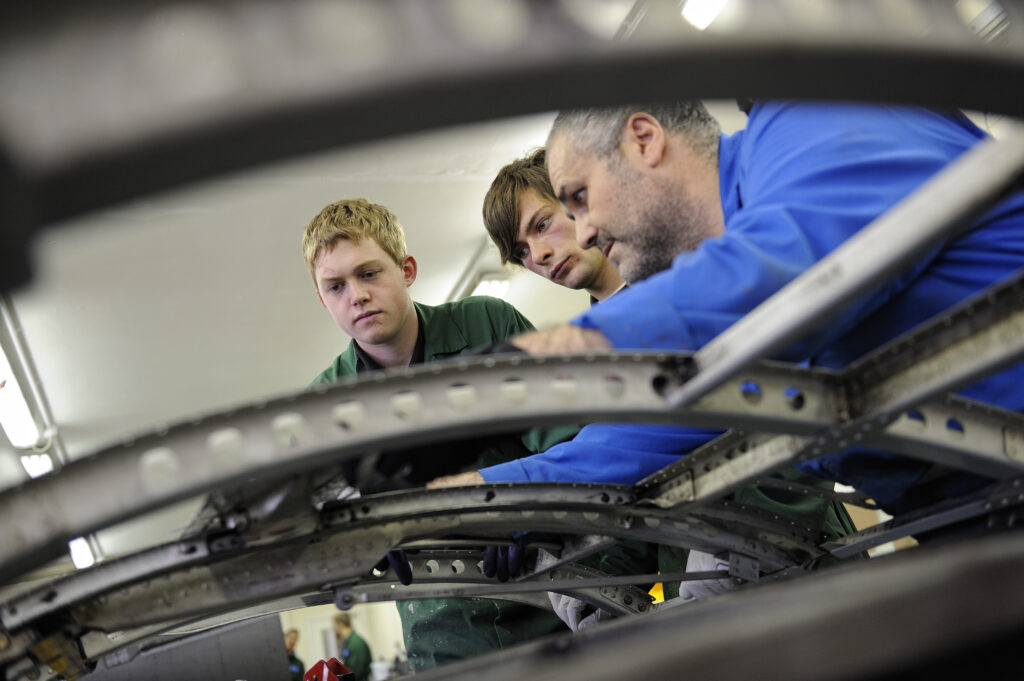
Teaching maintenance personnel involves not only the passing on of professional experience, but it also assumes the mastery of techniques in the field of teaching, highlights Jiri Jahoda, head of maintenance training at Czech Aviation Training Center (CATC). “The training is preceded by extensive preparation with the elaboration of a presentation that includes a progression from the simplest description of entire systems to a detailed description of individual components”, he says. “Various methods such as assisted learning, demonstrations, e-learning or multimedia training and various teaching aids such as visual technology, PC educational systems, simulation trainers or individual components are used for the training”.
A recognised best practice in aircraft maintenance training development is the ongoing commitment to programme enhancement, affirms Algirdas Kadaksys, deputy chief executive officer (CEO) for technical training at FL Technics. “This involves regular and systematic reviews of training programmes to incorporate any updates or recommendations provided by aircraft manufacturers”, he points out. “Furthermore, a crucial aspect of this process entails attentively considering and integrating feedback garnered from both students and instructors. This responsive approach to input allows us to align our training offerings as closely as possible with the evolving demands of the aviation industry, within the constraints of our regulatory framework”.
Development in training technologies
Technology has changed every sphere of human life, and it has certainly enabled a huge transformation in the aircraft maintenance training space, according to Emirates Engineering. “Today, virtual reality (VR), synchronous distance learning training and augmented reality (AR) are being integrated into aircraft maintenance training to provide more immersive and realistic training environments. The aviation industry has increasingly moved toward digital and remote training solutions, especially in response to the challenges posed by COVID. We are approved to conduct both type (EASA & GCAA) and basic (GCAA) training, employing distance learning training methodology, which is a synchronous virtual learning method, where instructors and students interact in real-time,” says Emirates Engineering.
Air France Industries KLM Engineering & Maintenance (AFI KLM E&M) observes that, at the moment, best practices for aircraft maintenance training development revolve around interactive training in the classroom. “The training we are developing is old-style theory supported by immersive technology, like VR, HoloLens, simulators, and haptics. The students receive the required information and instructions which can be practiced in the digital environment”, AFI KLM E&M says. “The available training technologies have expanded and improved rapidly over the last decade. The improvement is in quality of images which are getting more realistic and user friendly, but also the interaction with feeling (haptic glove) in the digital environment. In the future a realistic digital environment will be available where training can be simulated as working in the ‘real world’”.
With the development of new technologies, training tools such as simulators and virtual reality are indeed being improved and expanded, affirms CATC’s Jahoda. “The improvement of training tools also allows one to change the training methods, i.e., moving part of the training to an online environment or to increase one’s own experience by simulating activities on synthetic equipment. This improves the quality of training and, through personal experience, the skills, and techniques necessary to improve safety when working on a real aircraft. Preparing for the use of new aviation technologies in training is demanding not only in terms of expertise and time, but also financially. To make maintenance training attractive, it is necessary to involve the participant in the learning process so that the new technology provides a new experience that is similar to reality and the participant gains knowledge in a pleasant way,” he adds.
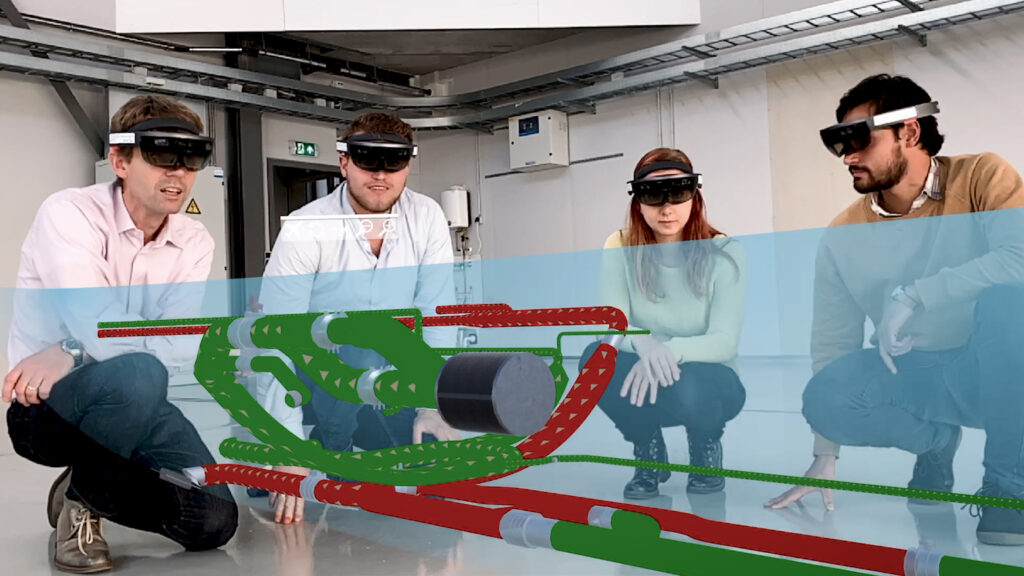
Immersive technologies, maintenance simulations and also cost-efficient solutions such as Panoramic Viewer play a significant role in maintenance training nowadays, observes Lufthansa Technik. “Young trainees and maintenance organisations alike indeed expect modern training methods and digital methods to support their learning journey. We adopt digital technologies as all trainees are equipped with tablets, easy access to literature, aircraft maintenance simulations and overviews through their learning management system”, says Lufthansa Technik. “We enhance our training as much as possible with digital technologies and are currently working on an immersive technology solution to improve the training. Nevertheless, practical training on aircraft, engines and components as well as learning basic hand skills is key and is not being replaced by digital features. At the end the learning objectives shall be the focus to determine the right methodology of training. Nevertheless, we strongly believe that new technologies will further evolve and enhance technical training”.
Appealing to future generations
Aircraft maintenance is one of the most critical segments within aviation, as one can buy the latest and best aircraft, but will always need it to be regularly maintained, certified, safe at all times, and in mint condition every single day, observes Emirates Engineering. “This is why attracting talent, shaping careers, specifying a growth path, and training future generations in aircraft maintenance is key to the growth and sustainability of the airline industry. To attract the right talent and appeal to upcoming generations, training teams need to understand the needs, motivations and preferences of future employees and students”, says Emirates Engineering.
CATC’s Jahoda observes that adult education involves both older and younger students, who show differences in their perception of the content. “They are all motivated by social and professional pressures, but the ability to learn is influenced by ‘professional memory’, motivation and the ability to concentrate”, he says. “Older participants show a criticality that comes from their experience, they want practical answers and information and do not like to waste time. Younger participants, on the other hand, are more receptive to the use of new technologies but do not like to learn the necessary basics, norms, and definitions”.
Some key points to make aircraft maintenance training appealing to future generations are career advancement opportunities, cutting edge training tools, continuous learning, and digital learning platforms, says Emirates Engineering. “It is important to communicate the potential for career growth and higher benefits within the aircraft maintenance field, to keep training fresh and updated, to use state-of-the-art technology – including VR, DLS and AR – to create engaging and immersive training experiences, and to use interactive digital learning platforms allowing students to access and engage with course materials online”, says Emirates Engineering.
Training in the future must be in line with the development of the new techniques and maintenance philosophies, matching the learning needs and expectations of the students, affirms AFI KLM E&M. “The new techniques on the horizon involve electricity or hydrogen instead of fossil fuel. The maintenance philosophy will move from inspection and rectifying if damaged to data-driven and predictive maintenance programmes, like PROGNOS,” says AFI KLM E&M.
The new generations of students are setting the bar higher. As they are accustomed to today’s technology, they expect a modernised approach to learning, observes FL Technic’s Kadaksys. “They crave higher-quality graphics, favour coloured illustrations over traditional blueprint schematics, demand interactive 3-D models, and seek a wealth of instructional videos. Their desire for more visually engaging and interactive content reflects the evolving technological landscape and the need for a dynamic learning experience,” he says.
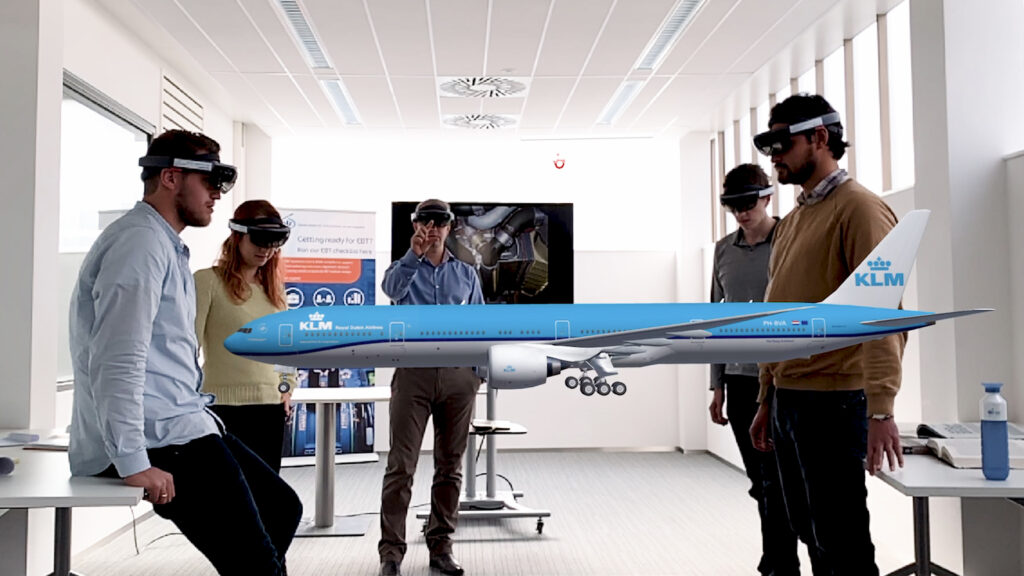
To make aircraft maintenance training appealing to future generations of professionals and adapt it to new technologies, eLearning can be an effective solution, according to Lufthansa Technik. “We have developed eLearning modules for the complete Part-66 syllabus which are interactive, engaging, and visually appealing. We have gamified the training by adding elements like quizzes, challenges, and rewards by the instructor-led classroom, and created mobile accessibility that allows students to learn on the go and at their own pace, which is particularly appealing to the younger generation”, says Lufthansa Technik. “We have also created individualised learning paths for students with regular updates and, by integrating these elements into eLearning with web-based training, we make aircraft maintenance training more appealing and effective for future generations of professionals while addressing the evolving needs of the aviation industry”.
In the field of aircraft maintenance training, the ultimate priority for the students is competence, according to Kadaksys. “What truly appeals to them is the presence of a seasoned and proficient instructor who can impart not only knowledge but invaluable hands-on experience. Regardless of a student’s age or familiarity with new gadgets, the expertise and genuine dedication of an instructor are irreplaceable”, he concludes.