

The commercial aviation industry as a whole is under tremendous pressure to reduce its carbon footprint. This doesn’t just apply to the aircraft which fly between destinations, but every aspect of operations which help airlines to transport passengers. That includes aircraft MRO. While engines are more efficient and sustainable fuel is being introduced into the ‘mix’, electric vehicles such as aircraft tugs and tractors, baggage tugs and belt loaders are helping to transform ground handling services in the drive to become more sustainable. So what has happened within the MRO sector, changes that are not commonly known about or seen by anyone other than technicians and engineers?
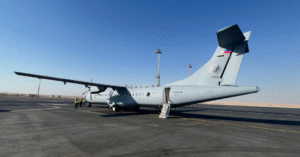
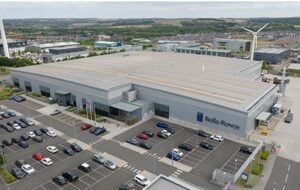
To find out more, we approached Pascal Parant, the Chief Commercial & Marketing Officer at the Vallair Group for his take on the situation. Vallair’s aircraft MRO & paint services are designed to support aircraft lessors and operators through the provision of a wide range of services, including maintenance, modifications or reconfigurations, paint, as well as aircraft parking and storage. The Group owns a modern, purpose-built facility in Montpellier, France, which has recently seen major investment in refurbishment and upgrade capabilities, which focuses on aircraft MRO and paint services for ATR, A320 and B737 aircraft types (all series), including the BBJ and ACJ.
Maintenance can range from basic line support through to “D” check type maintenance. The team in Montpellier, France, is also capable of carrying out major repairs, skin changes and frame changes (such as frame 16 and 18 on the A320), as well as cockpit window frames. The facility is both EASA and FAA approved and holds multiple additional regulatory approvals from around the world. For composite repairs, minor operations can be carried out at the Montpellier facility, usually while the aircraft is undergoing standard maintenance. However, larger repairs are usually carried out at Vallair’s Aerostructures Business Unit in Chateauroux, France, and cover such elements as nacelles, flaps, spoilers, rudders, or thrust reversers.
The Interview
AviTrader MRO360: How significant is the environmental footprint of aircraft maintenance compared with other aspects of airline operations?
Pascal Parant: There are several ways to look at the environmental footprint. If we look at the basics, MRO base maintenance is undertaken in a large hangar into which you bring aircraft and mechanics. We mainly sell labour time: inspection, repair, diagnostics, checks, etc. In an ideal world, if the climate is temperate, you need to heat and light the hangar during winter and at least provide lighting for the rest of the year. In hot parts of the world, air conditioning is a must, and in cold regions you still need heating in summer. Because of the internal volume to heat or cool and the fact that you regularly open the doors to move aircraft in and out, the main impacts are heating, cooling, and lighting. Things become less environmentally friendly when you need to perform engine tests. An engine test cell can burn several tons of Jet A-1 for a wide-body aircraft. If we take a holistic approach, we also need to consider all the logistics and transportation of parts that an aircraft may need during its check. The CO₂ footprint can skyrocket if you have to transport an engine, landing gear, or a nacelle. These parts are oversized, sometimes shipped from the other side of the world by air, and here we start going into the red. The last level of CO₂ footprint is related to where the aircraft comes from for maintenance. This can be a major part of the footprint when airlines ferry aircraft long distances – for example, from the Western world to the Far East. A 20-hour ferry round trip has a significant impact.
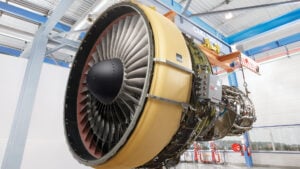
Going one level deeper: heating or cooling a building will always have an impact. A component’s repair will mainly generate transportation-related CO₂. For oversized parts, transport will have a larger impact. Landing gear may require specific surface treatment; the risk here is not CO₂ but chemical contamination in case of failure. Engines are even more complex: as they are stripped to piece-part, logistics to repair them generate CO₂, and the repair itself may be electricity-intensive. Then we still need to perform an engine test cell run that will consume several tons of Jet A-1. So, when speaking of footprint, hangars matter (you can optimize with large windows to allow more natural light, as long as thermal efficiency is maintained). But it is all the surrounding logistics that can have a much more detrimental impact on the environment.
Where do you see the biggest opportunities for near-term environmental footprint reduction?
Go regional. Keep your maintenance not too far away from your FBO. Set limits to ferry flight (three hours for narrow-bodies, six hours for wide-bodies perhaps). Incorporate the latest technology to build high-performance hangars with a maximum of natural light. And optimize them from isolation standpoint to keep naturally temperature controls. Take advantage of any surface to put photovoltaic panels.
What role do used serviceable material (USM), PMA parts, and DER repairs play in sustainable maintenance strategies?
When a part is manufactured, it generates a certain amount of CO₂. Metallic parts, engine parts, and composite parts are among those that generate the most CO₂: excavating, mining, drilling, refining, melting, forging, producing carbon fibre (from incomplete gas combustion), resins, etc. All of this makes a new part a substantial CO₂ producer (as is the case for most human-made products). In aviation, if you optimize the entire useful life of a part, you produce less CO₂ than if you have to buy a new one. In that sense, USM creates a virtuous cycle. DER can extend the life of a part that might otherwise be scrapped under OEM repair manuals, and therefore also has a virtuous environmental impact. It is less obvious to me how a PMA part directly reduces CO₂.
How can optimised engine maintenance directly improve fuel efficiency and reduce CO₂ emissions?
If you overhaul an engine simply to return it to its initial state, it is difficult to see how you can improve fuel efficiency, unless you optimize through USM and DER. However, if you continue to develop and incorporate new technological standards (Tech Insertion, PIPs, improved 3-D blades, new coatings, etc.,) that improve specific fuel consumption, and you insert them during an overhaul, you will have an impact. Even if SFC is reduced by only one or two percent, for airlines with large fleets – and with fuel being the largest direct operating cost – this translates into millions of dollars and tons of CO₂ saved per year.
Are current regulatory frameworks enabling or constraining greener maintenance practices?
National environmental laws apply to all industries. Most of the relevant decisions are made at a macro level by governments rather than through micro-regulations specifically designed for aviation maintenance.
What innovations will have the greatest impact on reducing the maintenance-related environmental footprint?
Composite (carbon) airframes have a strong positive impact: less corrosion, less aircraft immobilisation time, less corrective maintenance, and less potential environmental impact. But end of life and recycling will have to be engineered to minimise waste impact. We should also be rational. Accept that paying more for maintenance close to home – even in a high labour-cost region – can reduce your CO₂ footprint compared with flying aircraft to the other side of the world. Labour standards are not the same everywhere: while the norm may be 40 hours per week in Europe or the US, it can be much higher in other regions, often with far lower wages.
Be ethical. Be reasonable. Be responsible.
Pascal Parant concludes:
I do not want to compare or advocate aviation to other industries. I simply want to put everything into perspective. Aviation accounts for around 2–2.5% of global CO₂ emissions, while each new aircraft generation delivers roughly a 20% reduction in fuel burn. R&D continuously introduces new materials, extends maintenance intervals, and improves safety at the same time. Fashion and clothing are responsible for more than 10% of global emissions. Streaming video is estimated at an average of around 55 g of CO₂ per hour, and some reports suggest that streaming generates nearly twice as much CO₂ as aviation (4%).
I am not pointing fingers at any industry. But I sometimes feel that Greta was unfair toward aviation and missed her target. We do not need anyone to tell us to reduce our CO₂ footprint: fuel is the largest direct operating cost in the airline industry, so we constantly do everything we can to reduce it – and we are already leaders in this effort. The aviation industry is striving for a better-connected world, for our children, and for the planet.