
Honeywell Aerospace said its engineering team in Brno, the Czech Republic, has successfully integrated the main subsystems of a hydrogen fuel-cell power source capable of generating and supplying electricity for an aircraft, marking progress in a European project aimed at developing low-emission aviation technology.
The work is part of Project NEWBORN, launched in 2023 and funded by the European Union through the Clean Aviation Joint Undertaking. The project brings together 18 companies and research organisations from ten European countries to develop an aerospace-qualified hydrogen fuel cell propulsion system capable of delivering power in the megawatt class.
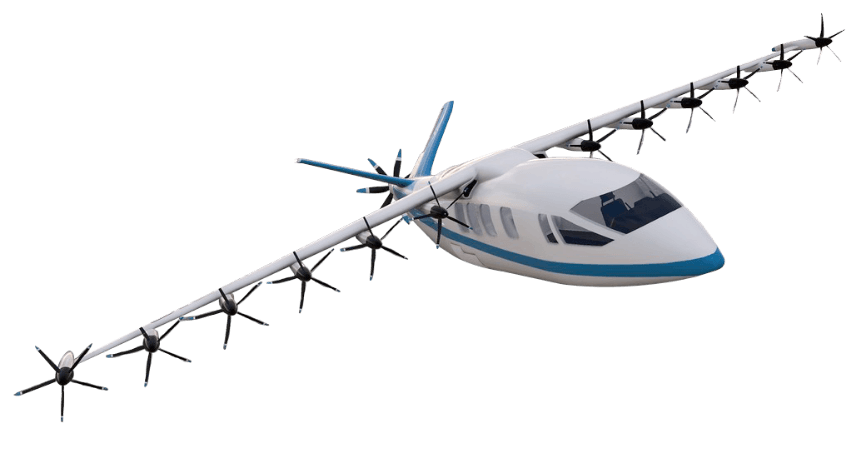
The completed integration brings together fuel cells and other electrical and supporting systems into a functional hydrogen power source. The next stage will be a ground demonstration of the complete propulsion system, in which hydrogen fuel cells and batteries will provide electricity to a megawatt-class electric motor driving an aircraft propeller.
Honeywell has developed a dedicated test platform to replicate a range of aircraft functions and assess the hydrogen power source under controlled conditions. The platform is installed at the research and engineering facility operated by ÚJV Řež near Prague and includes power generation, fluid distribution, electrical and control systems, safety equipment and heat-rejection systems.
Engineers have tested the integrated system for electrical functionality, leak tightness, fluid operating parameters, interaction between subsystems, control algorithms and protection mechanisms. Further testing will focus on increasing the system’s power range and improving its stability and resilience, Honeywell said.
The project involves multiple teams working on hardware, software, modelling, simulations and integration. Companies and research institutions including PowerCell, Fraunhofer, Test-Fuchs, Siemens Industry Software, KU Leuven, Friedrich-Alexander-Universität Erlangen-Nürnberg and CIRA have contributed to different elements of the programme.
The hydrogen power source will now be transferred to Gorizia, Italy, where the next phase of testing will take place. There, it will be connected to battery systems supplied by Pipistrel and a megawatt-class electric propulsion system jointly developed by the University of Nottingham, Honeywell Aerospace and Pipistrel.
The project is intended to bring together technologies developed across Europe and demonstrate their operation as an integrated hydrogen-electric propulsion system, a step towards the use of hydrogen fuel cells in future aircraft.