
How TAT Technologies is connecting repair, engineering, manufacturing, inventory and asset support to deliver integrated solutions for the increasingly complex business of aircraft maintenance
For airlines and operators, MRO has never been simply about repairing a component. Behind every removal is a much larger operational challenge: sourcing parts, managing inventory, coordinating suppliers, controlling turnaround times, maintaining asset availability and ultimately keeping aircraft flying. That challenge has become increasingly complex as material availability remains unpredictable, aging fleets require greater repair expertise, and operators manage multiple suppliers across different component categories and geographies. At the same time, expectations for turnaround, reliability and cost control have never been higher.
The result is changing what operators need from their MRO partners. Repair capability remains fundamental, but increasingly, it is only one piece of the equation. Operators need partners capable of connecting repair with engineering, manufacturing, material availability, inventory, exchange and leasing resources, and responsive customer support. At TAT Technologies, that thinking is behind an increasingly integrated approach to MRO. One designed to bring more of the resources required to support an aircraft component together within a single organization. The objective is straightforward: deliver integrated MRO solutions that reduce complexity, create greater simplicity for the customer and provide more control and predictability throughout the maintenance process.
MRO Is More Than the Shop Visit
The traditional repair-and-return model appears simple. A component is removed, shipped to an MRO provider, repaired and returned to service. The reality behind that transaction can be significantly more complicated. Once the component enters the shop, the provider may discover that replacement material is unavailable, a specialized repair is required, machining or plating must be outsourced, or a replacement asset is needed to keep the aircraft operating. Each requirement can introduce another supplier, another shipment, another approval and another potential delay. For an operator, those individual steps matter far less than the ultimate outcome: getting a reliable component back into service when it is needed.
That is where an integrated MRO model becomes increasingly important. TAT Technologies supports thermal components, auxiliary power units and landing gear through operations backed by engineering, manufacturing, inventory, exchange and leasing resources. The breadth of those capabilities matters, but integration is not simply about offering more services. It is about connecting those capabilities to create seamless solutions around the customer’s requirements, reducing unnecessary handoffs and helping streamline the maintenance process from removal through return to service.
“Customers are looking more and more for their MROs to help remove complexity from their maintenance operations. TAT’s integrated approach does exactly that by providing the optimum solution.” Paul Oliver, VP MRO Business
Controlling More of the Process In-House
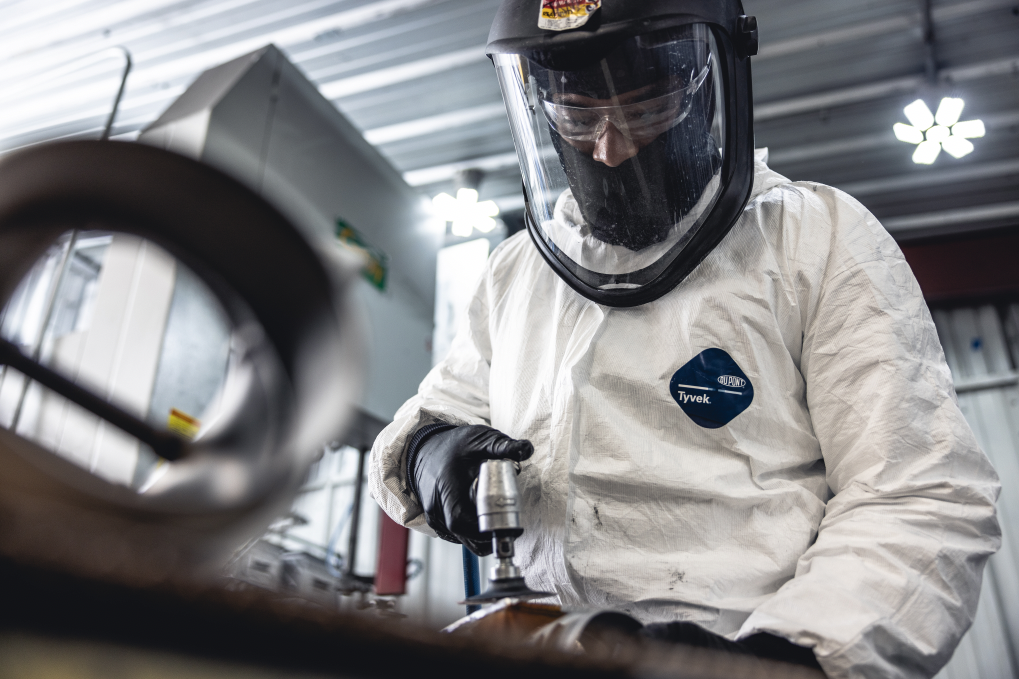
A central part of TAT’s integrated MRO strategy is the continued expansion of in-house capability. Across its operations, TAT has invested in advanced machining and robotics, plating, welding, engineering, specialized repairs, testing and manufacturing capabilities. These resources allow more work to remain within the organization rather than moving through a network of outside vendors. The impact goes beyond convenience. Every outsourced process creates an additional dependency: parts must be transported, outside capacity must be available, quality requirements must be coordinated, and schedules must align. Bringing more of those processes in-house gives the MRO provider greater visibility and control over the complete repair cycle while creating a more streamlined path through the maintenance process.
Within TAT’s APU and landing gear operations, advanced machining, robotics, in-house plating and other specialized processes support repair activity alongside engineering expertise and licensed and approved capabilities. Investments in automation and advanced equipment are helping improve consistency and efficiency while expanding the range of work that can be performed internally. TAT’s thermal operations provide another example of this vertical integration. In addition to MRO capabilities, TAT manufactures heat exchanger cores in-house, providing greater control over material, quality and scheduling while reducing dependence on external suppliers. This combination of OEM manufacturing knowledge and MRO experience creates another advantage: understanding how components are designed and manufactured can inform how they are inspected, repaired and returned to service. Together, these capabilities allow TAT to develop solutions that address more of the maintenance requirement internally and with fewer outside dependencies.
“In-house capability is really about control. When machining, plating, engineering, manufacturing and repair expertise are available within the organization, there are fewer external variables affecting the schedule. That helps create a more consistent and predictable process for the customer.” Donnie Loflin, Senior Director, APU Operations
Engineering as Part of the MRO Equation
Integration also extends beyond physical repair capabilities. Engineering plays an important role in determining whether components can be repaired efficiently, whether alternative repair solutions can be developed and how recurring maintenance challenges can be addressed over time. Rather than treating engineering as a separate activity, an integrated approach connects engineers directly with technicians, manufacturing resources and customer requirements. That collaboration can help identify repair opportunities, address difficult-to-source material and develop solutions that may otherwise require replacement of a component.
This becomes particularly important as aircraft and components remain in service longer. Aging fleets can create challenges that were not anticipated when the original maintenance programs were established. Parts become more difficult to source, repair histories become more complex and operators need practical solutions that balance reliability, cost and availability. In that environment, connecting engineering expertise with hands-on MRO experience can provide a more seamless path from identifying a maintenance challenge to implementing an effective solution.
Inventory Changes the Turnaround Equation
Even the most capable repair organization cannot deliver consistently if material is unavailable. For that reason, inventory has become a fundamental part of TAT’s integrated MRO strategy. TAT maintains extensive OEM and USM inventory to support ongoing operations and anticipated customer requirements. The distinction is important. In a traditional model, material sourcing may begin after a component arrives and the work scope is determined. When commonly required material is already available, a significant variable can be removed from the turnaround equation.
Inventory also provides flexibility. OEM material, USM, exchange assets and leasing options can provide different solutions depending on the customer’s requirements, economics and operational situation. Rather than treating inventory as a separate commercial activity, TAT views it as an integral part of MRO execution. The result is a more streamlined support model built not only around the ability to repair a component, but around having the resources available to keep the process moving.
From Repair-and-Return to Readiness
That same philosophy led to the development of PRO EXTM by TAT Technologies, an exclusive support program designed to move beyond the traditional repair-and-return relationship. PRO EXTM provides participating customers with access to dedicated exchange inventory positioned to support immediate asset availability when required. The program is initially focused on heat exchangers, with the potential to expand the model to additional product categories over time.
The concept addresses a familiar challenge. Under a traditional repair-and-return model, an operator removes a component and waits for that same asset to move through the repair process. Even with a strong turnaround time, the operator must plan around the period in which that asset is unavailable. PRO EXTM changes that equation by positioning dedicated inventory to support the customer. When a covered component is removed, an exchange asset can be made available from the dedicated pool, allowing the operation to continue while the removed unit enters the repair cycle. The value is not simply speed; it is readiness and simplicity. By aligning inventory with anticipated maintenance demand, PRO EXTM provides a more seamless solution that can help reduce the operational impact of a removal. Instead of responding to each event in isolation, assets and resources can be positioned around the customer’s broader operating requirements.
“The goal is to move the conversation beyond ‘How quickly can this component be repaired?’ to ‘How can the customer avoid feeling the impact of the removal in the first place?’ Programs such as PRO EXTM are designed around that broader operational question.” Kip Edwards, Senior Director, Global Sales
Connecting Capabilities Across the Organization
The real value of integrated MRO becomes apparent when these individual capabilities begin working together. A component entering the TAT network can be supported by technicians with deep product experience, engineers capable of addressing repair challenges, in-house manufacturing and specialized processes, inventory positioned to support material requirements, and exchange or leasing assets when immediate availability is necessary. The result is not simply a collection of capabilities, but an integrated solution designed to reduce the number of external touchpoints involved in resolving a maintenance event and create a more seamless experience for the customer.
It also creates opportunities to look beyond an individual shop visit. As the relationship with an operator develops, repair history, material requirements and removal patterns can help inform inventory planning and support strategies. The MRO relationship becomes less transactional and more focused on the overall performance of the customer’s maintenance program. For customers operating globally, that approach is increasingly important. Managing separate providers for individual processes and component categories creates administrative burden as well as operational risk. Connecting more capabilities through an integrated partner can simplify communication, contracting and logistics while helping streamline the overall maintenance operation.
Integration Is Ultimately About Predictability —
and Simplicity
The aerospace aftermarket will always involve variables. Components fail unexpectedly, material becomes constrained, fleet plans change and aircraft remain in service longer than originally anticipated. No MRO provider can eliminate every uncertainty, but an integrated provider can control more of the variables within its reach.
In-house machining can reduce reliance on outside capacity. Robotics and automation can support efficiency and consistency. In-house plating and specialized processes can eliminate external handoffs. Manufacturing capability can provide another source for required material. Engineering can expand repair options. Deep inventory can help address supply constraints. Exchange and leasing assets can protect availability. Programs such as PRO EXTM can position resources before a removal becomes an operational problem. Individually, each capability provides an important solution. Connected through an integrated MRO model, they can create something more valuable: a streamlined maintenance experience built around simplicity, responsiveness and predictability.
For TAT Technologies, that is the power of integrated MRO: not simply putting multiple capabilities under one corporate name, but connecting those capabilities to provide seamless solutions that make aircraft maintenance easier to manage. As operators continue to navigate supply chain pressures, aging fleets, cost constraints and increasing operational demands, the strongest MRO partnerships will be those that can see beyond the repair order, understand the larger operational objective and bring together the right resources to address it.
Ultimately, MRO performance is not measured only by what happens inside a repair facility. It is measured by what happens outside of it: fewer disruptions, greater asset availability, more predictable maintenance schedules and aircraft where they belong — in operation.
Integrated MRO. Simplified.