
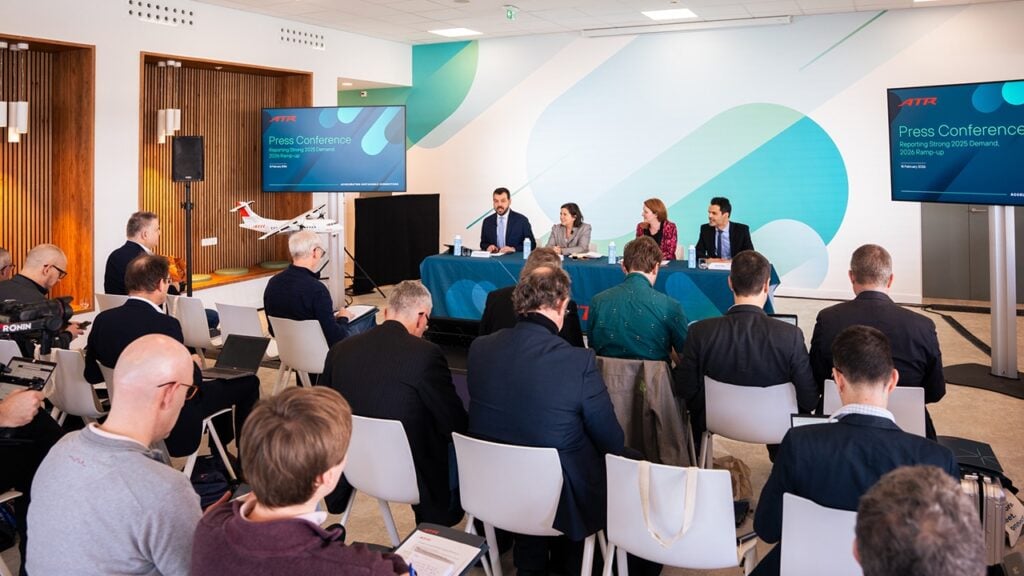
ATR has reported robust commercial results for the 2025 financial year, combining strong sales activity and stable revenues with continued investment in its industrial system to underpin long-term growth. While supply-chain constraints weighed on deliveries, the manufacturer strengthened its order book, expanded its global operator base and advanced key sustainability initiatives.
During 2025, ATR secured 60 gross aircraft orders from nine customers across nine countries. Notably, Air Algérie committed to 16 ATR 72-600s and UNI Air ordered 19 aircraft of the same type. After adjustments, net orders totalled 50 aircraft, lifting ATR’s backlog to more than 160 units, providing solid forward visibility.
The wider ATR ecosystem also demonstrated positive momentum. Nineteen new operators joined the global fleet across multiple regions, reflecting sustained demand for regional turboprop capacity. Leasing activity was particularly dynamic, with more than ten new aircraft placed from lessors’ order books, including a notable breakthrough within the Ethiopian Airlines Group. The secondary market remained active, generating over 90 transactions during the year.
Financially, ATR generated total revenues of US$1.2 billion in 2025, of which US$538 million derived from customer support and services, underlining the growing contribution of aftermarket activities. The year also marked progress in North America, where JSX launched public charter operations in the United States with ATR 42-600 aircraft, and Rise Air took delivery of the first ATR -600 certified in Canada. Demand for higher-end regional products increased, with further adoption of the ATR HighLine cabin offering by operators including Berjaya Air, Air Tahiti and Air Cambodia.
However, ongoing supply-chain disruptions constrained output. ATR delivered 32 aircraft in 2025, below initial projections. Management characterised 2025 as a transition year, prioritising structural improvements over short-term volume metrics. The company implemented measures to enhance final assembly line flow, reopen production stations and reduce parts shortages — now reportedly at one-third of early-2025 levels — while intensifying collaboration with suppliers. ATR is targeting a 20% increase in deliveries in 2026.
Strategically, 2025 also marked the launch of two major EU Clean Aviation programmes, HERACLES and DEMETRA. These research initiatives aim to develop a hybrid-electric ATR 72-600 flying testbed by 2029, integrating hybrid propulsion, advanced propeller technology and electrified systems to support the next generation of low-emission regional aircraft.