
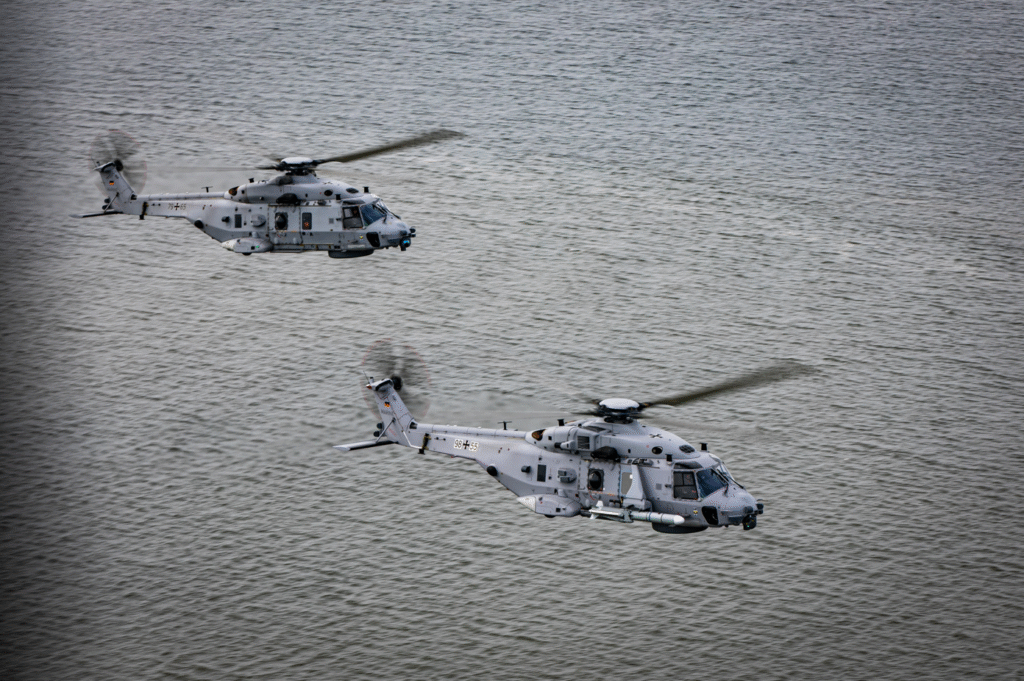
NATO’s NH90 programme agency, NAHEMA, has commissioned NHIndustries—a consortium comprising Airbus, Leonardo and GKN Aerospace—to undertake a two-year architecture study for the helicopter’s Block 2 upgrade, marking a significant step in the platform’s long-term evolution.
The Block 2 initiative is intended to modernise the NH90 with a range of structural and systems enhancements. These include the introduction of modular avionics, increased configuration commonality across variants, and improvements in maintenance efficiency and overall performance. In parallel, the upgrade is expected to deliver new operational capabilities, particularly in areas such as collaborative combat, advanced connectivity, and integration with uncrewed systems through crewed–uncrewed teaming concepts.
This study builds on the ongoing Block 1 upgrade programme and is designed to ensure continuity in industrial activity while preparing the aircraft for operational requirements beyond 2040. The work will be guided by high-level capability needs defined by NAHEMA and participating nations, ensuring alignment with sovereign defence priorities.
The architecture study will also run in parallel with broader European efforts under the Next Generation Rotorcraft Technologies (ENGRT) initiative, positioning the NH90 within the wider future vertical lift ecosystem being shaped across NATO and Europe.
Having recently surpassed 500,000 flight hours, the NH90 has demonstrated its maturity and operational relevance across a range of missions. Current variants, including naval and tactical configurations, are already regarded as benchmarks in their respective roles. The Block 2 study aims to build on this foundation by identifying and evaluating design options that will keep the platform competitive and adaptable in an increasingly complex battlespace.
Ultimately, the outcome of the study will provide the technical basis for NAHEMA and partner nations to decide on the most suitable upgrade path, ensuring the NH90 remains a key component of European defence capabilities for decades to come.