

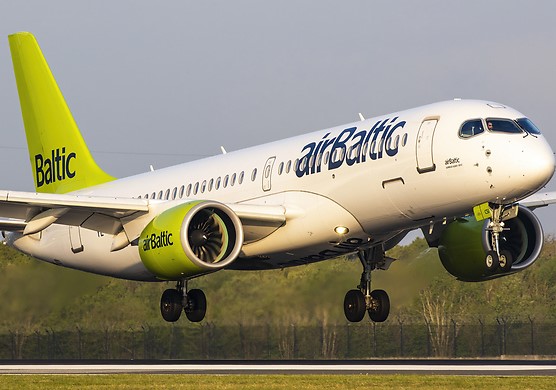
airBaltic has outlined the key elements of a revised business plan aimed at strengthening its long-term competitiveness, improving financial sustainability and maintaining connectivity for Latvia and the wider Baltic region.
Approved by the airline’s Supervisory Board, the plan combines a more focused network centred on Riga, a smaller all-Airbus A220-300 fleet, stronger year-round ACMI partnerships and improved operational efficiency.
The revised strategy marks a shift from airBaltic’s previous growth-focused plan, developed ahead of its planned IPO, which envisaged increasing passenger volumes and expanding towards a 100-aircraft fleet.
airBaltic said market conditions have since changed materially, with slower demand and revenue growth, geopolitical uncertainty in Ukraine and the Middle East, higher operating costs and prolonged Pratt & Whitney engine availability constraints affecting fleet deployment.
The new plan therefore prioritises financial stability over growth, aligning the airline’s network, fleet, cost base and capital structure with current market conditions. Future expansion will focus on opportunities supporting sustainable profitability, cash generation and a stronger balance sheet.
The plan has been disclosed as airBaltic holds discussions with stakeholders and potential providers of interim financing. The proposed financing and wider recapitalisation have not yet been agreed and remain subject to stakeholder agreements, bondholder resolutions and other approvals.
Holders of airBaltic’s 2029 Senior Secured Notes are being encouraged to participate in upcoming votes on the proposed recapitalisation, with a reconvened vote scheduled for 17 August.