
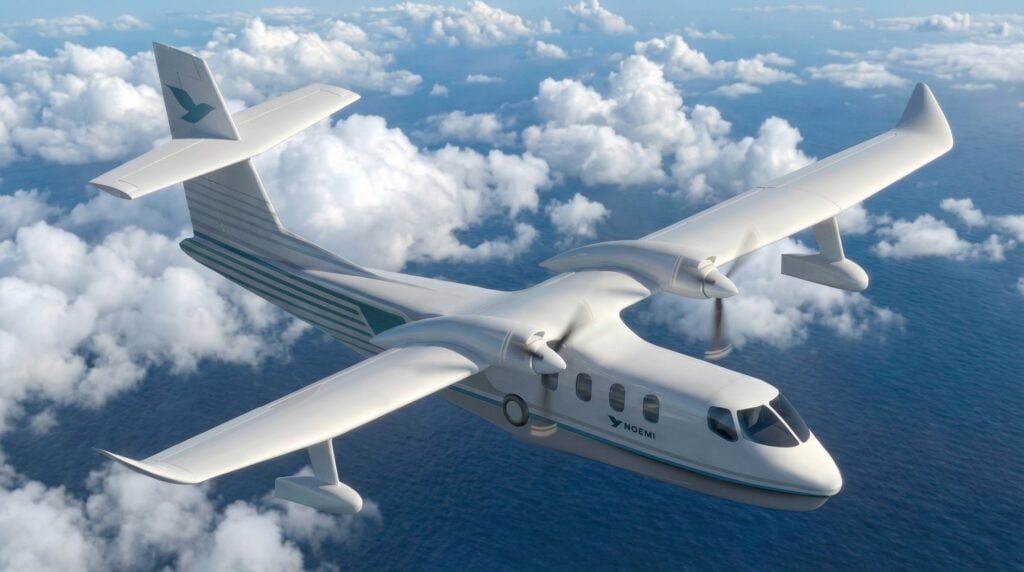
NOEMI Aerospace has secured NOK30 million (€3 million) from Innovation Norway to support the flight test programme for its electric amphibious aircraft, advancing what could become the world’s first certified electric amphibious aircraft for commercial passenger transport. The public funding will be matched by €4 million from private investors, bringing the total funding for the flight test programme to €7 million.
The Norwegian start-up said the funding will support the development of what could become the world’s first certified electric amphibious aircraft for commercial passenger operations.
The investment will finance the aircraft’s flight test campaign, covering ground, water and flight testing from initial system checks through to first flight and subsequent certification activities. The programme is intended to validate the aircraft’s performance and provide the data required for certification and entry into commercial service.
“Not only are we building a new aircraft, we are developing a new Norwegian industry,” said Eric Lithun, founder and Chief Rxecutive of NOEMI Aerospace.
“The flight test programme is one of the most important phases of the project, where we will demonstrate the technology at full scale. Innovation Norway’s support validates the progress we have made, reduces project risk and reinforces to investors and industry partners that this technology has significant international potential.”
Construction of the first full-scale prototype is progressing at NOEMI’s development and test facility at Torp Sandefjord Airport. Wing production is under way, while the electric motors, inverters and battery systems have been installed. Testing of the electric propulsion system is due to begin in August.
The company expects to roll out the prototype within the next 12 months and complete its maiden flight by the end of 2027.
Designed to operate from both land and water without requiring new infrastructure, the aircraft is intended primarily for regional passenger transport. NOEMI says the platform could also be adapted for cargo operations, medical evacuation, search and rescue, firefighting, military missions and other specialist applications.