
Collins Aerospace has officially opened its fully operational Engineering Center of Excellence in Wolverhampton, strengthening its capabilities in developing and testing next-generation electric thrust reverser actuation systems (elecTRAS) for commercial aircraft.
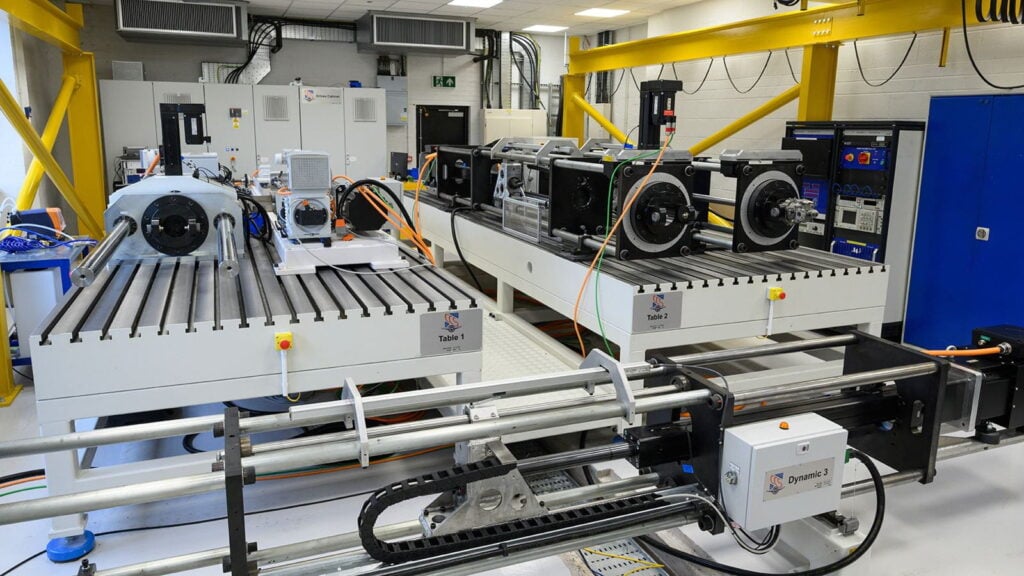
The UK facility features a new modular and scalable test centre designed to support every stage of aircraft actuation system development, from initial design and validation through to certification. The advanced testing environment enables engineers to assess individual components, actuators, subsystems and complete integrated systems under realistic operating conditions, allowing potential design issues to be identified and resolved earlier in the development process. This is expected to reduce programme delays, lower development costs and provide greater flexibility for future aircraft applications.
Collins said the centre represents a significant investment in more-electric aircraft technologies, which are becoming an increasingly important focus for aircraft manufacturers seeking to improve efficiency and reduce operating costs. The company’s elecTRAS system replaces conventional hydraulic actuation interfaces with an all-electric solution, eliminating hydraulic fluids and simplifying the overall architecture. At aircraft system level, this approach can reduce nacelle actuation weight by between 15 and 20 per cent, contributing to lower fuel consumption, improved operational performance and reduced maintenance requirements.
The Wolverhampton centre combines expertise in electric thrust reverser systems with nacelle actuation design, enabling engineering teams to work more closely throughout the product development cycle. Collins said the co-location of specialist skills will accelerate innovation in electric systems, motor control technologies and intelligent control algorithms, while continuing to support existing aircraft fleets already equipped with the technology.
The modular design of the new facility also allows testing equipment to be reconfigured for different aircraft programmes and system variants, improving scalability and shortening development times for future products. Collins believes this flexible approach will help meet growing demand from aircraft manufacturers as the aviation industry continues its transition towards more-electric aircraft architectures.
The company’s elecTRAS technology is already well established in commercial service. It is fitted to the Airbus A350 family and, by 2025, had accumulated more than 15 million flight hours and 2.2 million flight cycles across a fleet of more than 700 aircraft. Collins said the experience gained from those operations is helping to inform the next generation of electric actuation systems, supporting continued advances in efficiency, reliability and aircraft performance as airlines and manufacturers pursue lower operating costs and reduced environmental impact.